

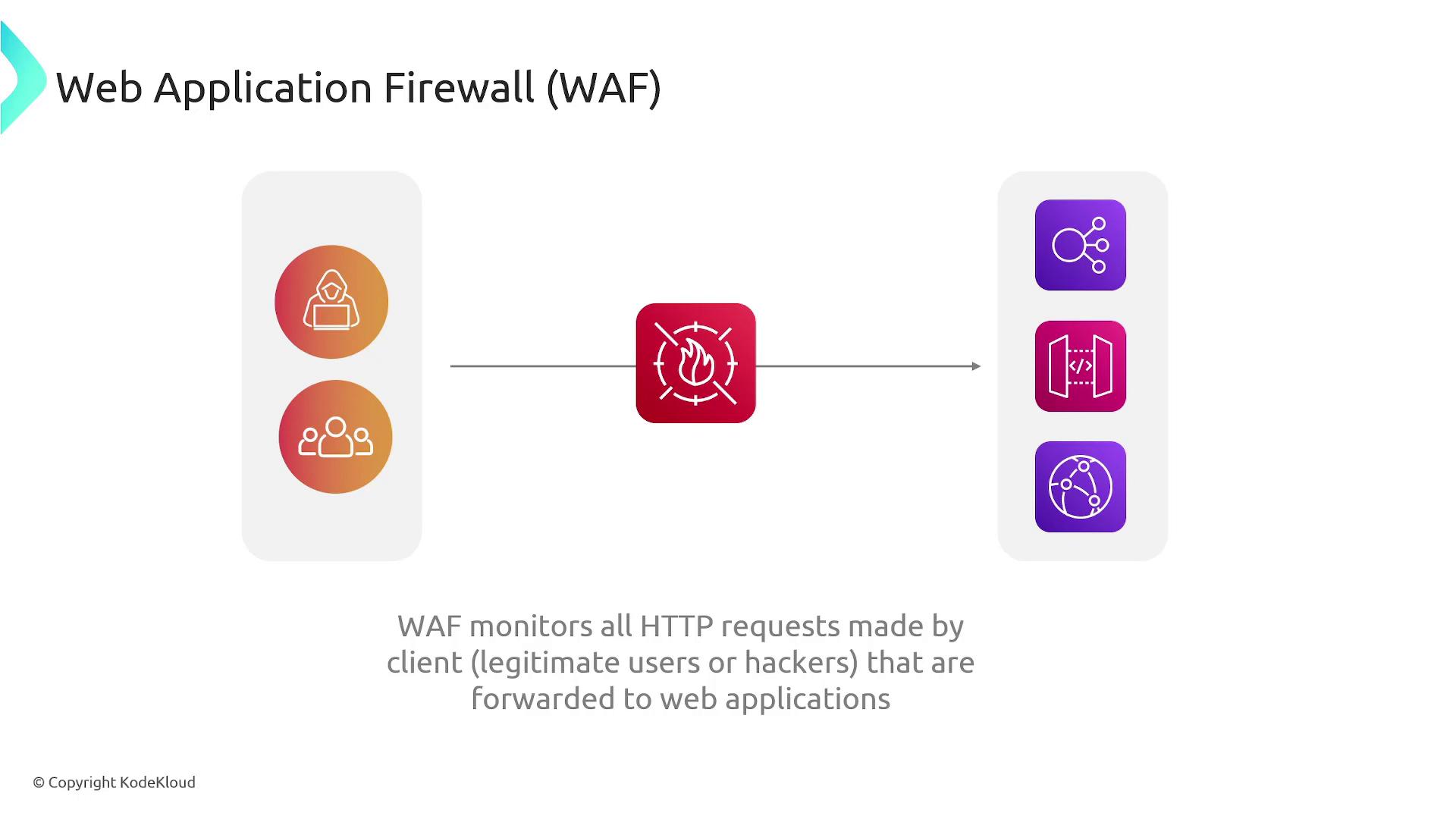
How AWS WAF Works
AWS WAF uses a series of rules organized within what is called a Web Access Control List (Web ACL). A Web ACL is essentially a collection of rules that evaluate incoming requests based on various conditions. These conditions can include properties like:- IP addresses
- HTTP headers
- Request bodies
- URI strings
- Packet sizes
- Specific geographic locations
- Rate-based conditions to mitigate DDoS attacks
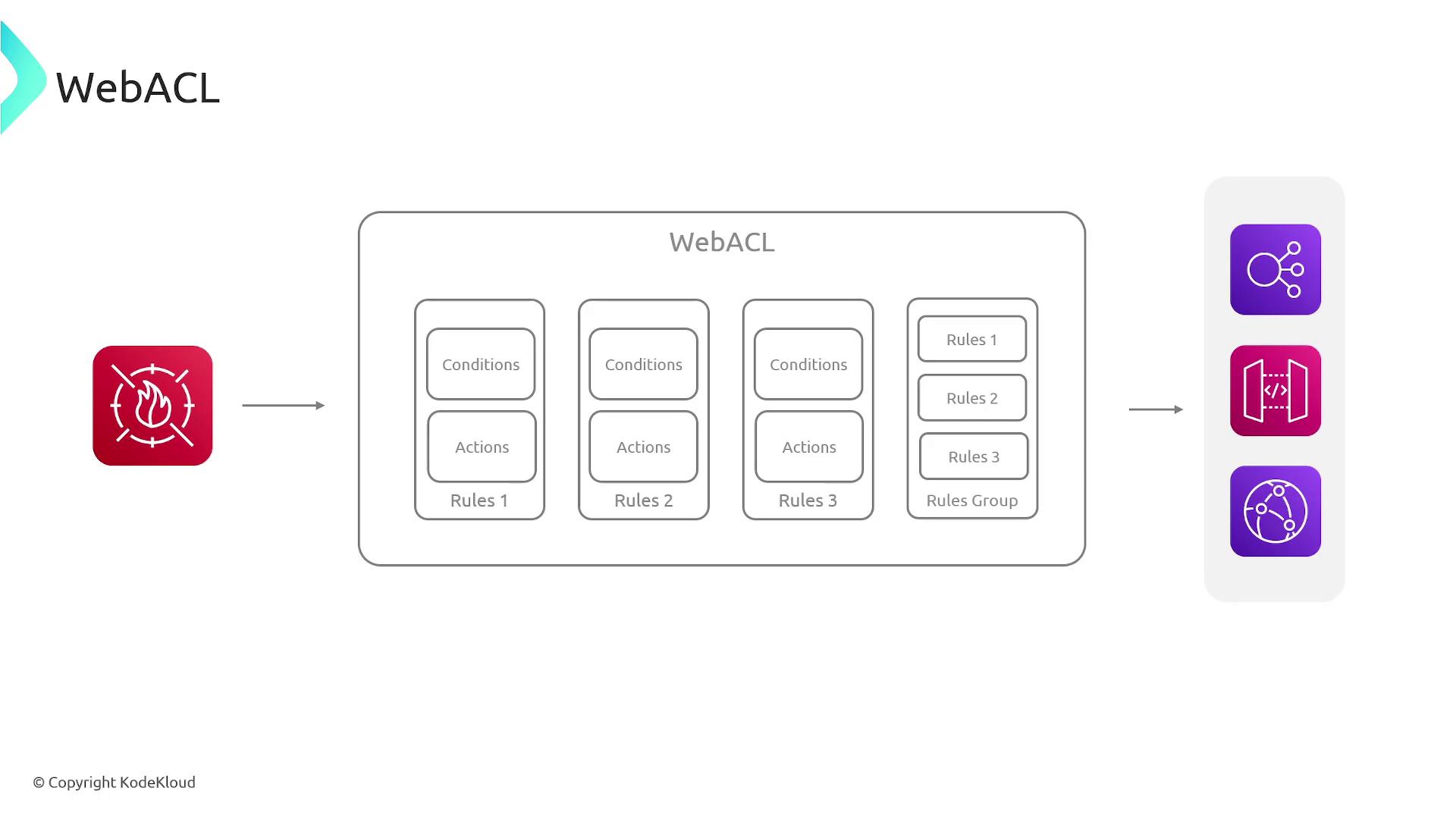
AWS WAF processes each web request as follows:
- The request is made to a resource (e.g., a CloudFront distribution or an Elastic Load Balancer).
- AWS WAF inspects the request and evaluates it against the defined rules in the Web ACL in order of priority.
- If a request matches a rule, AWS WAF takes the specified action—allow, block, or count the request.
- If no rule is matched, the default action specified in the Web ACL is applied, typically allowing the request to reach the protected resource.
Key Use Cases for AWS WAF
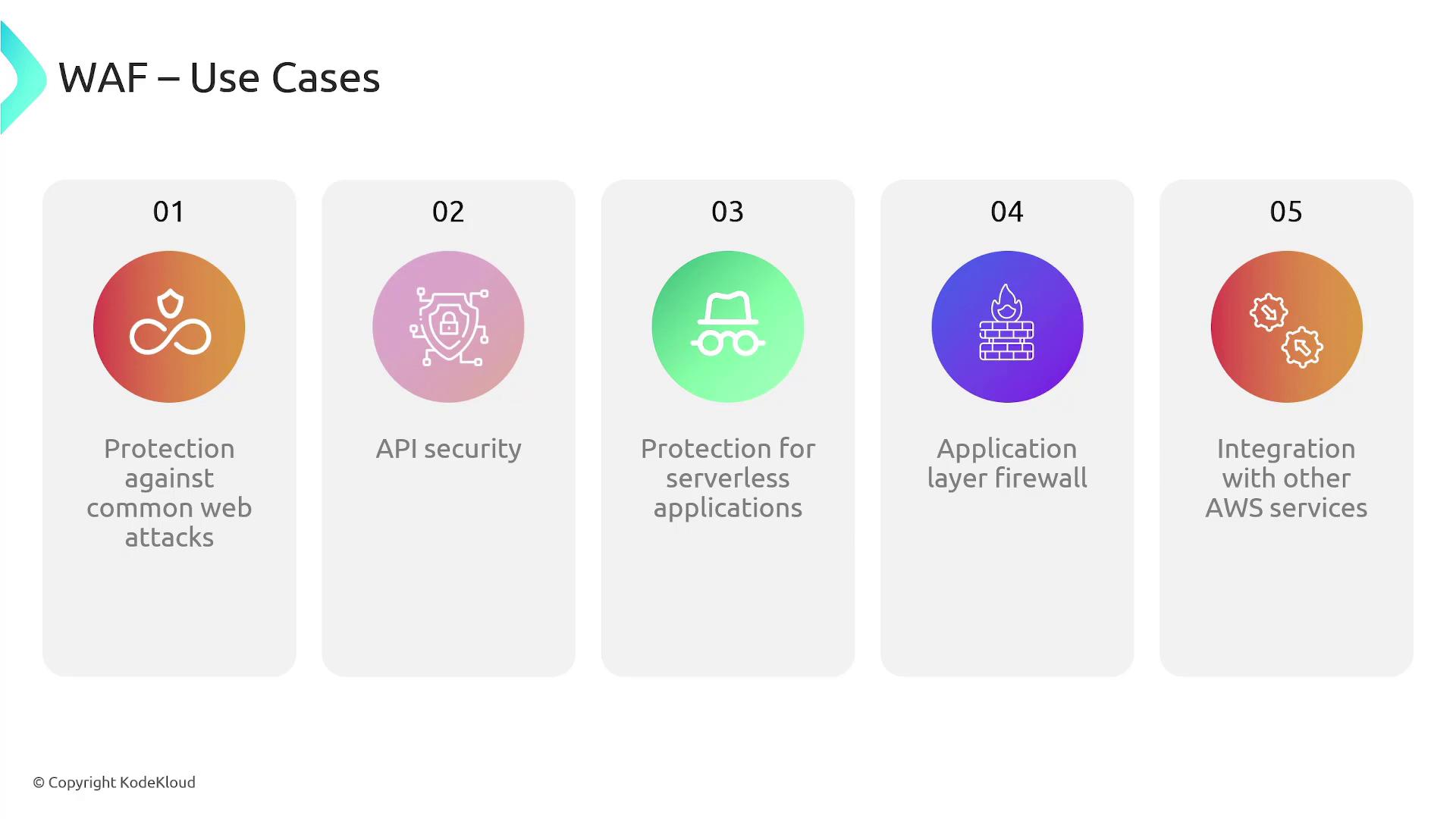
AWS WAF seamlessly integrates with other AWS services—such as Firewall Manager and CloudWatch—providing a comprehensive security and compliance management strategy. It is particularly useful for:- Protecting Against Common Web Attacks: Safeguard your web applications from SQL injection, cross-site scripting, and cross-site request forgery.
- API Security: Secure internet-facing APIs from unauthorized access and potential data exfiltration risks.
- Enforcing Access Rules: Implement authentication and authorization rules to ensure that only legitimate users and applications gain access.
- Securing Serverless Applications: Integrate easily with API Gateway to protect serverless applications.
- Layer 7 Traffic Filtering: Filter HTTP traffic based on methods, headers, URI strings, and body content.
Always review and update your Web ACL rules regularly to ensure they encompass the latest security threats and vulnerabilities. Regular monitoring and adjustments can help maintain the integrity of your application’s defenses.