

Course Objectives
This course is designed to help you master designing for security, resilience, performance adaptation, and cost optimization on AWS. You’ll gain a solid understanding of core AWS services and design principles, which will prepare you for the AWS Solutions Architect exam. For instance, you will learn how to enhance security for EC2 instances, improve resiliency for Direct Connect, and optimize performance for DynamoDB. Throughout the lesson, we cover the basics of core AWS services. It is recommended that you take detailed notes—consider dedicating a separate sheet for each service in your notebook to collect key points and insights. The course equips you with the dials and levers necessary to optimize security, resiliency, performance, and cost efficiency. It assumes that you have prior experience as a Solutions Architect on AWS, though even newcomers will acquire the skills needed for both passing the exam and excelling in the role.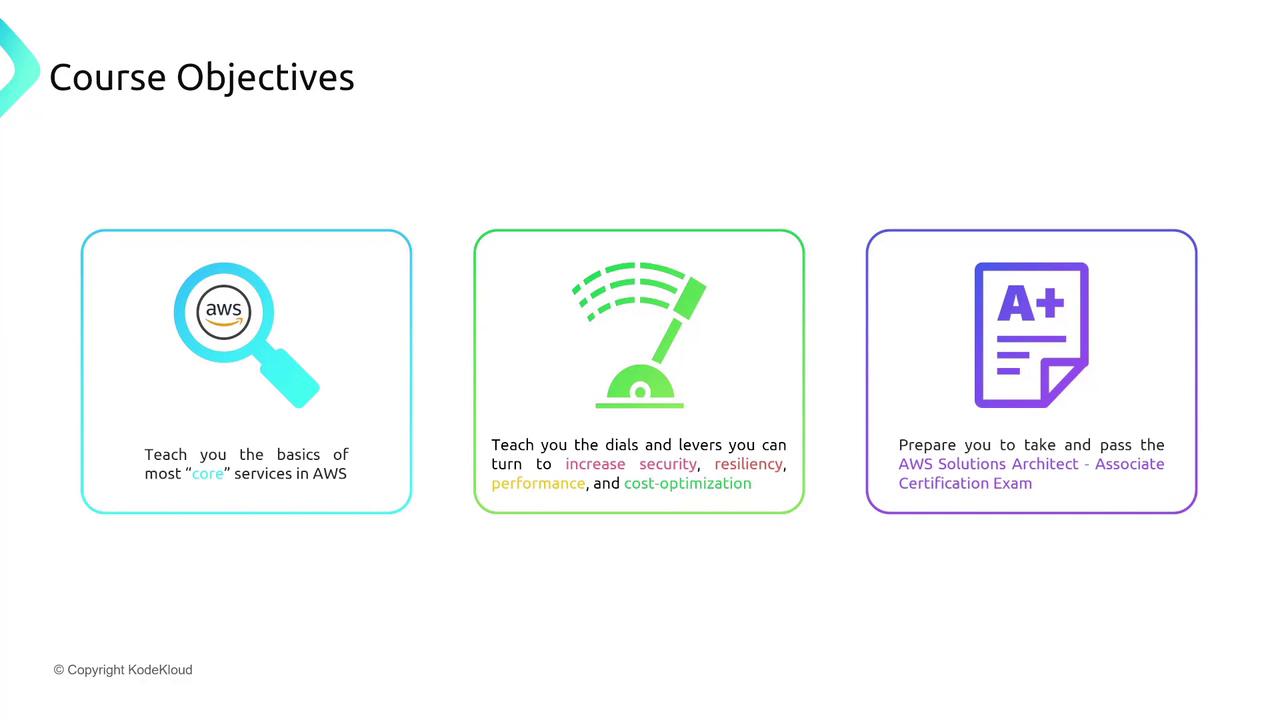
If you have prior AWS hands-on experience, you’ll find it easier to follow along and absorb the concepts presented in this course.
Target Audience
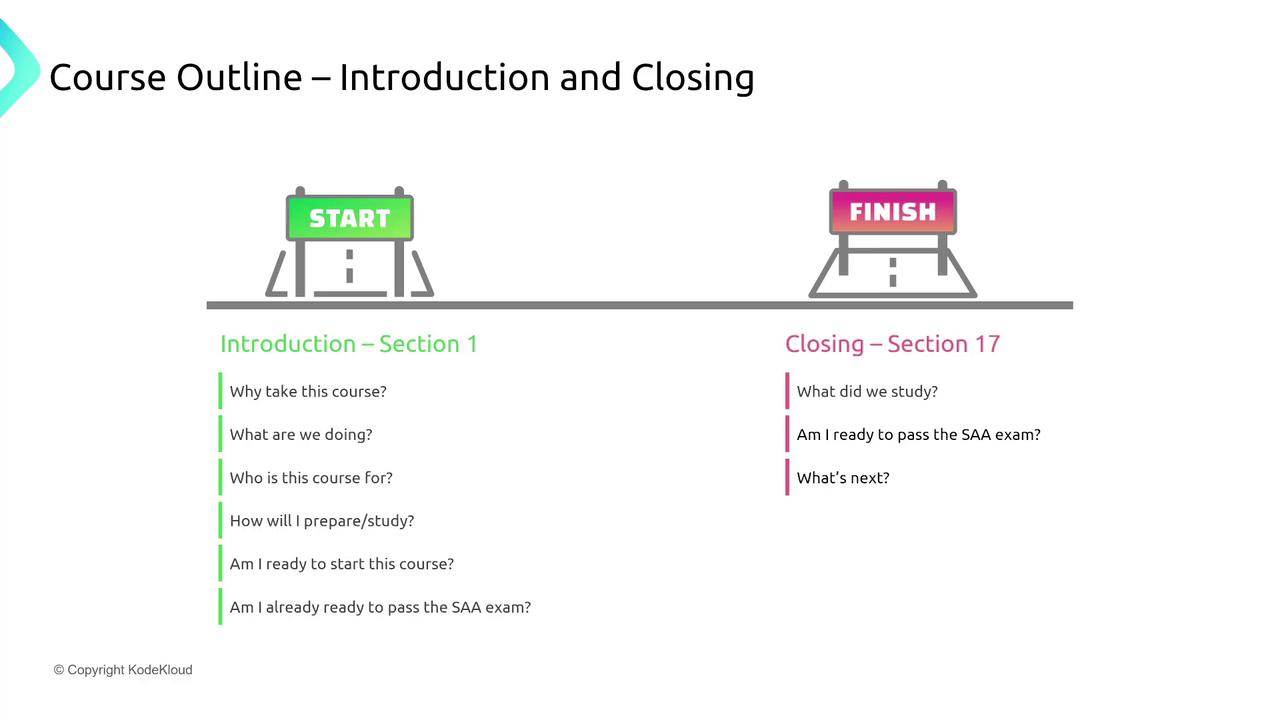
This lesson is ideal for individuals who have already completed the Cloud Practitioner exam or who possess foundational cloud computing knowledge. If you’re new to this area, we highly recommend taking the Cloud Practitioner course first. Sanjeev Thiyagarajan and I co-teach the Cloud Practitioner course, so you’ll benefit from diverse perspectives. Once you’ve finished the Cloud Practitioner material, return here fully prepared.
Assessments and Course Structure
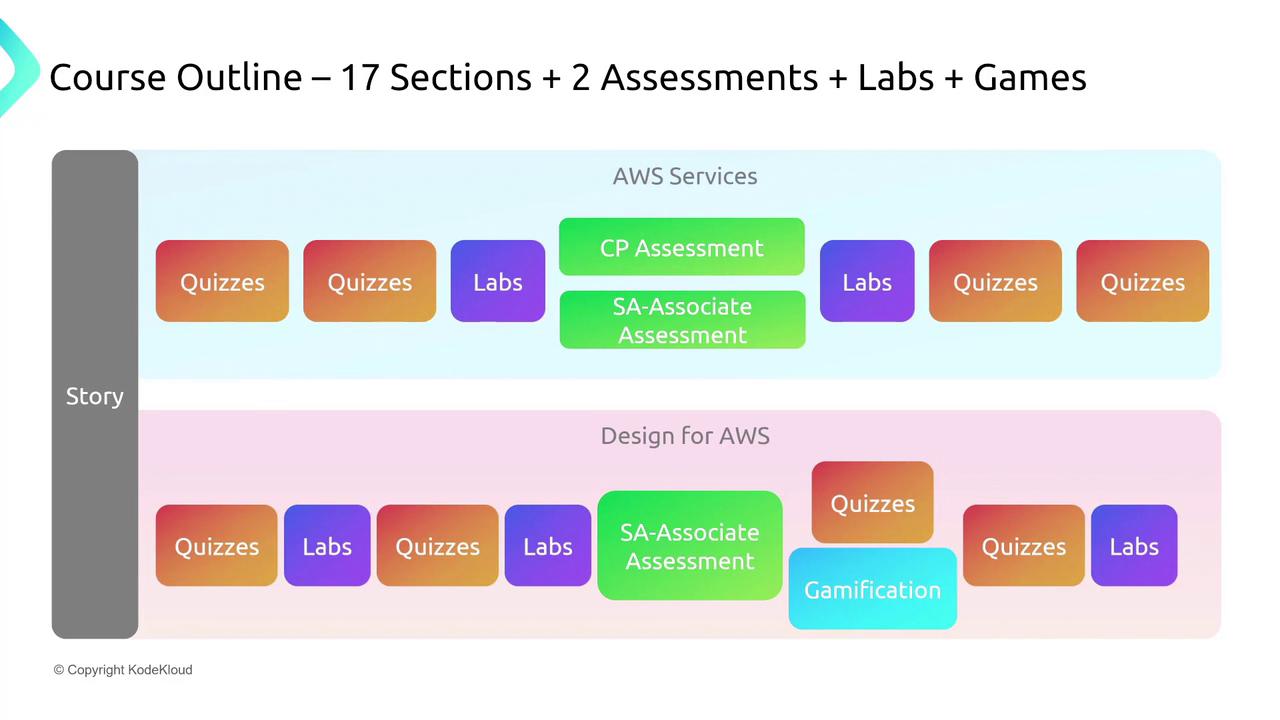
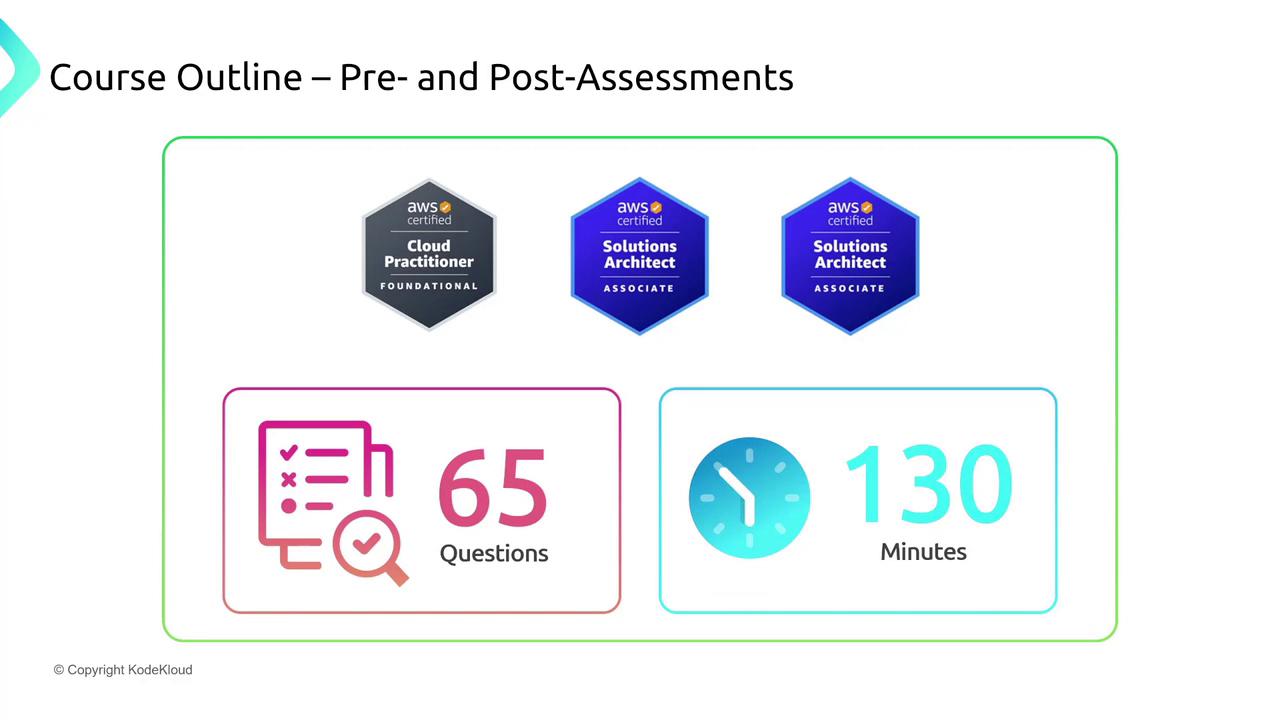
Before diving into the course materials, assessments are available for both Cloud Practitioner and Solutions Architect Associate levels. Passing the Cloud Practitioner assessment indicates that you already have the foundational knowledge needed for this course. If not, consider revisiting that material before proceeding further. The course is divided into two major sections:-
AWS Services Section
In this section, you will learn about various AWS services through labs, quizzes, and presentations. -
Design for AWS Section
This section focuses on core design fundamentals for AWS services. It includes quizzes, interactive questions, and a design challenge that tests your ability to optimize for security, reliability, performance, and cost management.
Detailed Course Breakdown
Meet Your Services
After the course introduction, the first major section is titled “Meet Your Services.” Here, you will dive into various service categories such as Networking, Storage, Compute, and Database. While it is not necessary to memorize every service detail, organizing your notes by category (for example, all networking services grouped together) can be very helpful. By the end of this section, you might be familiar with between 100 and 150 AWS services.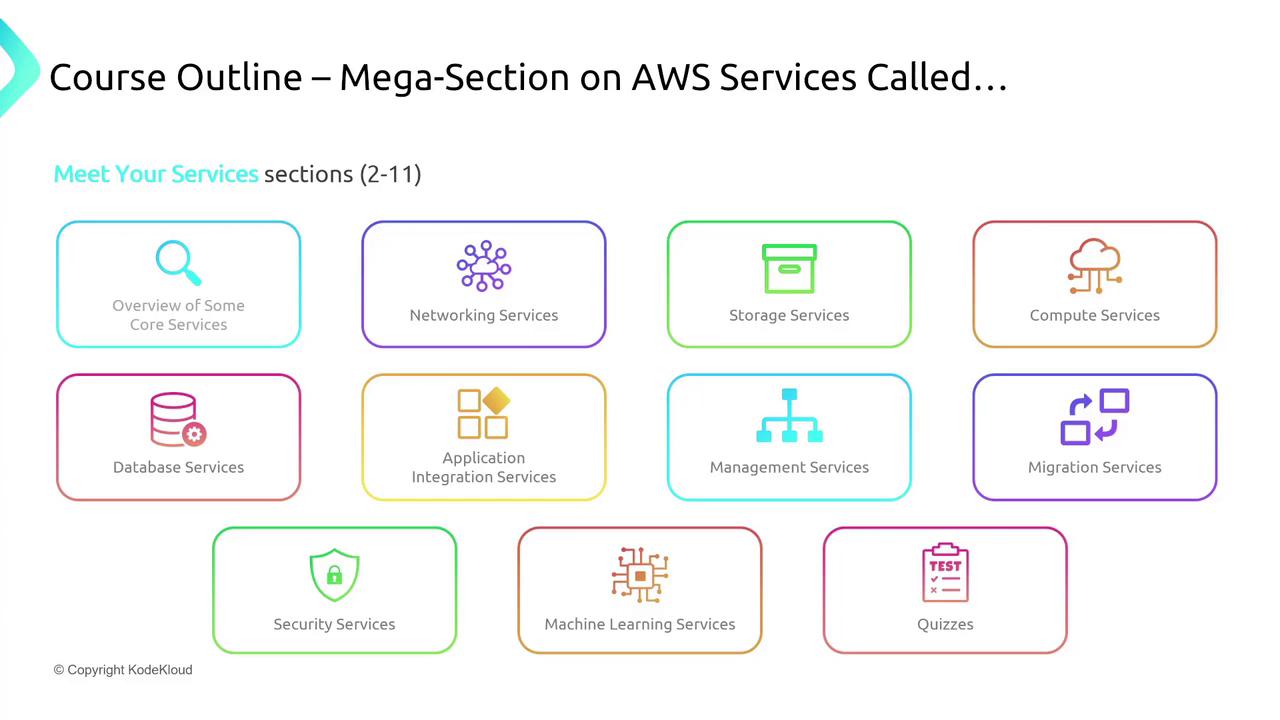
Design for X
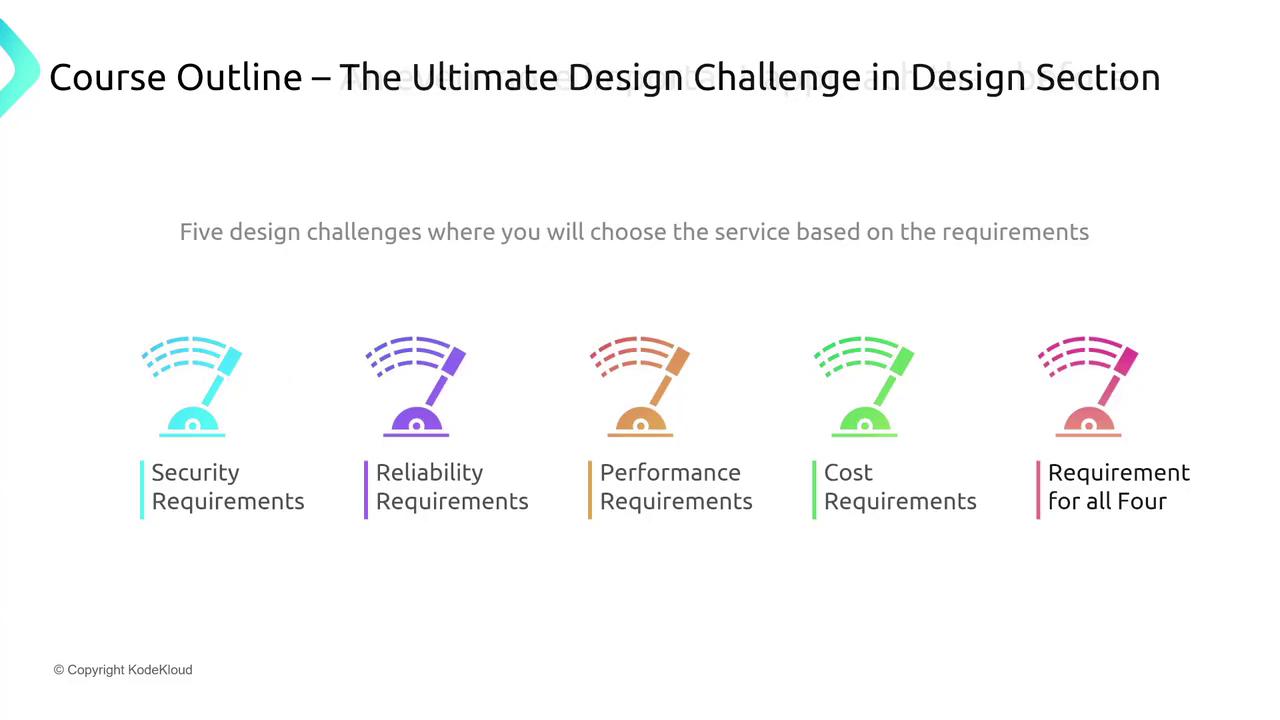
The second major section, “Design for X,” focuses on enhancing key design elements such as security, reliability, performance, and cost optimization. This section reinforces each design concept with quizzes, followed by an ultimate design challenge. In this challenge, you will analyze diagrams to identify service modifications that enhance security, reliability, performance, or cost efficiency.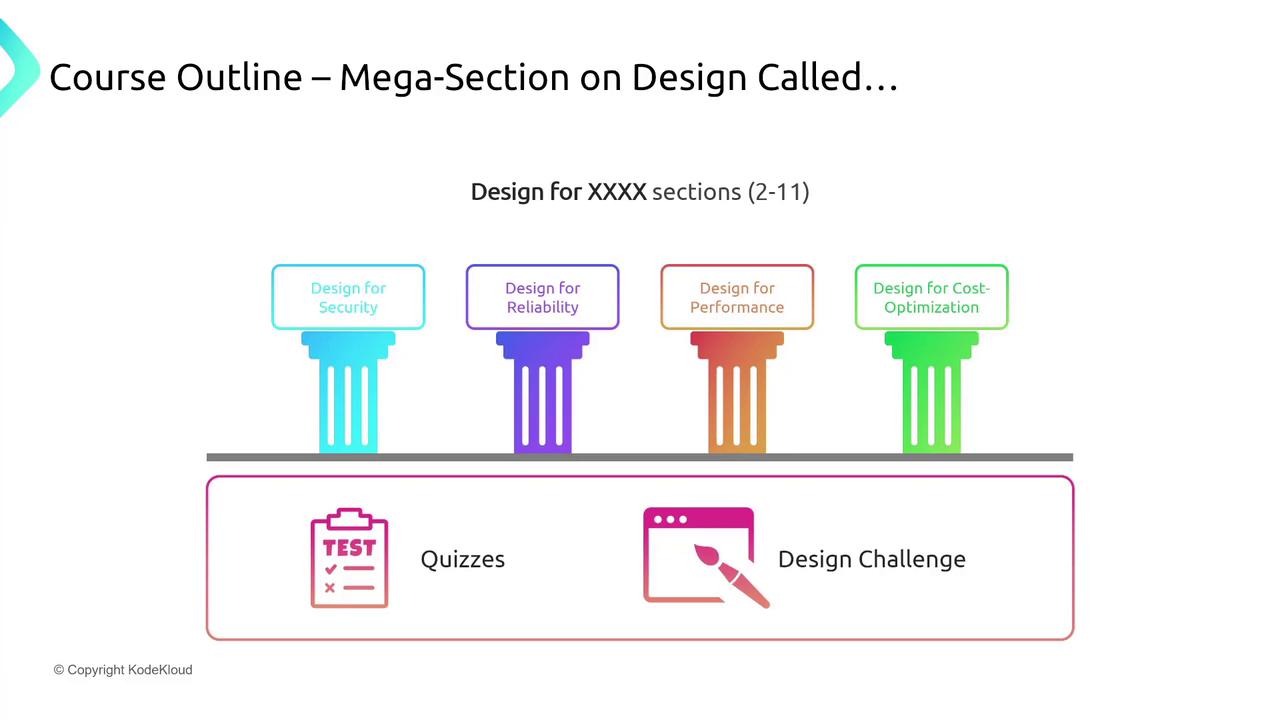
Study Tips and Final Thoughts
This is a comprehensive course, and it’s normal to feel overwhelmed at first. Here are some tips to help you study effectively:- Study one small section at a time with a systematic approach.
- Establish a regular study schedule—even dedicating just 15 minutes a day can lead to steady progress.
- Engage actively with hands-on labs and AWS playgrounds; however, be mindful to manage costs and avoid unnecessary expenses.
- Experiment with different note-taking techniques, such as mind maps or sketches, to reinforce your understanding.
- Stay focused and patient, and try not to let distractions interrupt your study routine.
Breaking down the material and taking consistent notes will significantly improve your retention and understanding. Even small, regular study sessions can cumulatively lead to a successful exam performance.