This article explores AWS Proton, a service that simplifies infrastructure management for microservices through standardized templates and automated deployments.
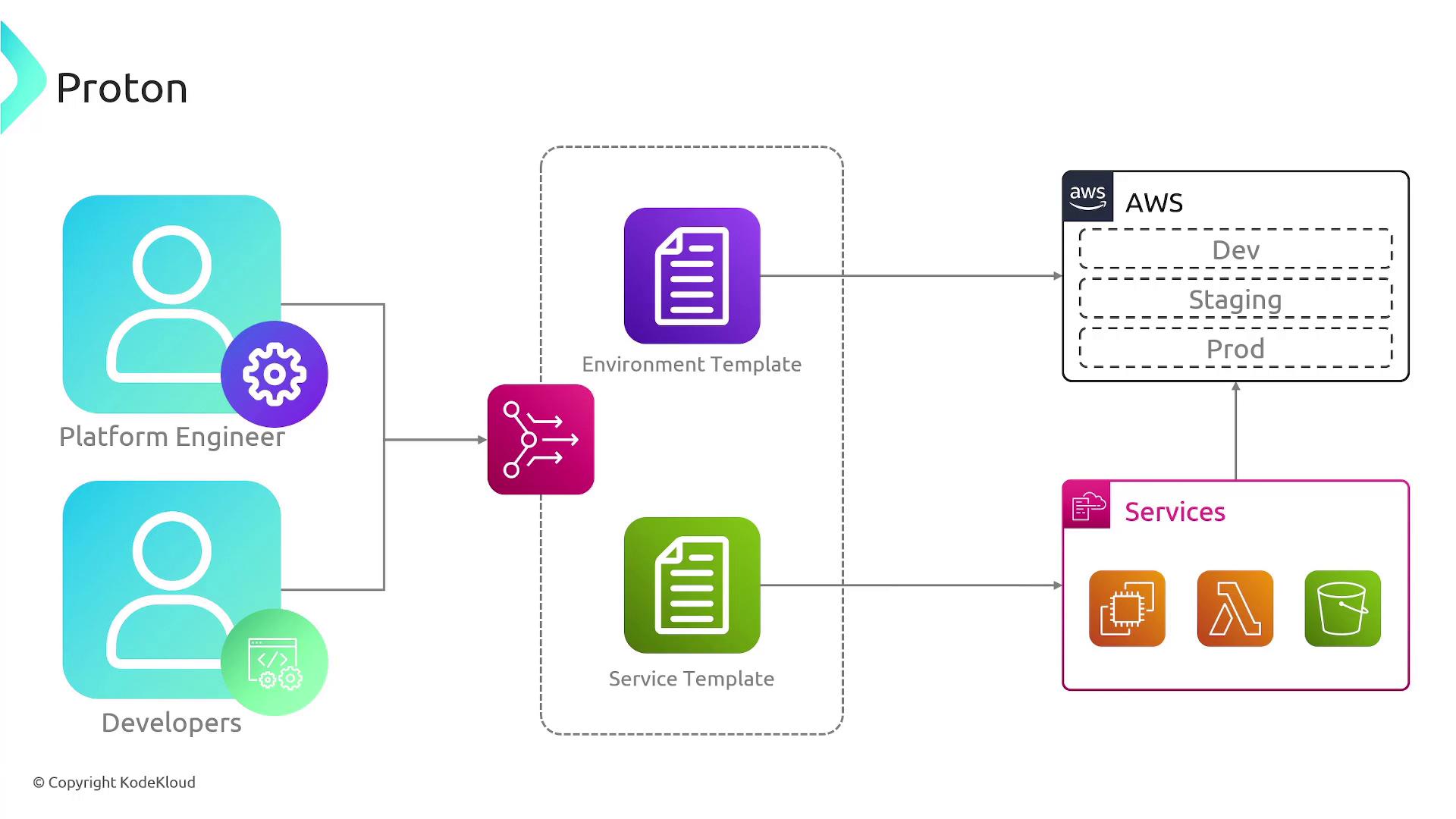
In this lesson, we explore AWS Proton, a powerful service designed to simplify infrastructure management in a microservices-based environment. As organizations increasingly adopt microservices, managing and deploying infrastructure can become complex and time-consuming. Instead of dealing with disparate deployment practices and environments maintained by different teams, AWS Proton offers a standardized approach.AWS Proton standardizes the application stack by allowing administrators or platform team members to create environment and service templates. An environment template defines the shared infrastructure required across multiple applications or microservices, while a service template specifies the infrastructure for a specific application or service. These templates ensure consistent deployment protocols across teams, leading to uniform and reliable configurations.
When developers need to deploy microservice infrastructure, they simply select a standardized service template. AWS Proton automatically creates the service, sets up a CI/CD pipeline, and manages the service instances running the source code. This significantly reduces the operational burden, allowing developers to focus on writing code rather than managing infrastructure.
Standardizing deployments with AWS Proton not only improves consistency across different environments but also minimizes troubleshooting challenges due to varied configurations.
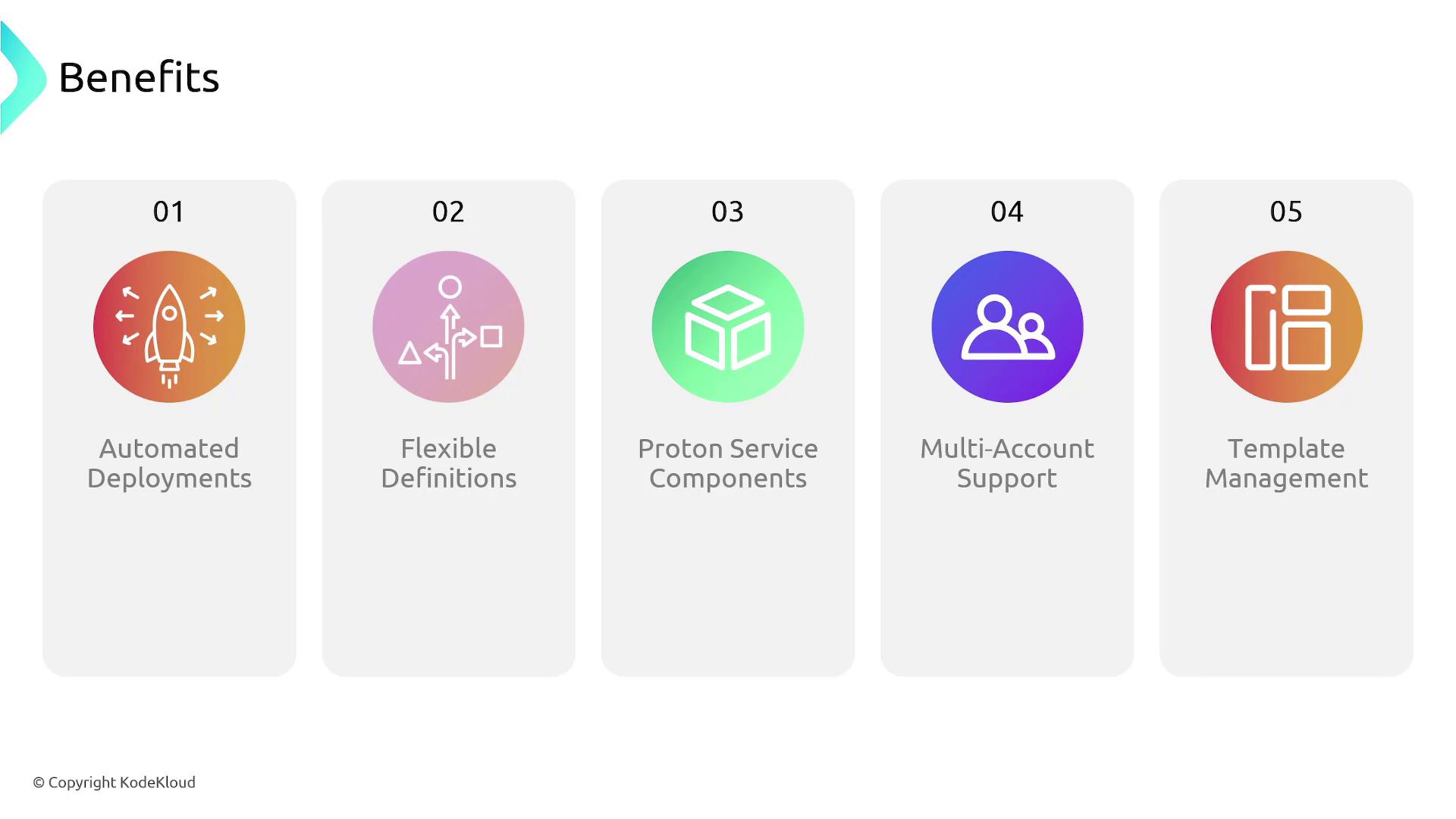
Simplified Application Stack Templates: Streamline the creation of application stack templates, including ready-to-use CI/CD pipelines for developers.
Flexible Service Provisioning: Supports service deployment with or without a pipeline, enhancing the overall developer experience.
Enhanced Template Customization: Easily extend existing templates to support a broader range of use cases, enabling developers to create intricate components using infrastructure as code.
Multi-Account Management: Manage all resources centrally from a single AWS account, simplifying administrative oversight.
Built-In Template Management: Store and manage reusable versions of application stacks within AWS Proton, ensuring consistency and ease of updates.
AWS Proton is designed to standardize microservices deployments by providing a reusable and consistent infrastructure management framework. By automating the heavy lifting involved in infrastructure deployment, Proton allows development teams to concentrate on building and enhancing their applications. This results in improved reliability across environments and a reduced operational burden for developers.For more information about AWS Proton and other AWS services, refer to the AWS Documentation.