Overview of Migration and Transfer Services
AWS offers a host of services that facilitate data and workload migration. We begin by examining the role of the Application Discovery Service and the Migration Hub. The Migration Hub provides a centralized dashboard for tracking migration data. However, it offers limited options for adjusting reliability directly.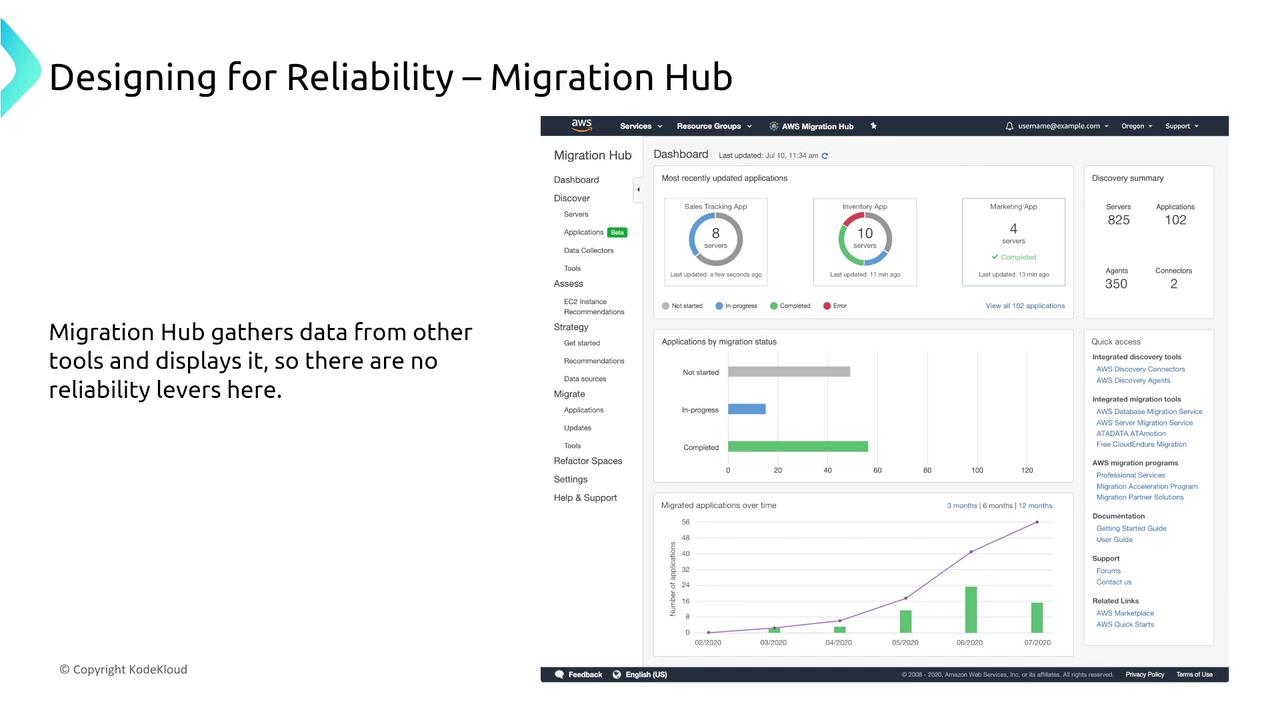
AWS Application Discovery Service
Unlike the Migration Hub, the AWS Application Discovery Service actively detects and collects configuration and performance data from your on-premises applications. It supports multiple discovery methods, including agents, agentless collectors, and manual entries.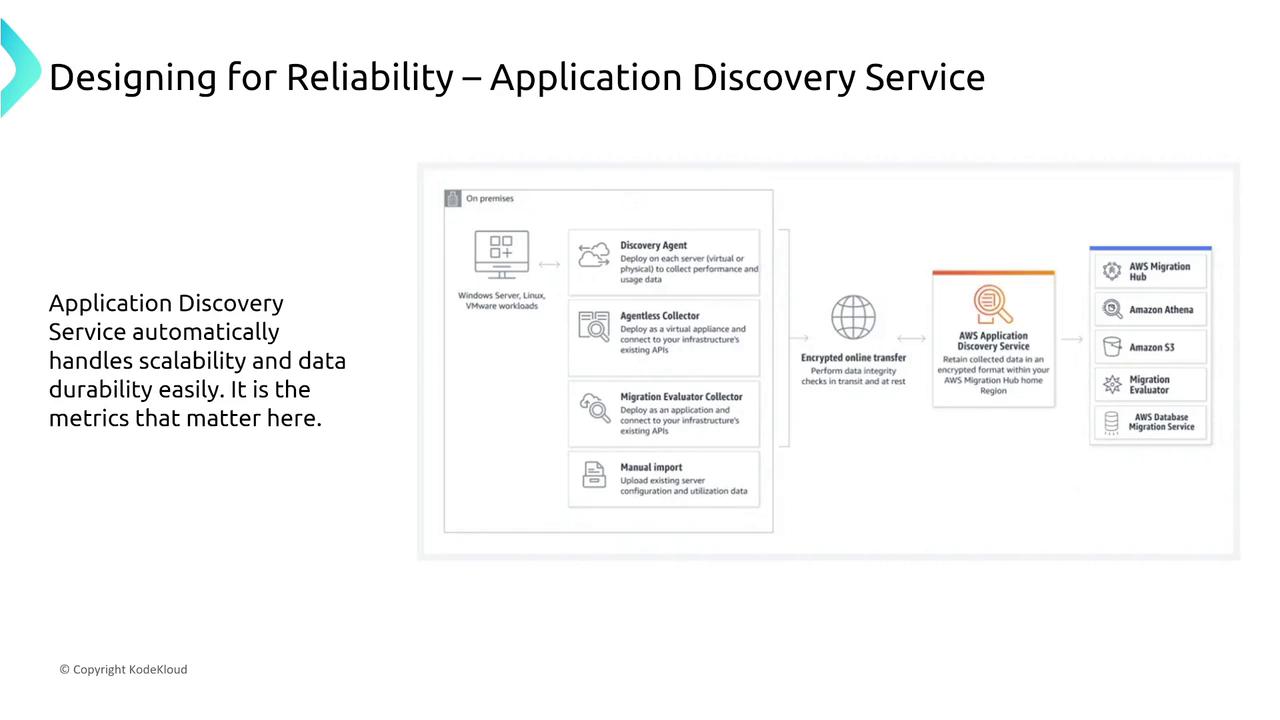
AWS Application Migration Service
The AWS Application Migration Service is built to simplify and automate the migration process. It facilitates the lift-and-shift of servers from your data center to Amazon EC2, ensuring a controlled and repeatable workflow. Being highly managed, this service minimizes manual intervention while emphasizing redundancy and reliability.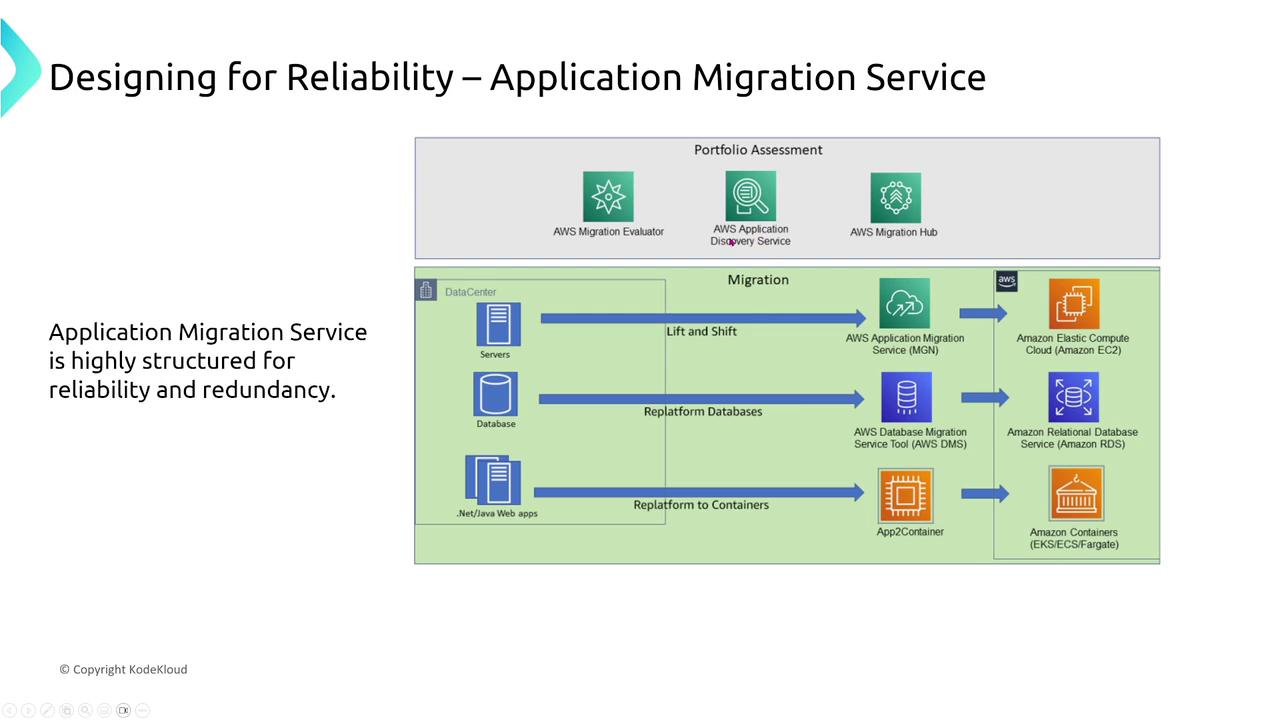
Because the process is nearly automated, there are few custom adjustments for reliability. Instead, AWS ensures a predefined, repeatable workflow.
AWS Database Migration Service (DMS)
The AWS Database Migration Service (DMS) transfers data between databases using a replication instance and change data capture. While efficient, the replication instance introduces a single point of failure. Multi-AZ support is available; however, it does not include automatic failover during failures in full load scenarios. Instead, manual intervention to restart the replication job is required.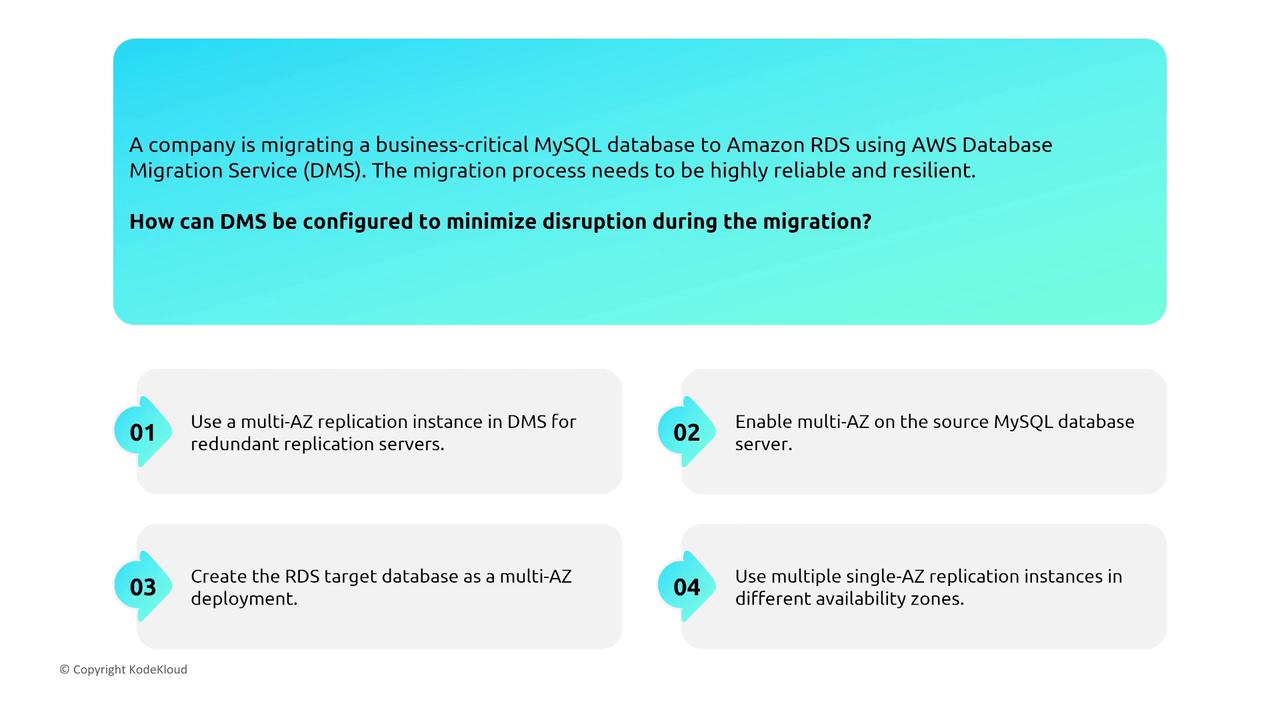
Ensure you have procedures in place to manually restart replication jobs in case of a failure, despite using Multi-AZ configurations.
Elastic Disaster Recovery Service (EDR)
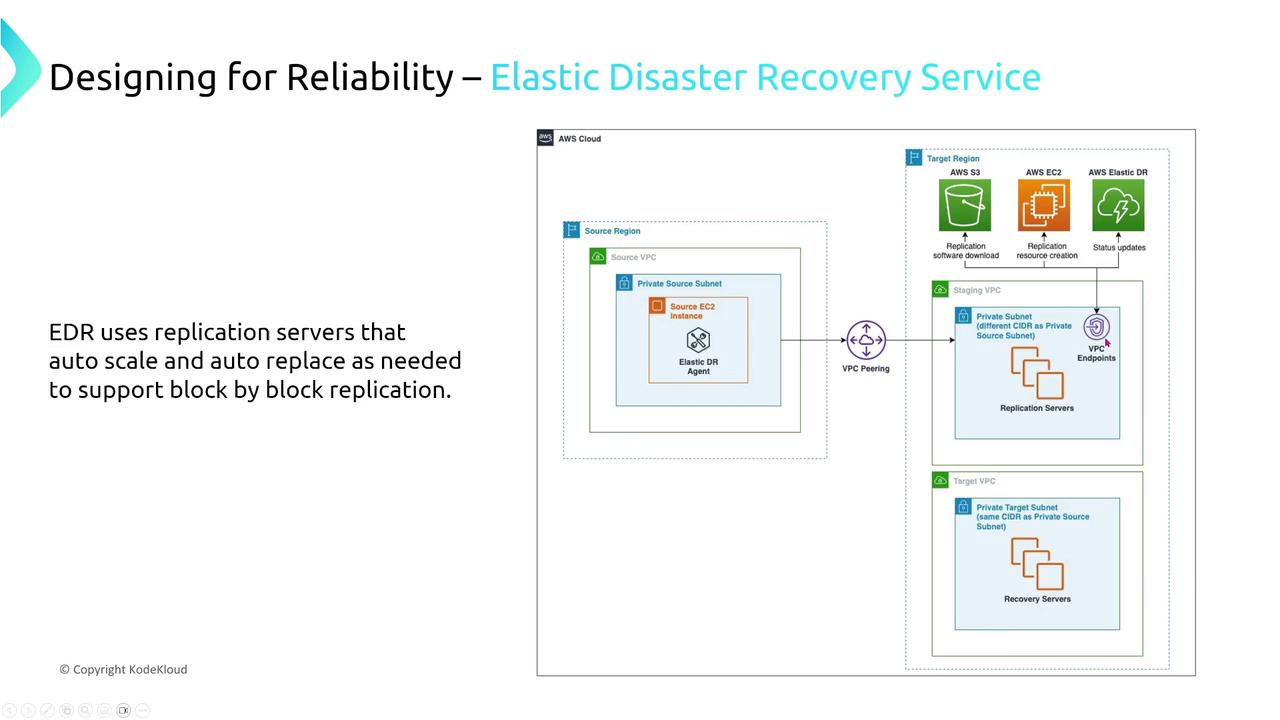
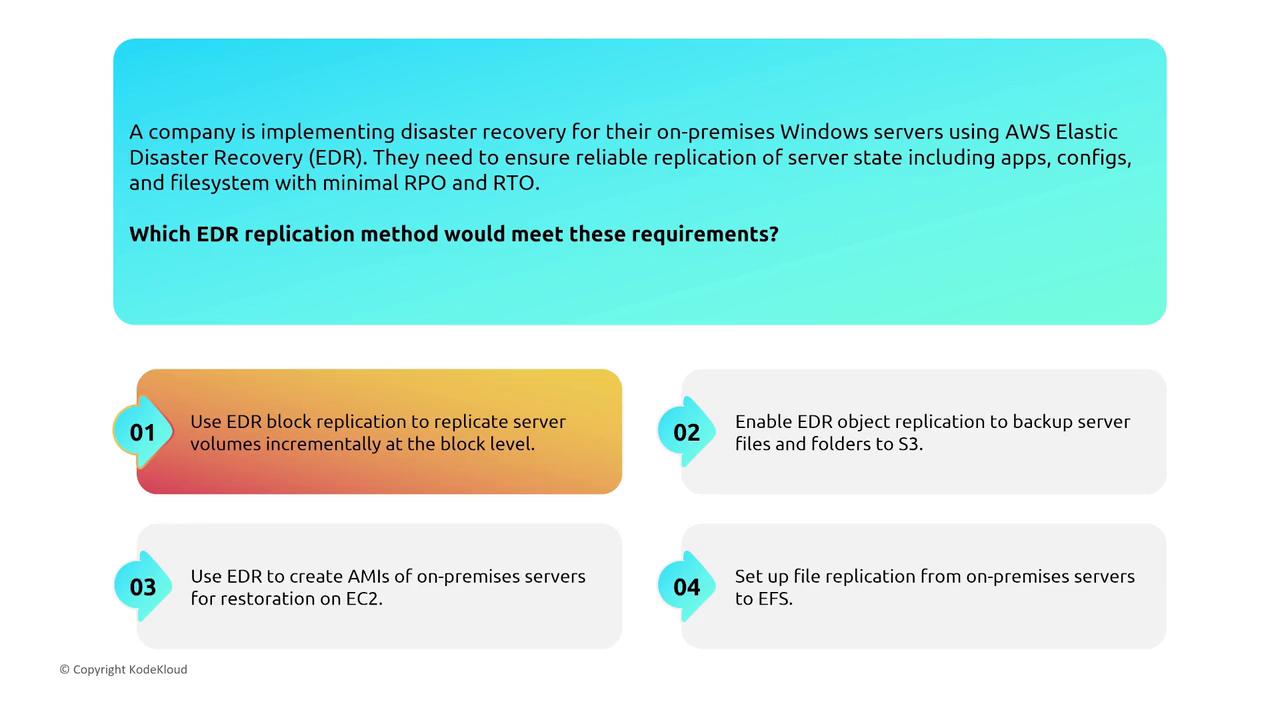
Formerly known as CloudEndure, the Elastic Disaster Recovery Service delivers near-real-time, block-by-block replication from on-premises systems to AWS. EDR utilizes a staging VPC and scalable replication servers, making it an excellent solution for meeting strict Recovery Point Objectives (RPO) and Recovery Time Objectives (RTO).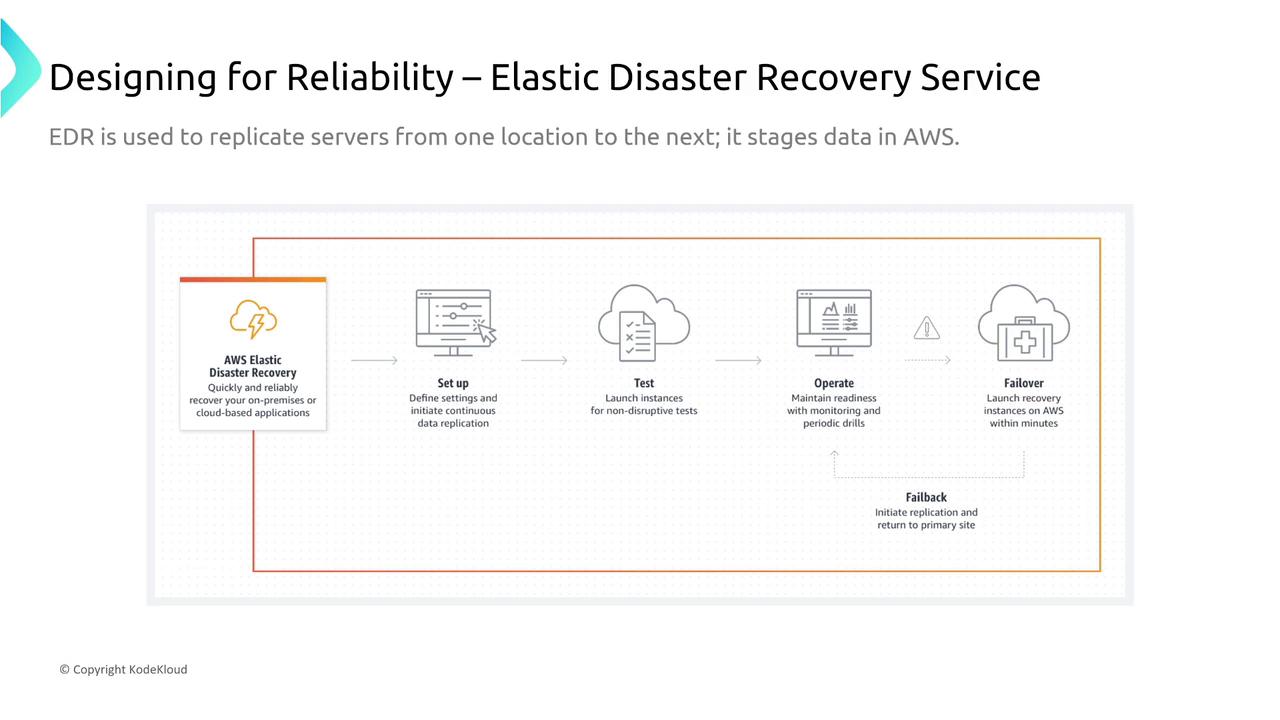
Mainframe Modernization
Mainframe modernization involves migrating legacy mainframe workloads to modern AWS services such as EC2, Lambda, or other managed services. In this context, the reliability of your solution is determined more by the target AWS service than by the modernization process itself.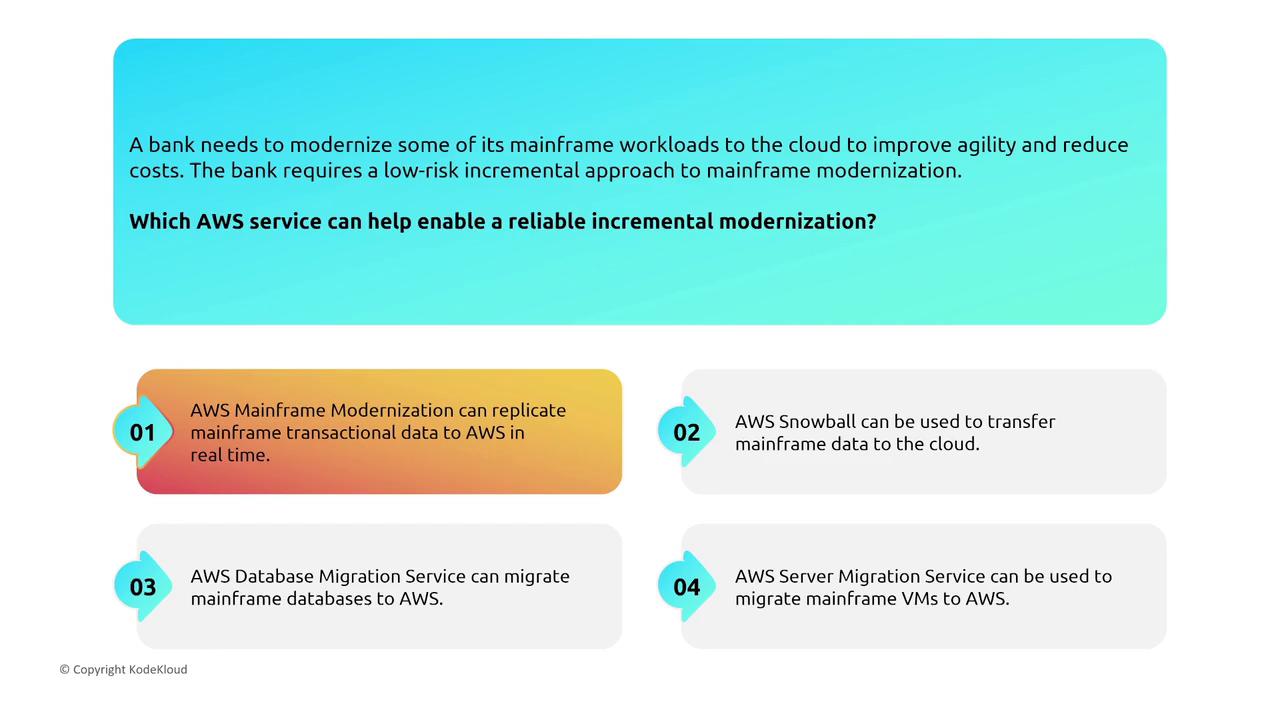
Think of mainframe modernization as the orchestration layer. The inherent reliability is primarily provided by the target AWS services.
AWS Data Transfer and DataSync
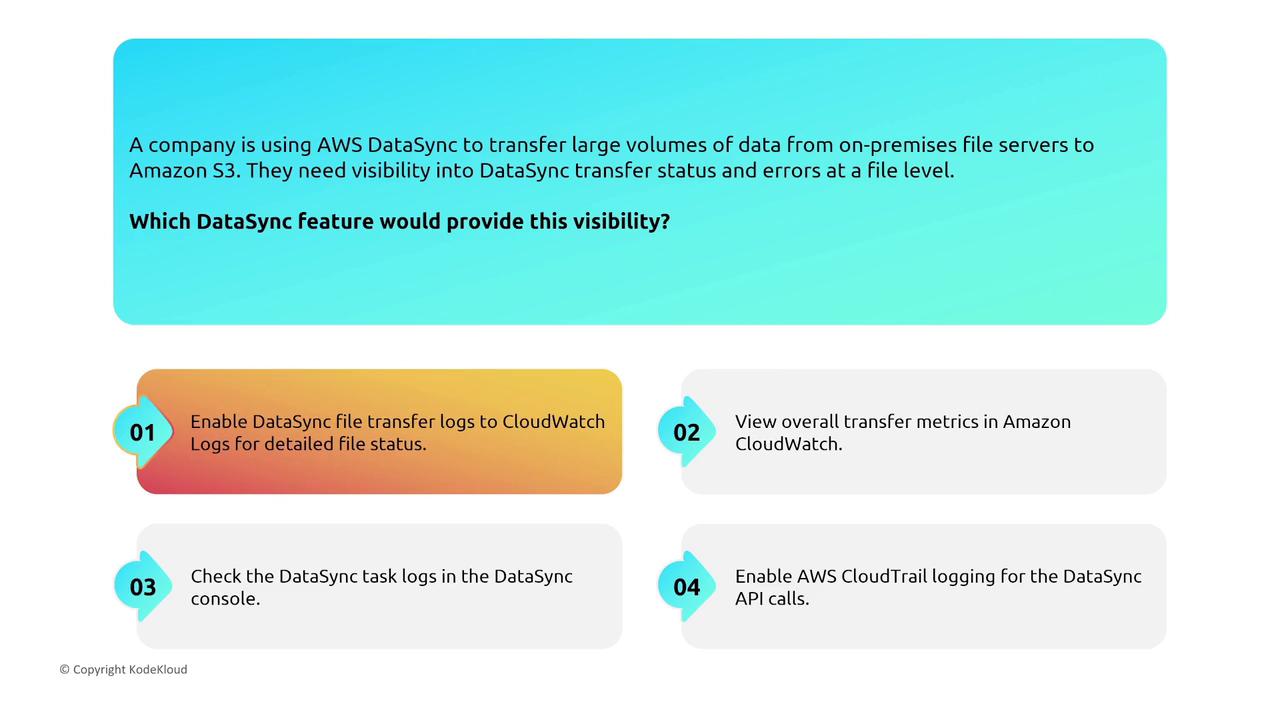
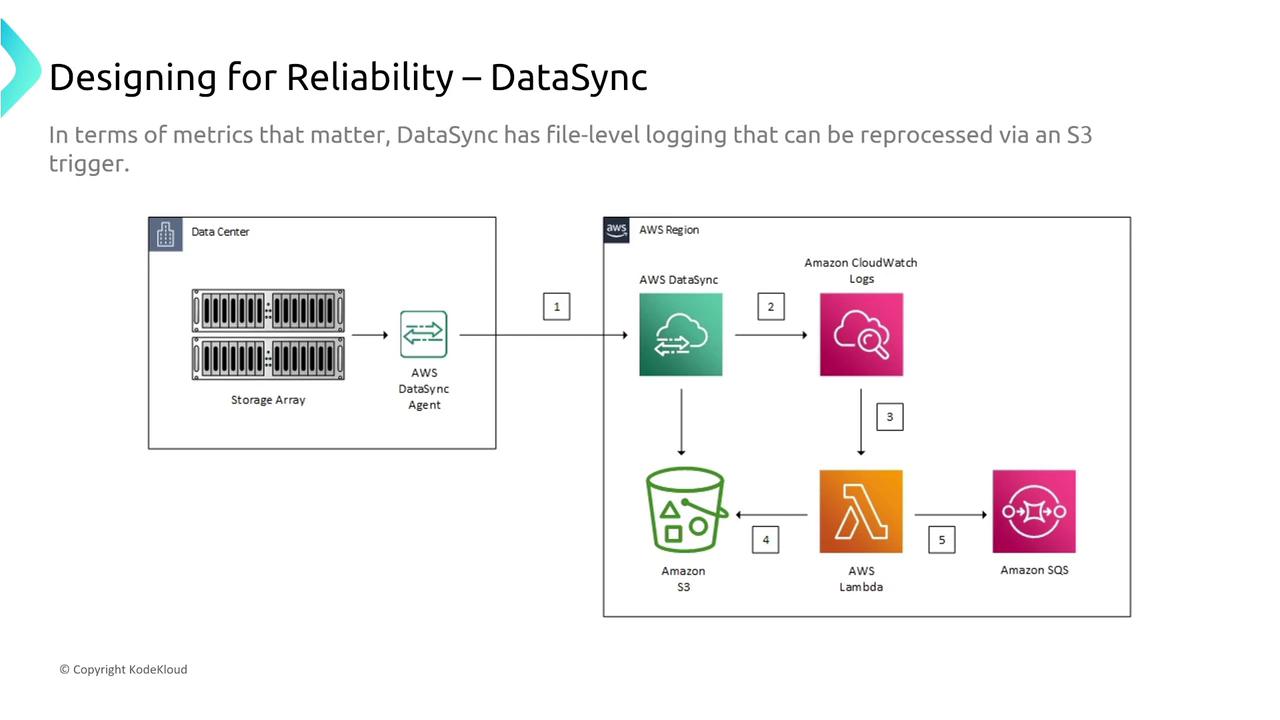
AWS DataSync is designed for secure and efficient data transfers between on-premises storage and AWS storage services. By using a dedicated DataSync agent, it ensures file-level logging and monitoring via S3, CloudWatch, and CloudTrail. For protocol-based transfers (FTP, FTPS, SFTP, or SCP), the service offers built-in reliability features and visibility.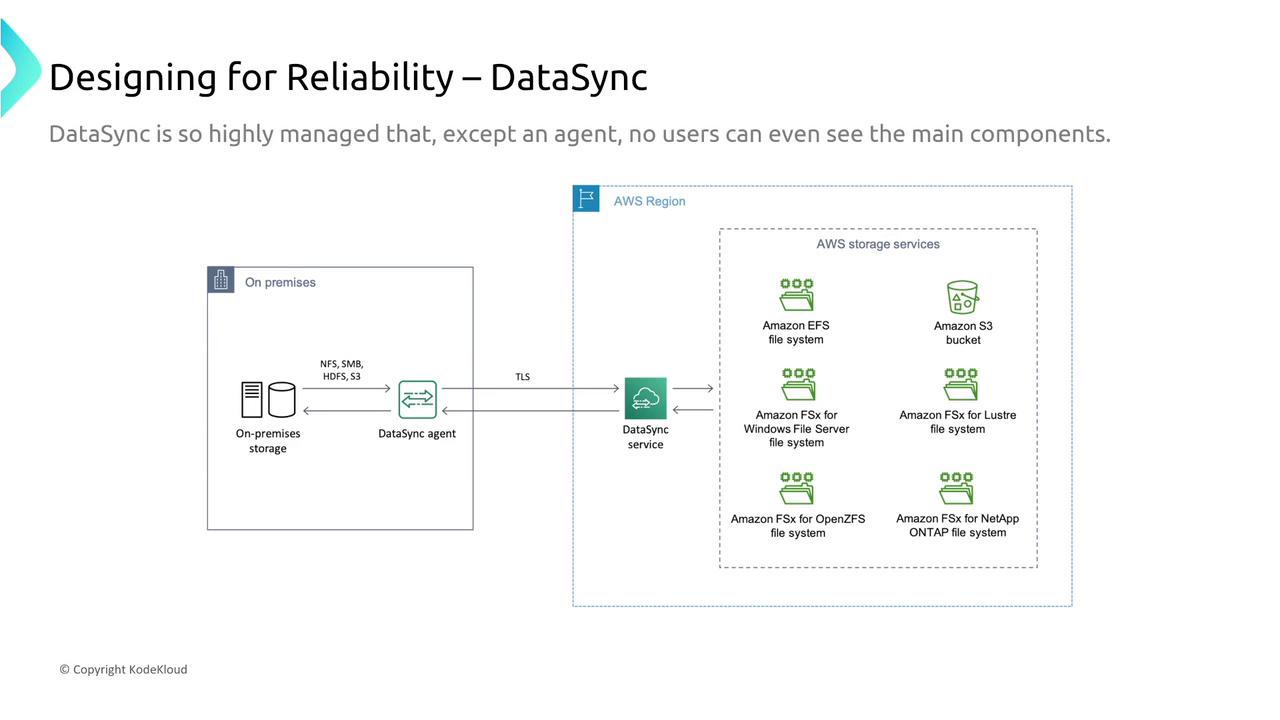
AWS Snow Family Storage Devices
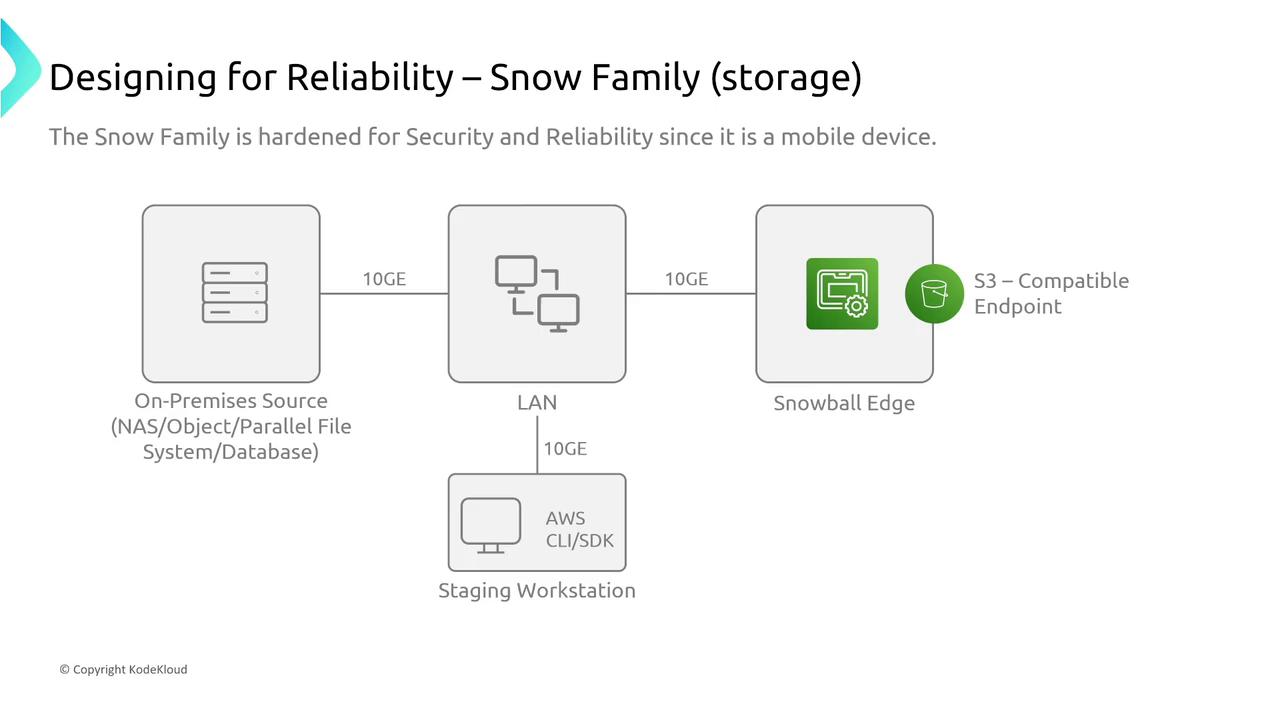
For physical data migration, the AWS Snow Family—comprising devices like Snowcone and Snowball Edge—is engineered for reliable and secure data transfer in challenging environments. These rugged devices are pre-hardened for transit and are ideal for moving large volumes of data from remote or harsh locations.