

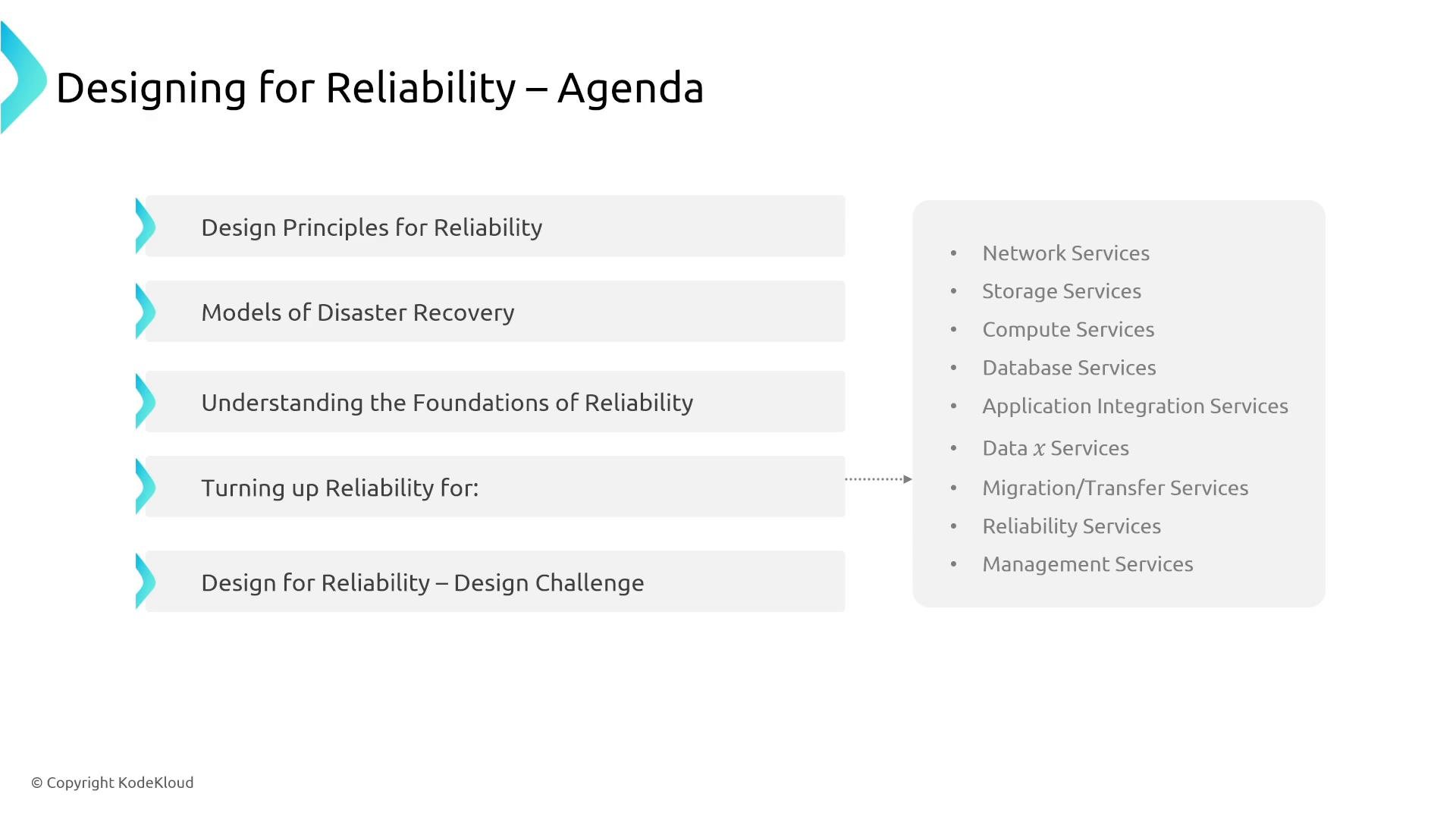
- Design principles and foundations for reliability
- Disaster recovery models and trade-offs (RTO / RPO)
- Service-specific reliability guidance (networking, storage, compute, database, application integration, data, migration, management/security)
- Demos and hands-on labs
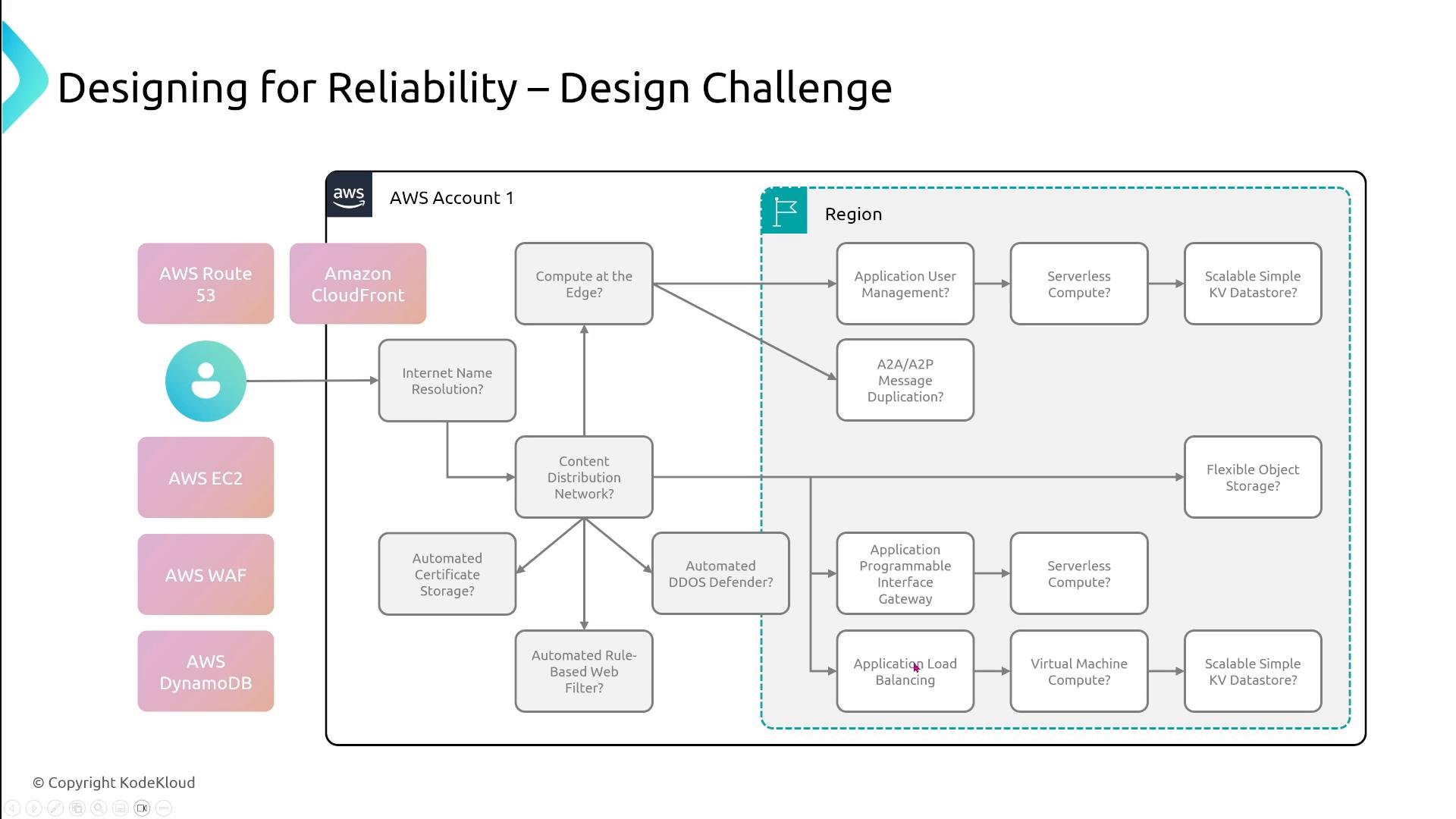
- Final design-for-reliability challenge
- Scale automatically to match demand
- Automatically recover from failures
- Automate operations where possible
- Design assuming components will fail (plan for failure)
Design Principles for Reliability
The foundation of reliability design is to combine resilient infrastructure with fault-tolerant application patterns and strong operational processes. We’ll examine each principle and show how specific AWS services and configurations enable them.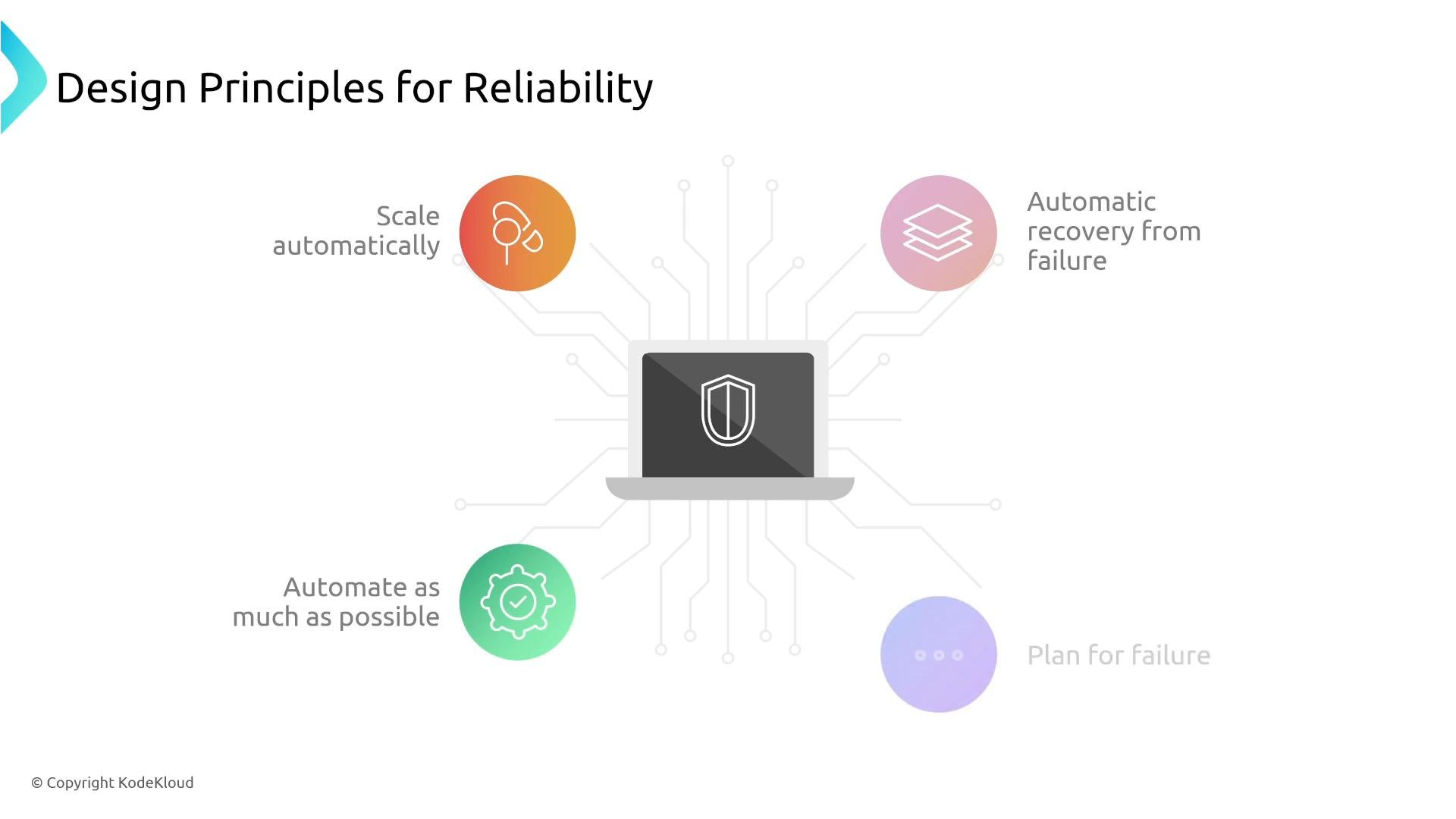
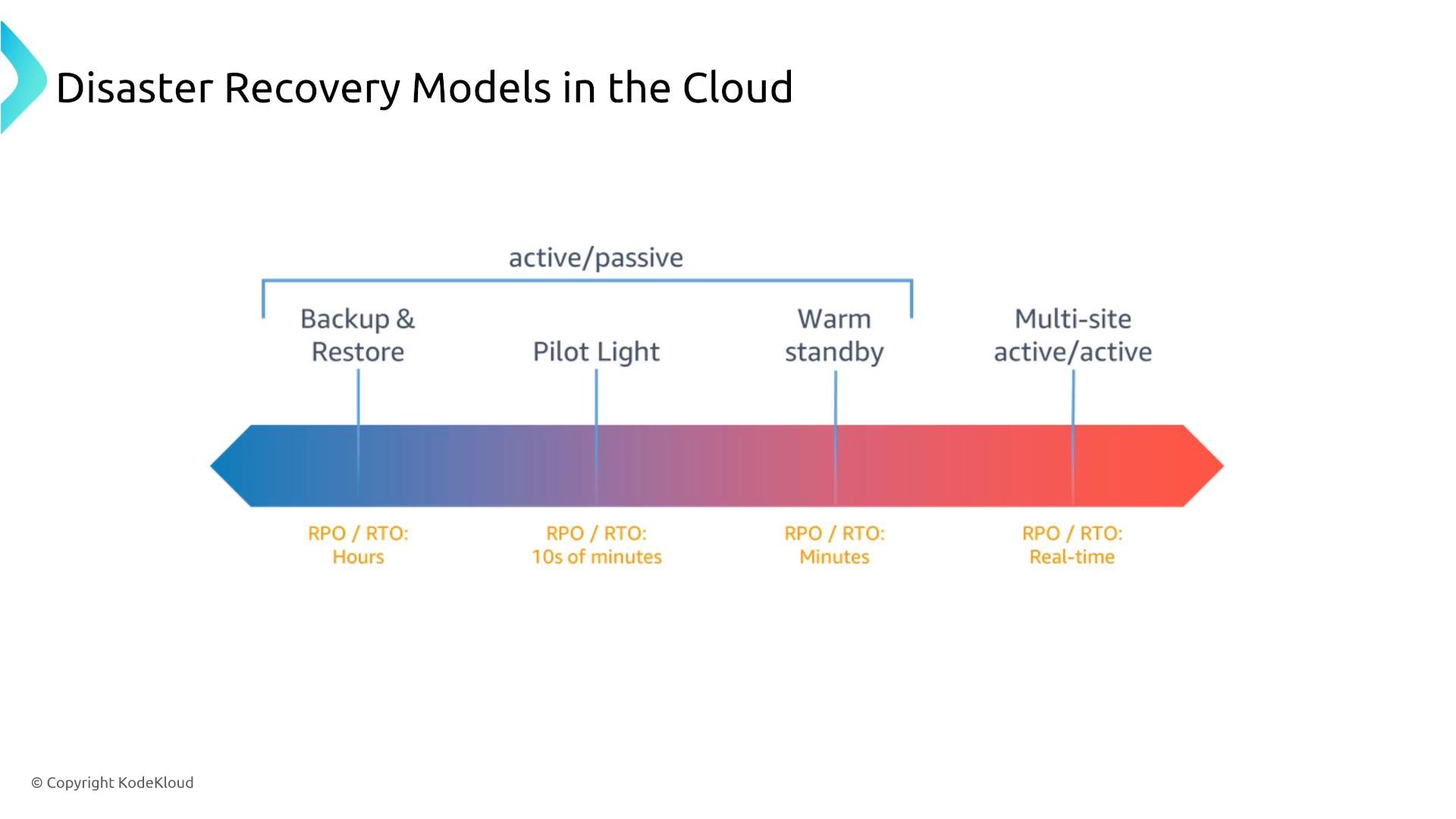
Disaster Recovery (DR) Models — Overview
Disaster recovery models are a frequent exam topic and a critical part of designing for reliability. Each model represents a trade-off between cost, complexity, and recovery objectives:- Backup and restore — lowest cost, higher RTO/RPO
- Pilot light — reduced replication footprint, moderate RTO/RPO
- Warm standby — running scaled-down production replicas, better RTO/RPO
- Multi-site active/active — fully active across regions, lowest RTO/RPO but highest cost and complexity
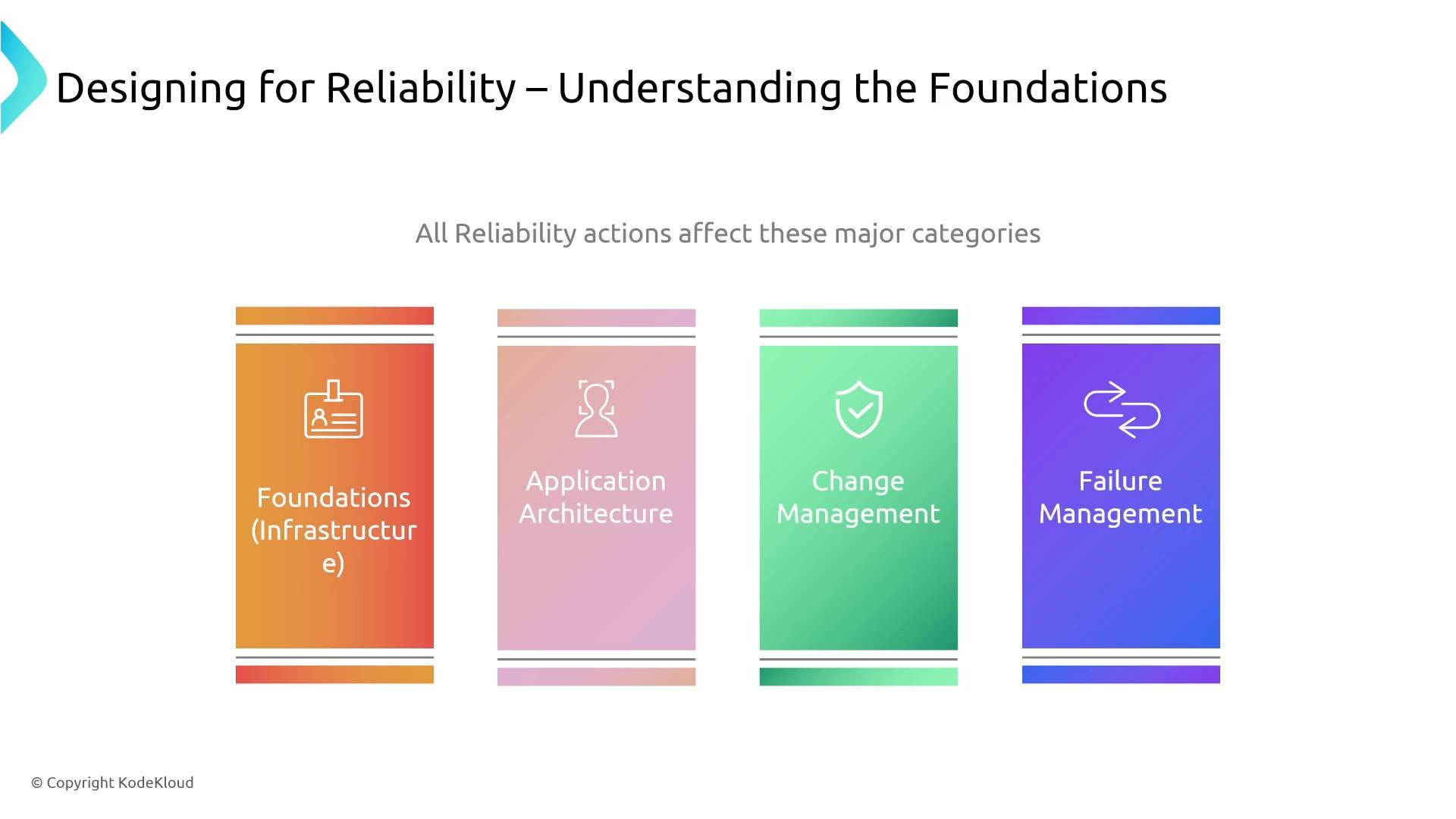
Reliability Action Categories
We organize reliability work into four major categories so you can prioritize design and operational effort:- Foundations (infrastructure): availability zones, multi-region planning, redundancy
- Application architecture: stateless design, graceful degradation, retries/exponential backoff
- Change management: CI/CD, change windows, canary/blue–green deployments
- Failure management: monitoring, alerting, runbooks, incident response
Applying Reliability Across AWS Service Areas
We will apply reliability principles to a set of AWS service areas and show service-specific guidance and best practices:- Networking: VPC design, route resiliency, health checks
- Storage: durability, backup lifecycle, cross‑region replication
- Compute: Auto Scaling Groups, EC2 lifecycle, Lambda retries and concurrency
- Database: replication, read replicas, multi‑AZ and multi‑region options
- Application integration: SQS, SNS, EventBridge, step functions for decoupling
- Data analytics & ML: resilient pipelines, checkpointing
- Migration & transfer: robust data transfer, validation, cutover planning
- Management/governance/security: IAM least privilege, monitoring, automated remediation
- DynamoDB for a scalable key-value store: https://aws.amazon.com/dynamodb/
- AWS Lambda for serverless compute: https://aws.amazon.com/lambda/
- CloudFront for content distribution (CDN): https://aws.amazon.com/cloudfront/
- Route 53 for DNS and health-based routing: https://aws.amazon.com/route53/
This lesson draws heavily on the AWS Well‑Architected Framework’s Reliability pillar. Reviewing that framework alongside this course will help solidify the concepts: https://docs.aws.amazon.com/wellarchitected/latest/reliability-pillar/welcome.html
Links and References
- AWS Well‑Architected Framework — Reliability pillar: https://docs.aws.amazon.com/wellarchitected/latest/reliability-pillar/welcome.html
- DynamoDB: https://aws.amazon.com/dynamodb/
- AWS Lambda: https://aws.amazon.com/lambda/
- Amazon CloudFront: https://aws.amazon.com/cloudfront/
- Amazon Route 53: https://aws.amazon.com/route53/