This article explores Amazon S3 Access Points and how they simplify the management of complex access policies for different user groups.
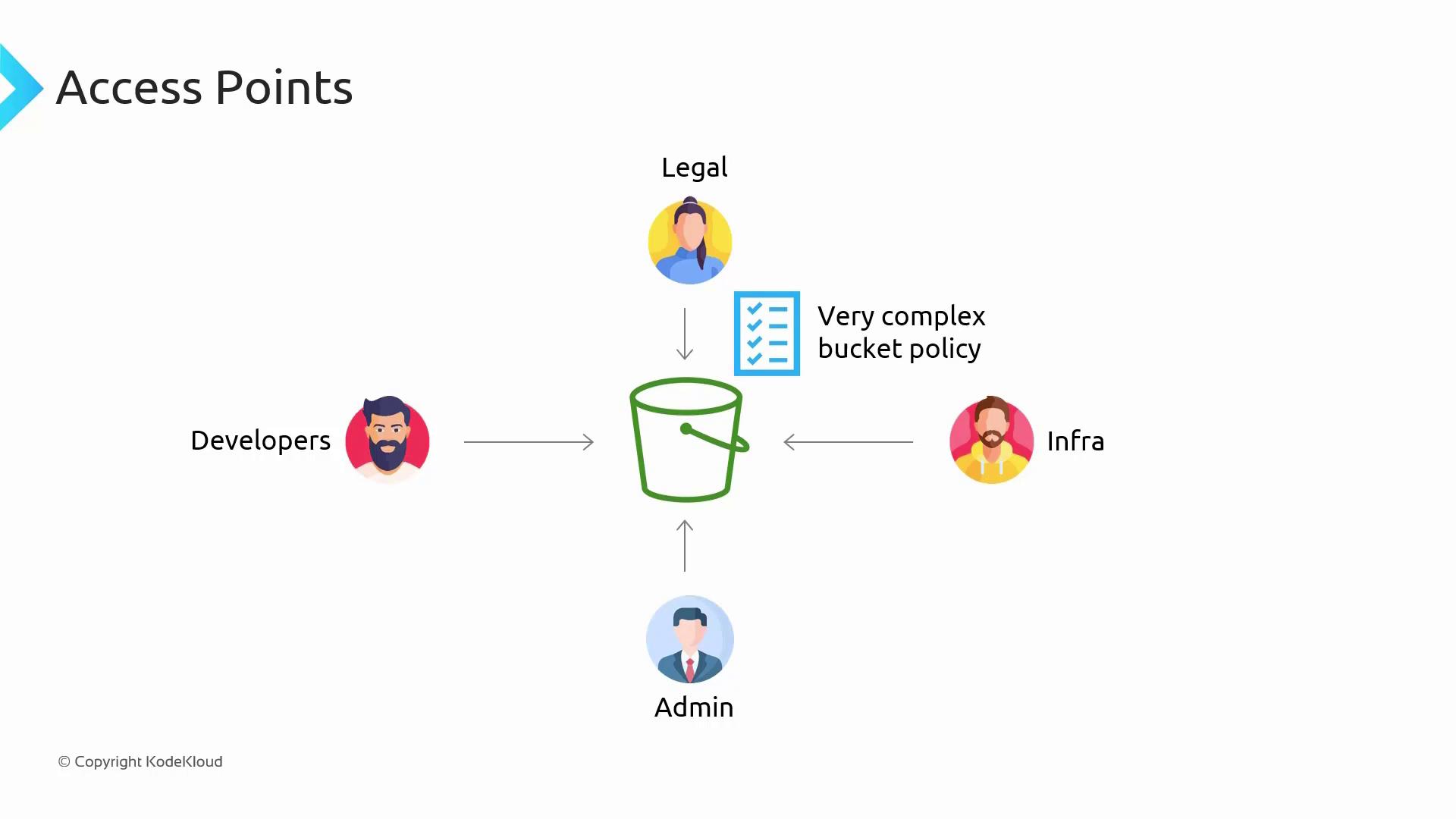
In this lesson, we dive into Amazon S3 Access Points and explore how they simplify the management of complex access policies. Access points provide dedicated “windows” into an S3 bucket, streamlining the creation and application of tailored policies for various groups, users, and roles.Consider an S3 bucket serving multiple stakeholders, such as developers, infrastructure teams, legal, and administrators. Each group may require distinct access levels; for example, developers might access specific folders, the infrastructure team may need full access, while legal may only require read-only permissions.When all these requirements are consolidated into a single bucket policy, the configuration can quickly become overly complex:
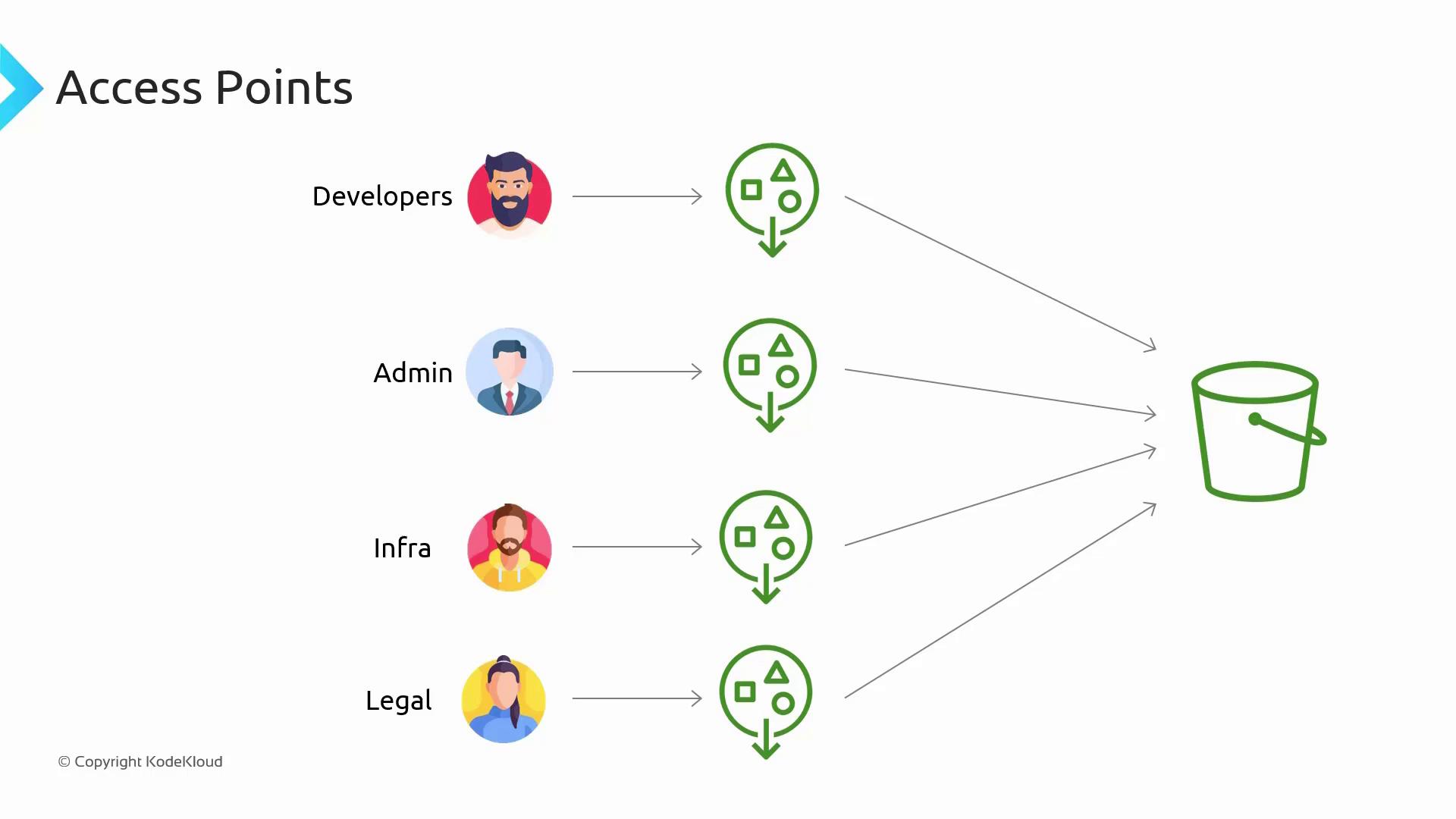
To manage this complexity, you can create separate access points for each group. Each access point acts as a dedicated gateway into the S3 bucket, with its own Amazon Resource Name (ARN) and a set of finely tuned policies.For instance, when developers need access to objects in the S3 bucket, they reference the ARN of their dedicated access point rather than the bucket’s ARN. This segregation ensures that customized policies can be applied based on the specific needs of each group.The following diagram illustrates how different user roles access a central resource through dedicated access points:
Access points not only simplify policy management but also enhance security by isolating permissions. This approach reduces the risk associated with misconfigurations typically found in complex bucket policies.
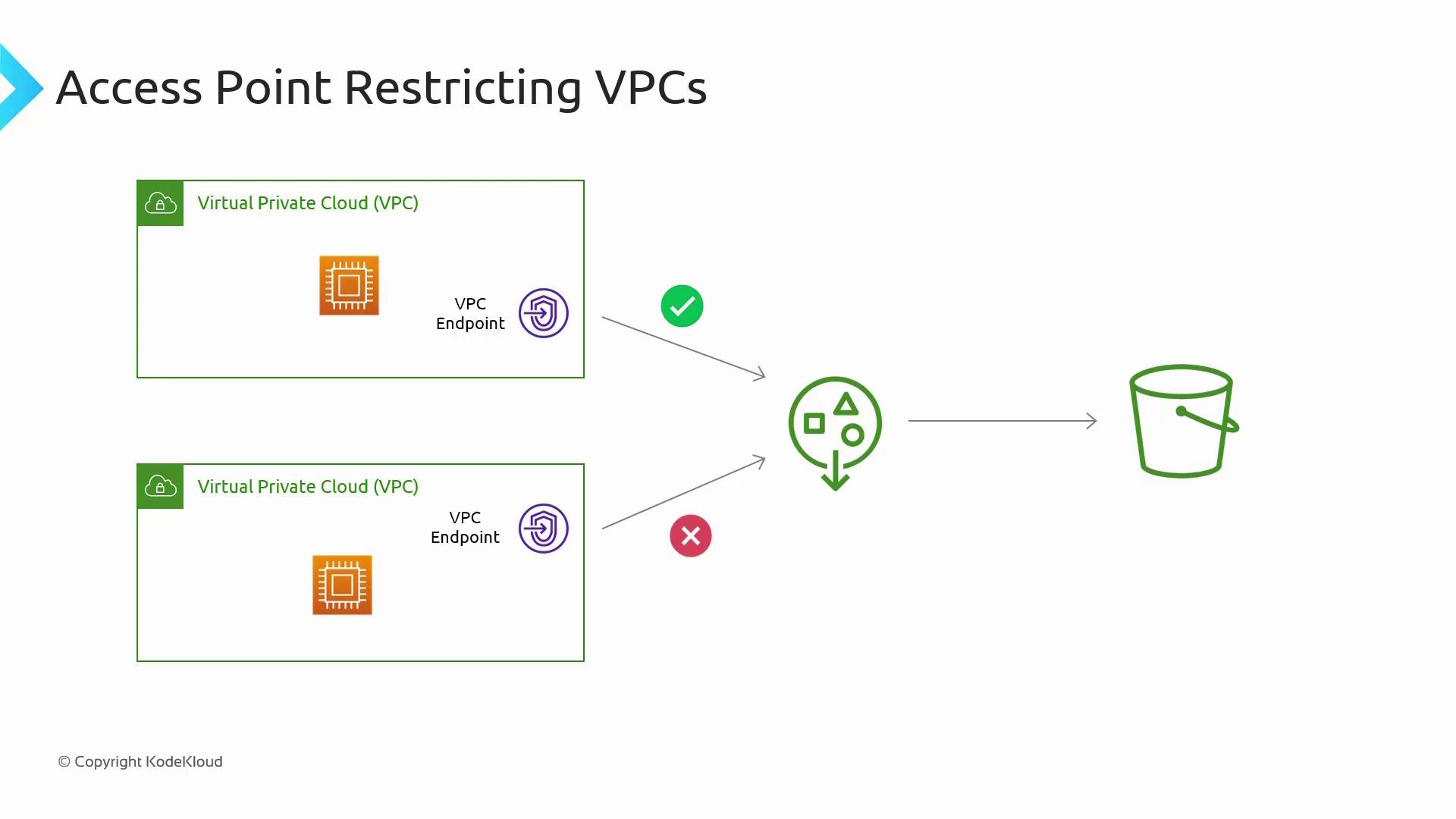
Another significant benefit of access points is their capability to enforce network-level restrictions. For example, you can restrict access to the S3 bucket to specific Virtual Private Clouds (VPCs) by managing VPC endpoints via access points. This ensures that only authorized Amazon Elastic Compute Cloud (EC2) instances within the designated VPCs can access the bucket’s objects.This concept is demonstrated in the diagram below:
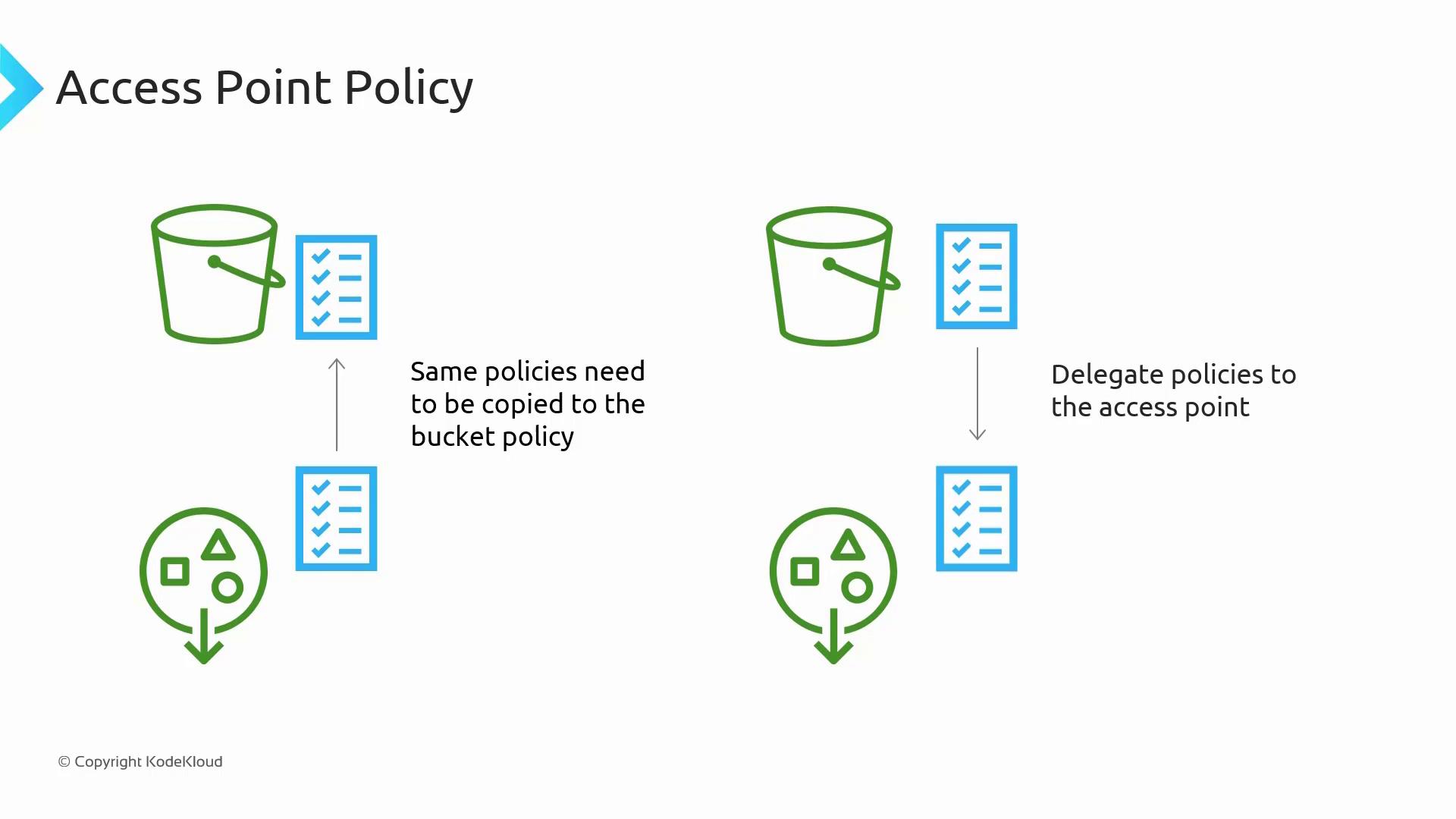
When defining access point policies, it is important to note that the initial configuration requires the access point policy to be mirrored in the bucket policy. However, to streamline management and reduce redundancy, you can modify the bucket policy to delegate access control directly to the access points. This delegation centralizes policy management at the access point level and minimizes the need for frequent updates to the bucket policy.This approach is illustrated below:
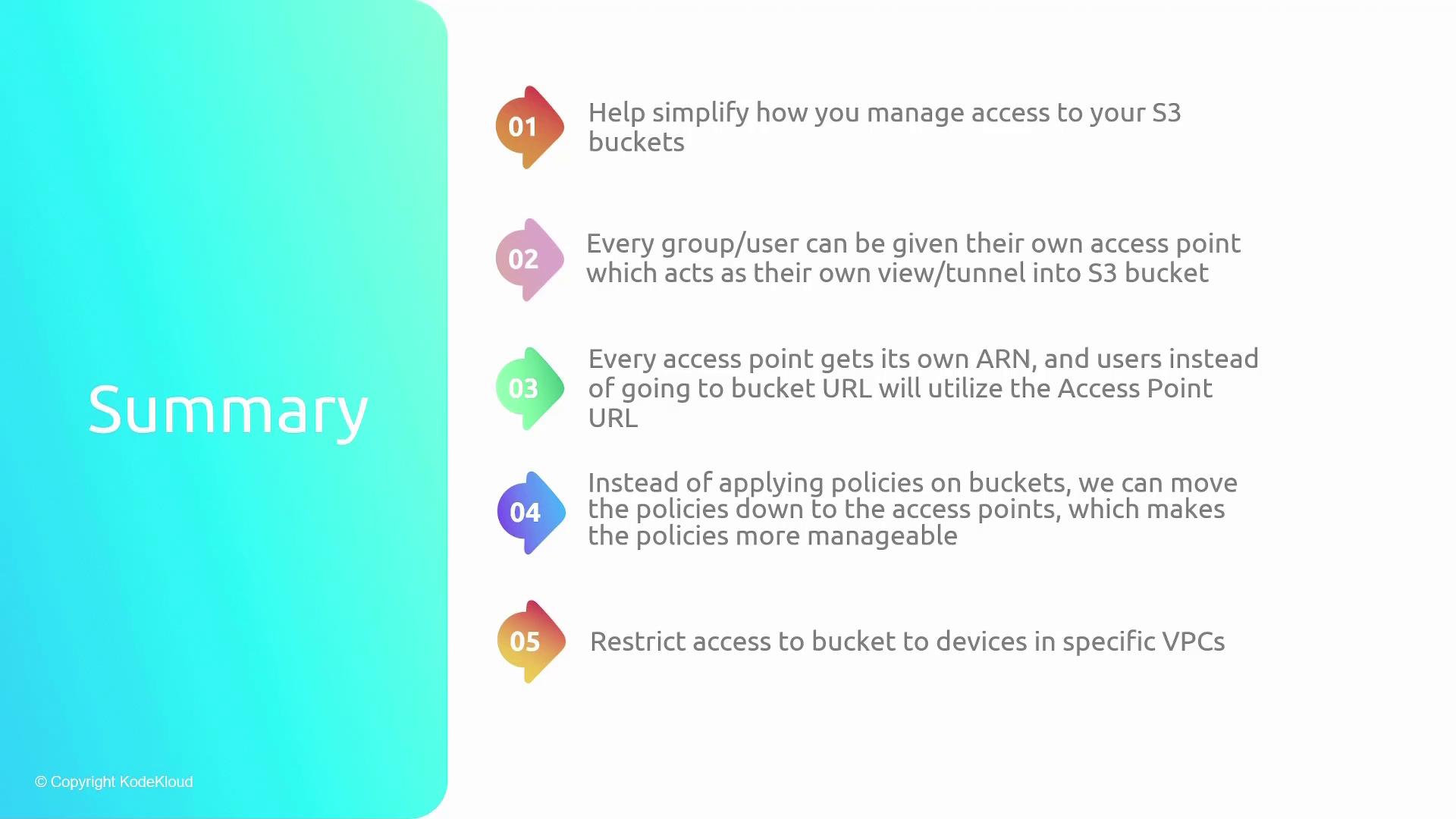
Provides each group or user with a dedicated access point acting as a unique tunnel to the bucket.
Unique ARN for Each Access Point
Users reference the access point URL instead of the S3 bucket URL, ensuring tailored access.
Streamlined Policy Application
Policies can be directly applied to each access point, reducing overall policy complexity.
Enhanced Network Security
Supports network restrictions by allowing access only from specific VPCs.
The summary diagram below encapsulates these key points:
S3 Access Points offer an effective method to segregate and manage access rights for various roles, enhance security through network control, and simplify policy management. Leveraging dedicated access points can significantly reduce the complexity of your S3 bucket policies.