

- a repeatable analysis process to discover savings,
- a set of design and operational principles to reduce waste,
- and the governance and controls needed to sustain efficient spend.
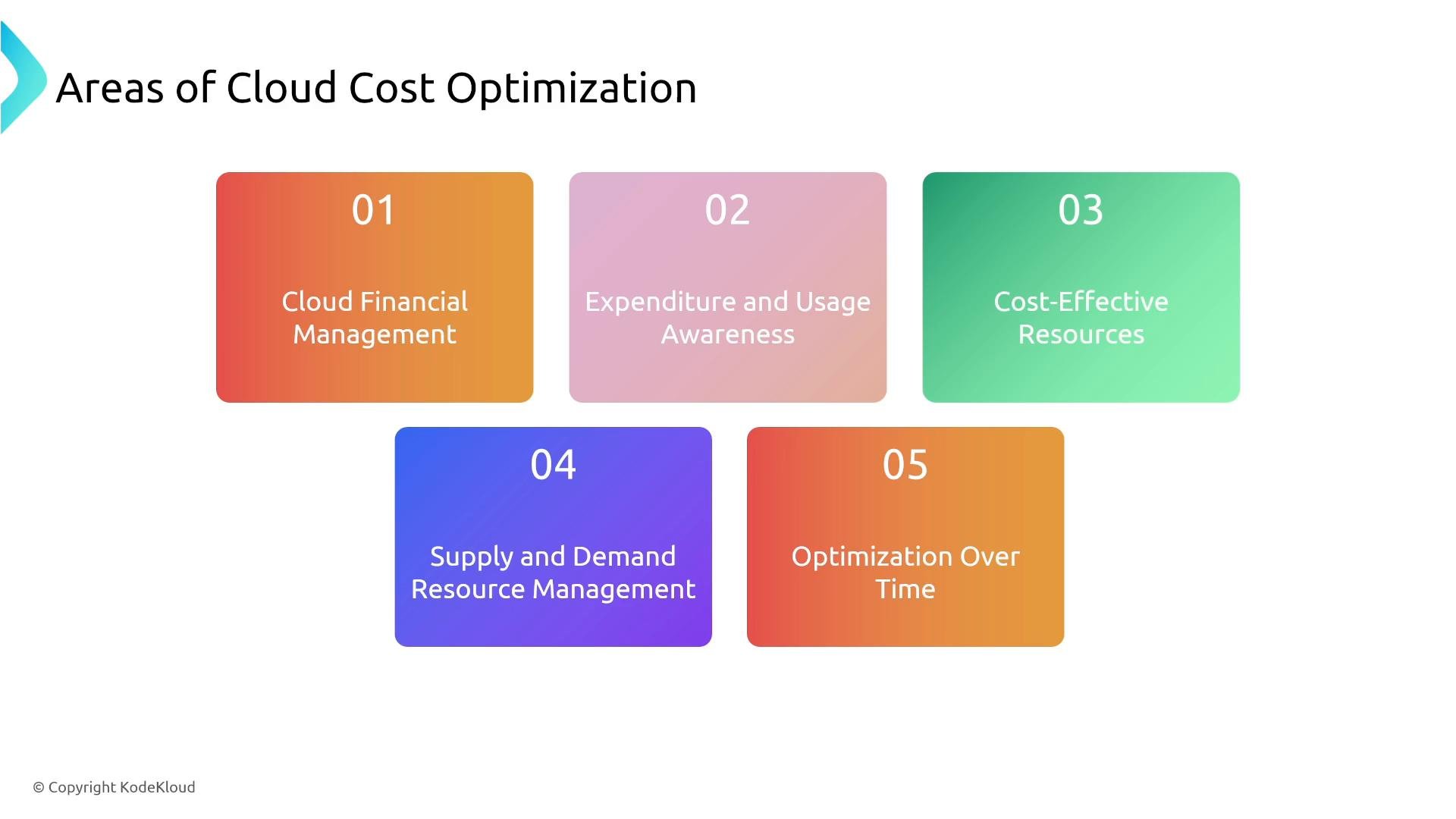
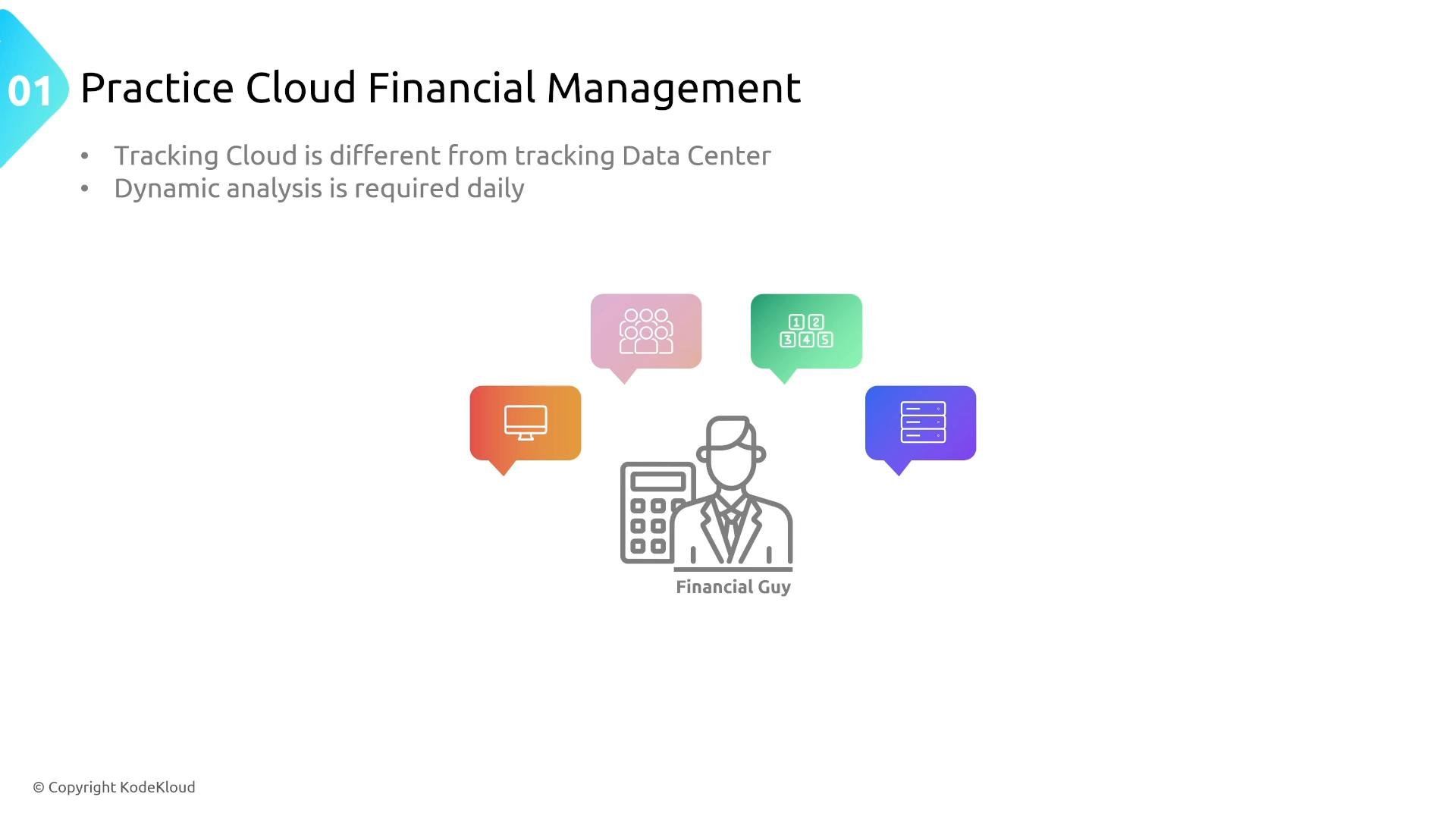
1) Practice Cloud Financial Management (CFM)
Cloud Financial Management (CFM) evolves traditional financial processes so cloud costs are visible, planned, and controlled across your organization. Unlike static monthly budgets, cloud spend can change hourly—CFM helps teams align spend with business value and avoid surprises. Key outcomes and actions:- Establish budget ownership by product or team.
- Integrate cloud usage into financial planning cycles.
- Implement continuous forecasting and variance analysis (daily or weekly).
- Use tagging and cost allocation to make costs transparent.
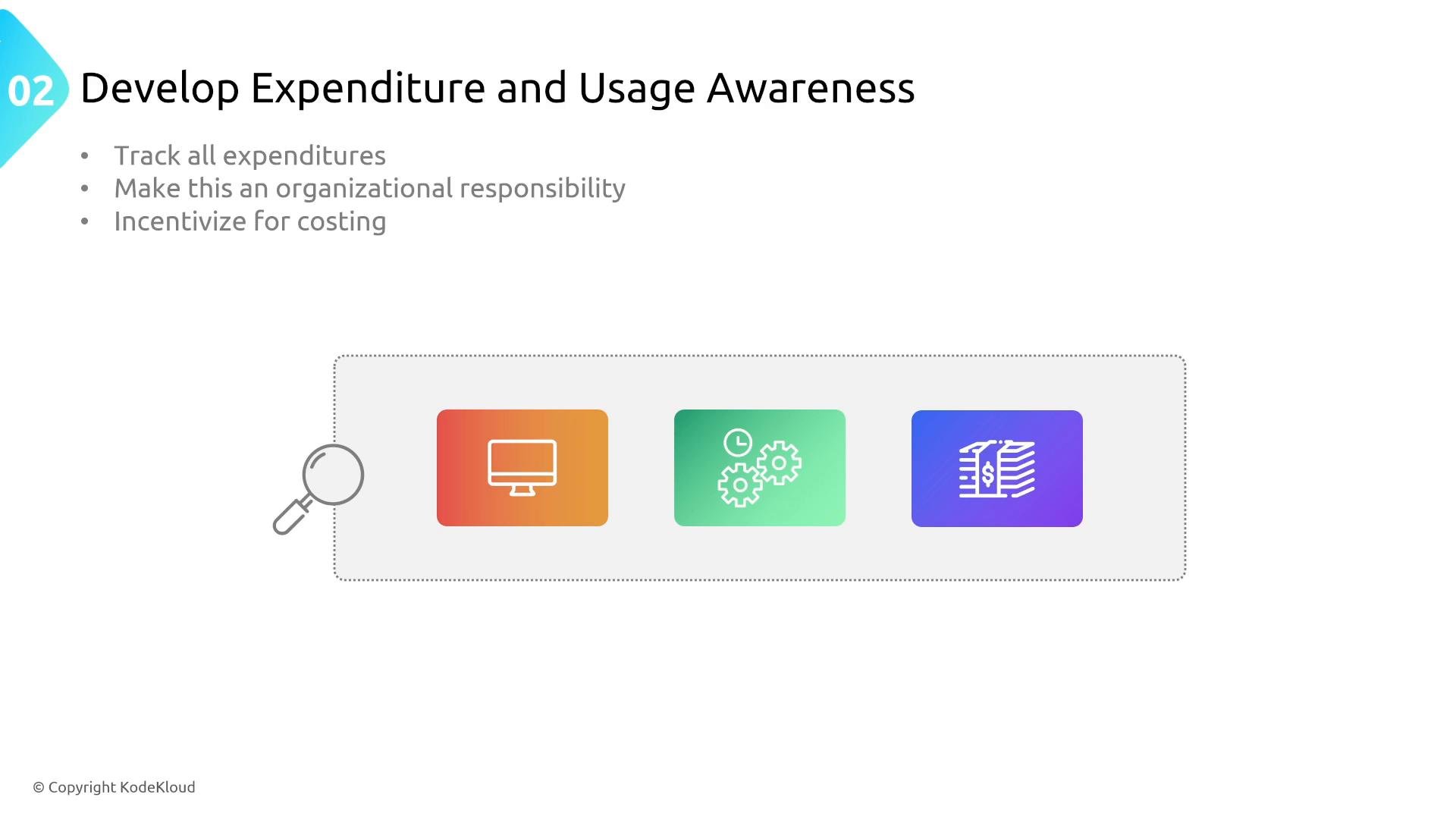
2) Develop Expenditure and Usage Awareness
You cannot optimize what you don’t measure. Expenditure and usage awareness means tracking who consumes resources, how much they consume, and which activities drive costs. This visibility is the foundation for accountability and optimization. Practical steps:- Enable Cost and Usage Reports and AWS Cost Explorer.
- Tag resources consistently for cost allocation.
- Share dashboards with teams and create chargeback or showback models.
- Introduce incentives or KPIs that reward cost-conscious design.
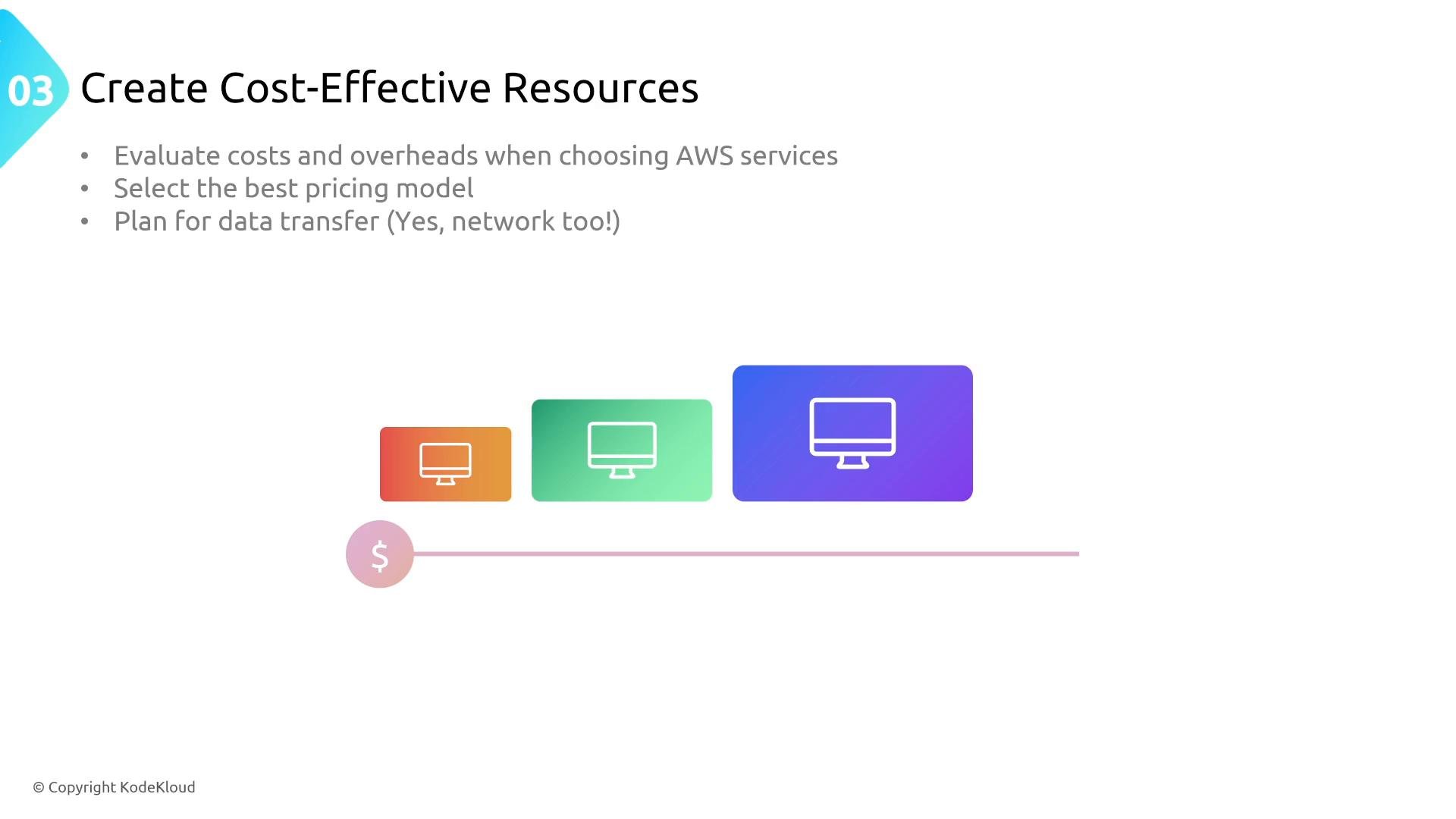
3) Create Cost‑Effective Resources
Choose resources, services, and pricing models that match workload characteristics. Cost-effective architecture balances performance, resilience, and price. Evaluate:- Resource type and size (right-sizing).
- Pricing model: On-Demand, Reserved Instances, Savings Plans, Spot Instances.
- Licensing and managed services trade-offs.
- Data transfer and networking costs—these can add up quickly.
- Right-size instances and databases regularly.
- Use Savings Plans or RIs for steady-state workloads.
- Consider Spot for fault-tolerant, batch, or flexible workloads.
- Architect to reduce cross-AZ and cross-region data transfer when possible.
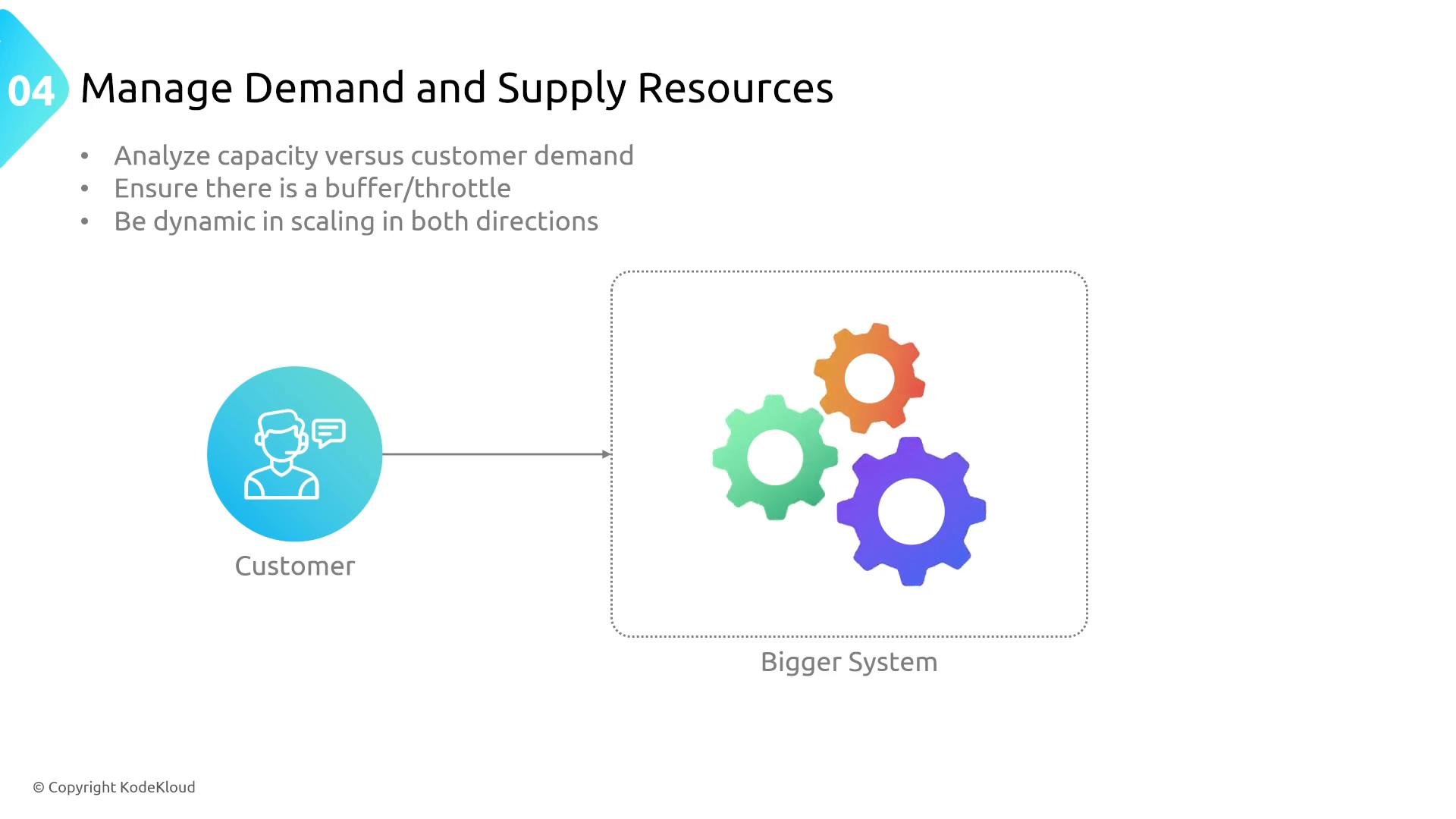
4) Manage Demand and Supply (Capacity Planning)
Capacity management matches supply to customer demand. The cloud enables elastic capacity, but you still must plan for growth, smoothing, and burst behavior to avoid overprovisioning or throttling. Guidance:- Use autoscaling to scale out for load and scale in to reclaim capacity.
- Implement buffering, throttles, and queues to smooth spikes.
- Scale aggressively upward, but conservatively downward to avoid oscillation.
- Model capacity needs for peak, average, and unexpected bursts.
5) Optimize Over Time
Cost optimization is continuous. Workloads drift: usage patterns change, new features introduce resource needs, and idle resources accumulate. Make optimization part of your operational cadence. Best practices:- Run regular (daily/weekly/monthly) reviews depending on workload criticality.
- Decommission unused resources and orphaned assets.
- Automate right-sizing and idle resource detection.
- Track and measure the impact of optimizations to feed back into CFM and governance.
Tracking expenditures and usage is the foundation of every other area. Without accurate, timely cost and usage data you cannot do effective financial management, capacity planning, resource selection, or ongoing optimization.
Quick Reference Table
Summary
These five areas align with AWS cost-optimization design principles and provide the knobs and dials to manage cloud spend:
- Practice Cloud Financial Management (CFM)
- Develop Expenditure and Usage Awareness
- Create Cost‑Effective Resources
- Manage Capacity and Supply/Demand
- Optimize Over Time