

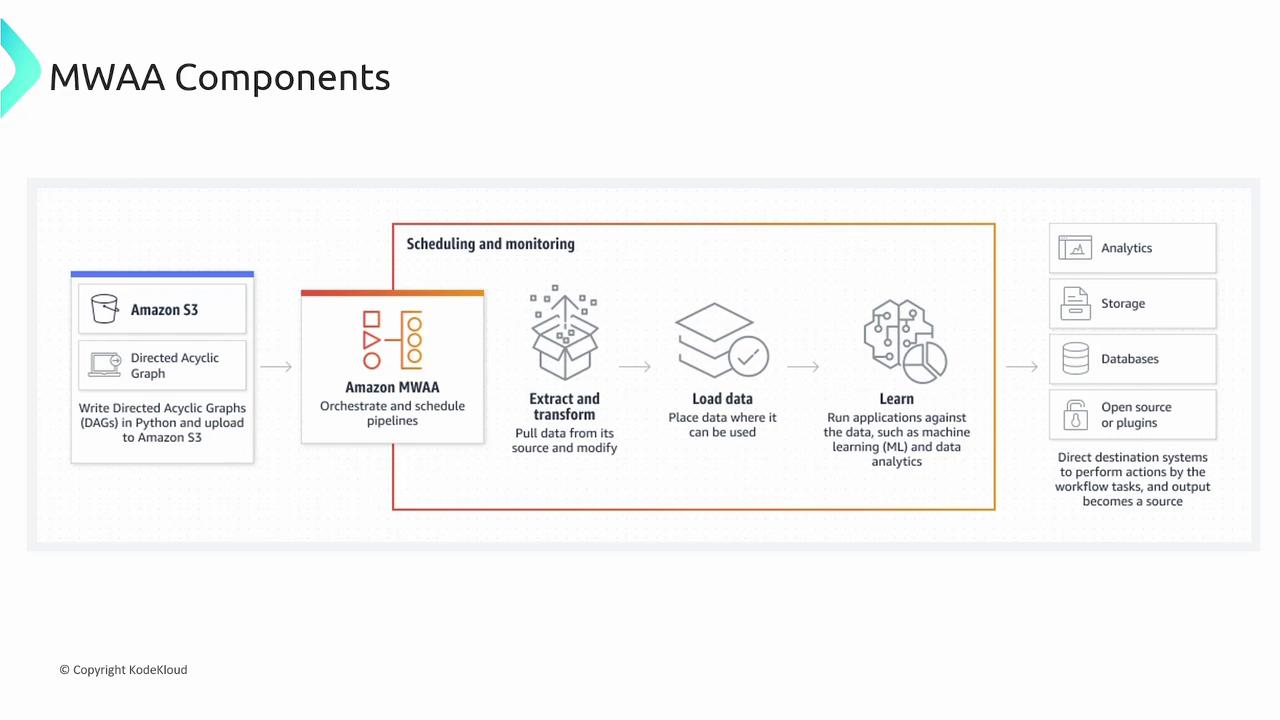
When you create an Apache Airflow instance in AWS, you are essentially receiving the same open source Apache Airflow—but managed in the cloud. Simply upload your directed acyclic graphs (DAGs) defining your data pipelines to an S3 bucket, and Apache Airflow orchestrates the extraction, transformation, and loading (ETL) of your data.
Key Benefits and Features
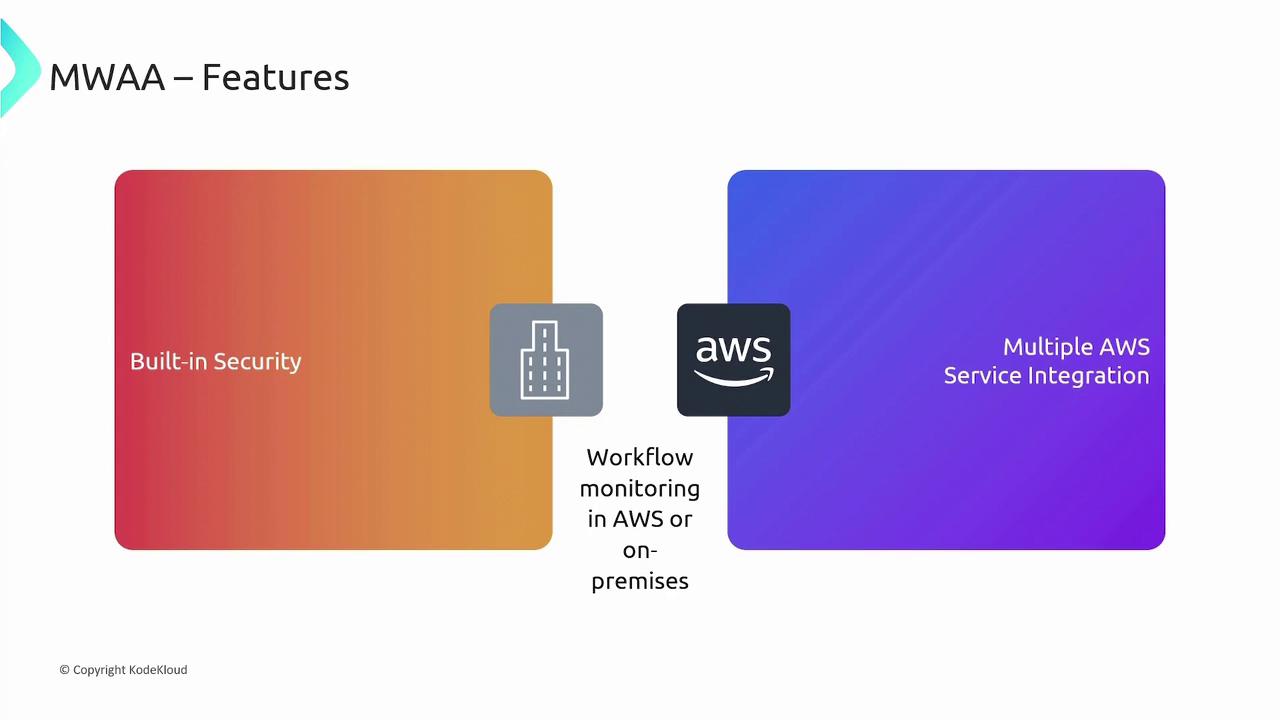
Amazon MWAA offers several advantages that allow you to focus on building robust data pipelines rather than managing infrastructure. Key features include:- Managed Infrastructure: AWS provisions and maintains the Apache Airflow instance, eliminating the burden of server upkeep.
- Security: The environment is secured using Amazon VPCs and encrypted automatically with AWS KMS.
- Monitoring: System metrics and logs from Apache Airflow are sent directly to Amazon CloudWatch, facilitating efficient monitoring of task delays and workflow errors across multiple environments.
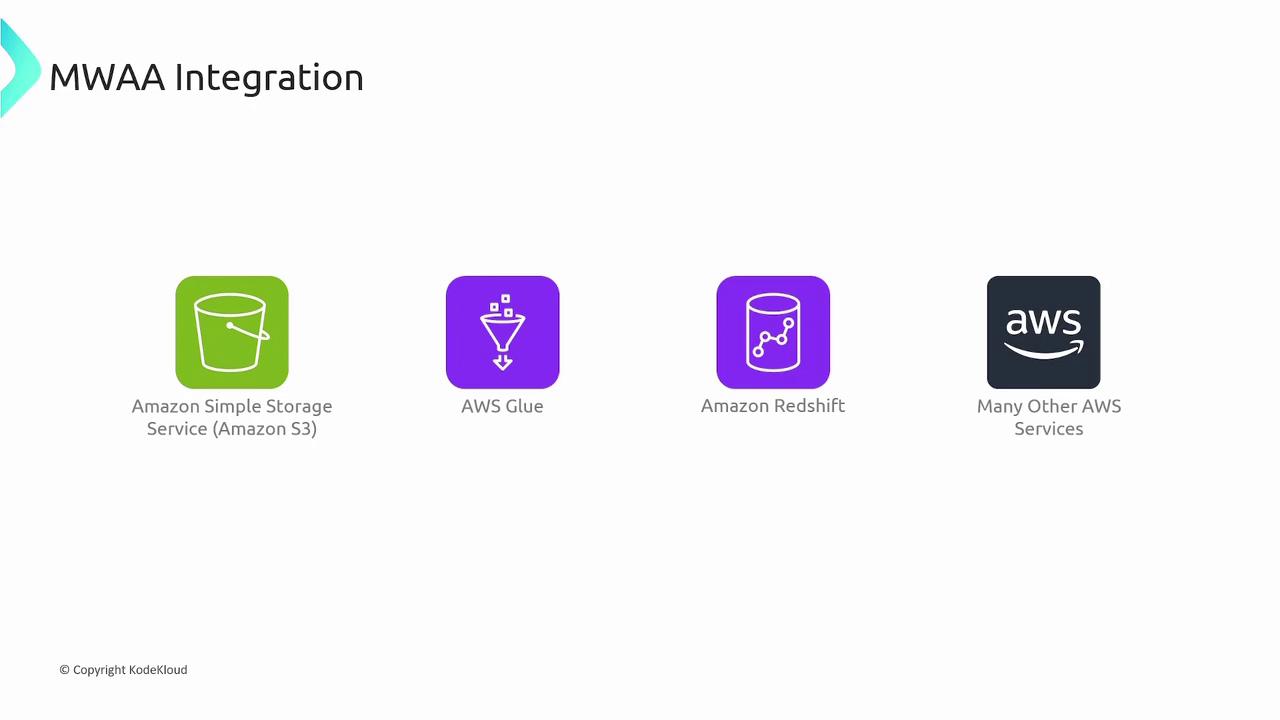
- AWS Integrations: MWAA integrates seamlessly with a variety of AWS services such as AWS Athena, Batch, DynamoDB, DataSync, EMR, Firehose, Glue, and Lambda, enabling you to build intricate workflows that harness the full ecosystem of AWS capabilities.
Use Cases
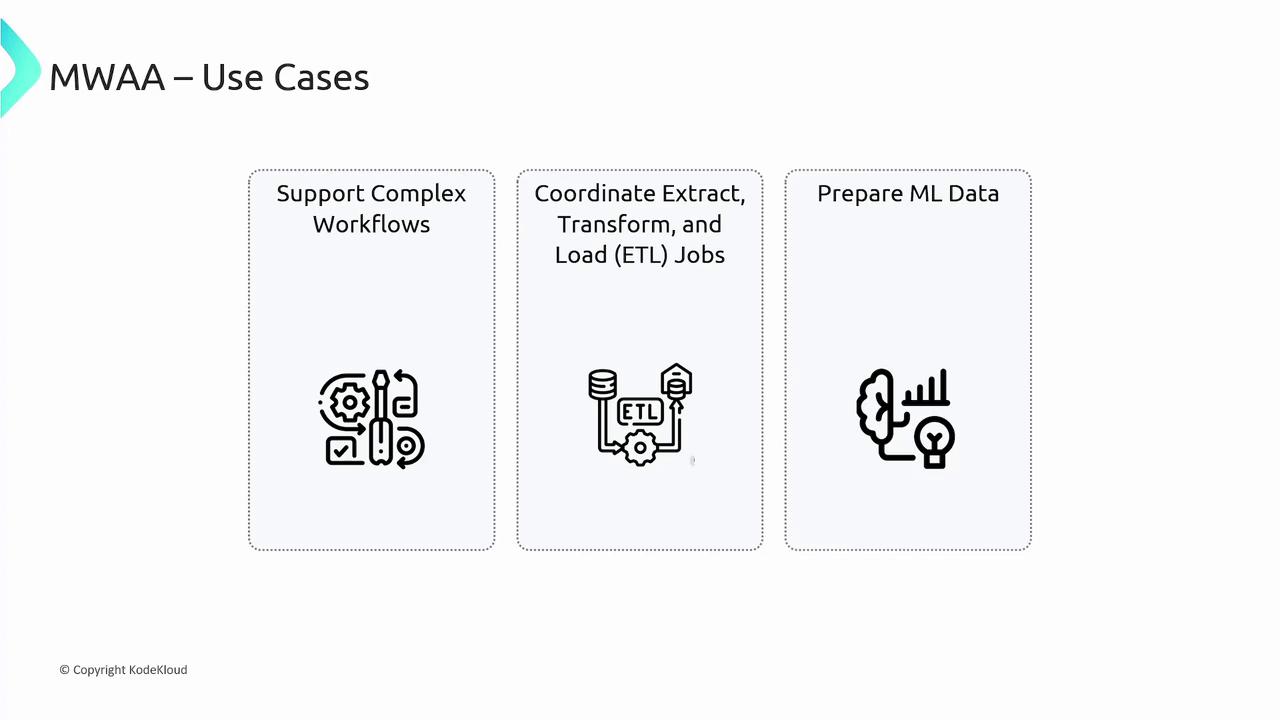
Apache Airflow is well-suited for constructing and managing complex data pipelines. Common use cases include:- Scheduling and executing workflows to process and prepare intricate datasets.
- Orchestrating multiple ETL processes that involve diverse technology stacks.
- Automating pipelines for data ingestion, transformation, and loading to power machine learning models and analytics platforms.
Amazon Managed Workflows for Apache Airflow significantly simplifies the deployment, management, and scaling of Apache Airflow workflows in the cloud. By leveraging AWS’s robust, integrated infrastructure, teams can effectively automate and manage complex data pipelines without the overhead of traditional infrastructure management.