This article explores AWS Security Hubs role in centralizing and simplifying security management within AWS infrastructure.
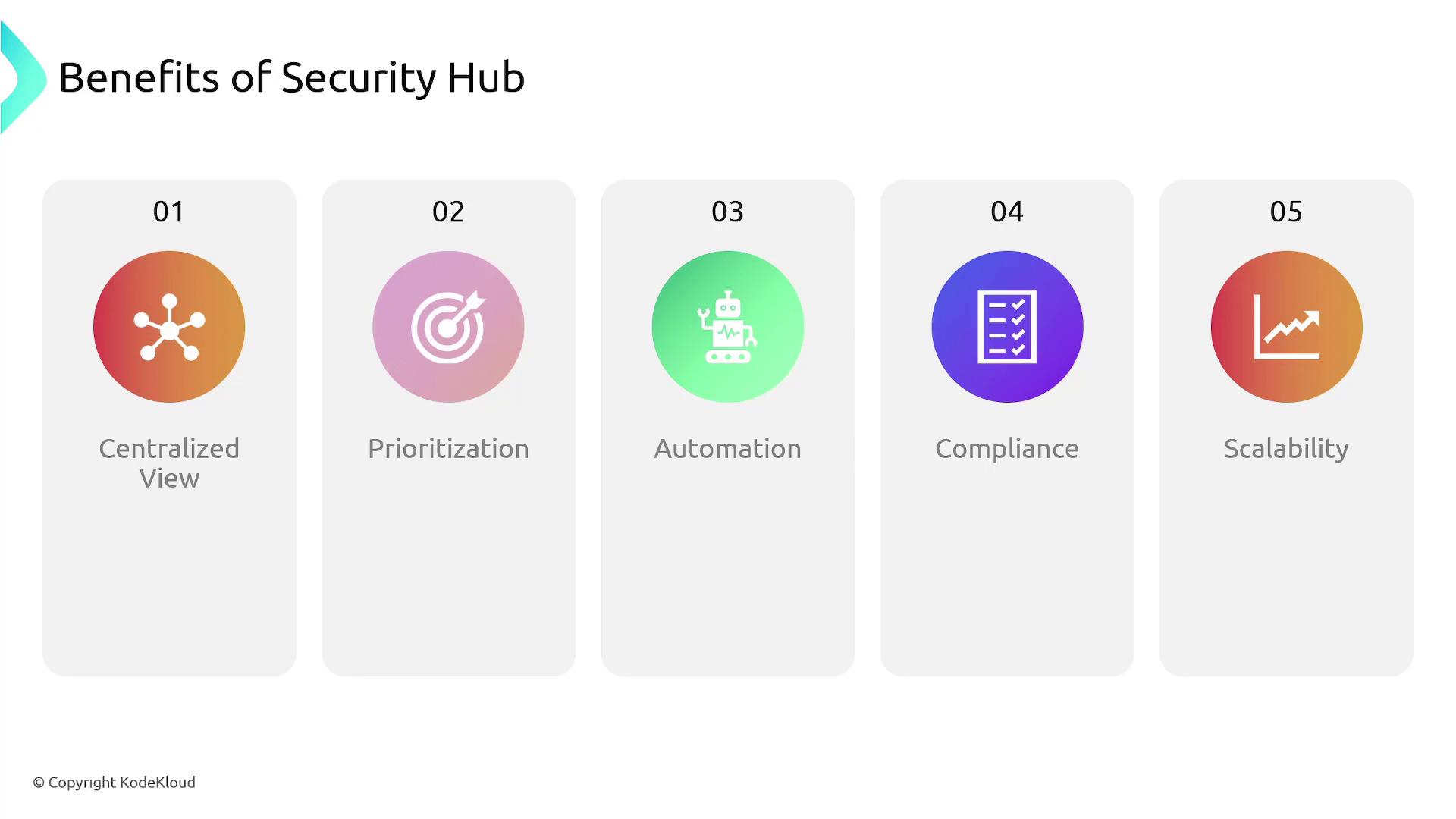
In this article, we explore AWS Security Hub and its significant role in centralizing and simplifying security management within your AWS infrastructure.Think of a building equipped with various security devices—security cameras, metal detectors, motion detectors, and smoke alarms. Normally, each device reports to a different system, making it difficult to monitor all security events efficiently. Now, imagine if every device sent its data to one centralized dashboard. This is exactly what AWS Security Hub does for your AWS environment.AWS Security Hub aggregates findings from multiple AWS security services, including Inspector, GuardDuty, Macie, Lambda, and CloudWatch Events, as well as integrated third-party tools. This consolidation eliminates the need to log into each service separately. Instead, all security alerts, vulnerabilities, and compliance findings are available in one place. This centralized approach enables you to prioritize critical issues and automate responses—such as triggering AWS Lambda functions to remediate detected vulnerabilities.
One of the standout features of Security Hub is its automated compliance checks. It continuously monitors your AWS resources against best practices and various security standards, ensuring that your infrastructure remains secure as it scales.
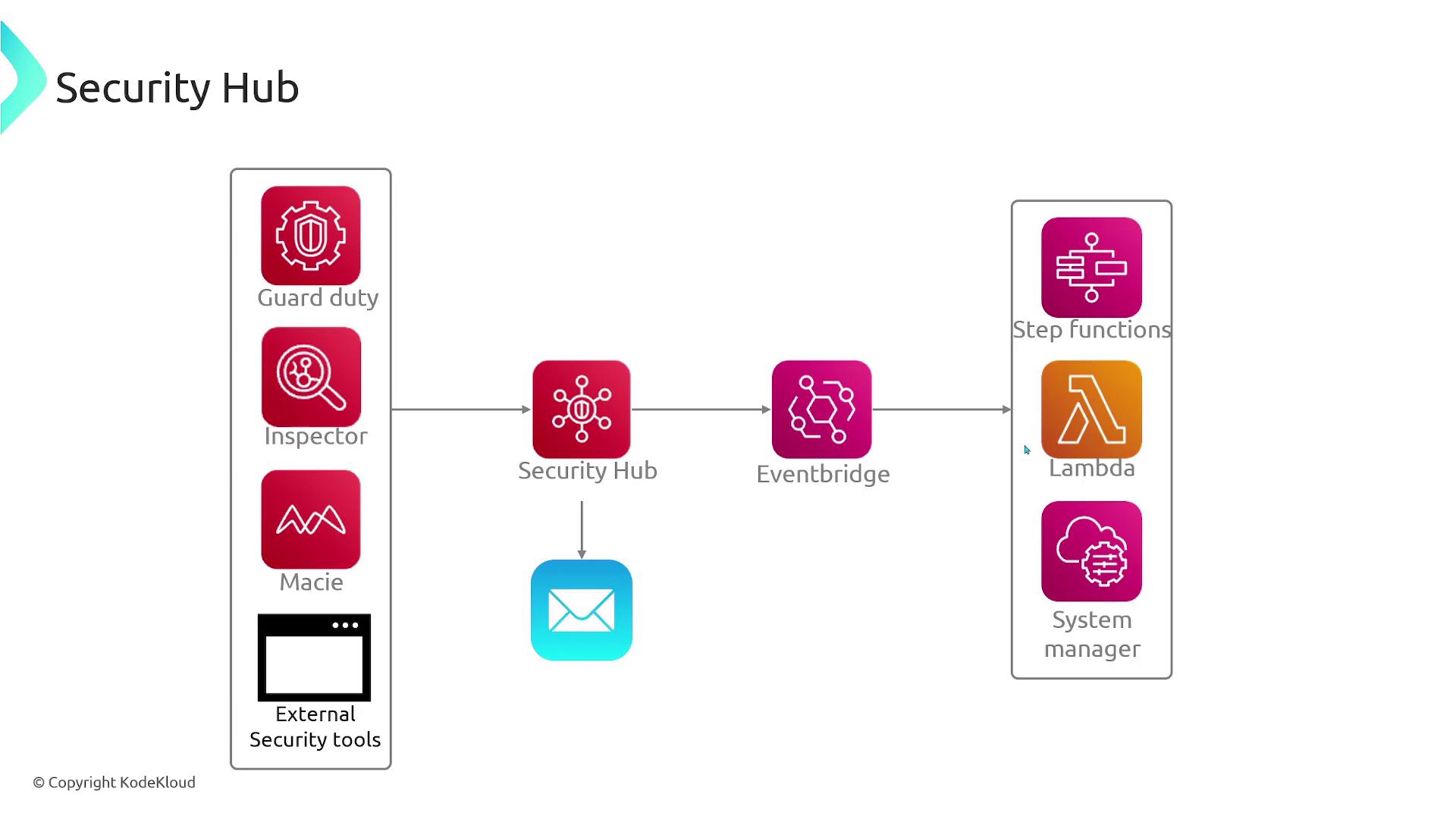
Consider the following scenario: During routine scans, AWS Inspector detects a vulnerability on an EC2 instance. The finding is immediately sent to Security Hub. Security Hub then triggers an EventBridge event that activates a specific rule to invoke a Lambda function designed to apply a necessary patch automatically. This seamless, end-to-end workflow moves from detection to remediation without manual intervention.The diagram below summarizes this comprehensive solution. Various AWS services send their findings to Security Hub. From there, notifications can be generated or additional events can be triggered via EventBridge. These events may call on services such as Lambda functions, Step Functions, or Systems Manager actions to remediate vulnerabilities or execute intermediary steps until a resolution is achieved.
The flexibility of this architecture is one of its greatest strengths. It accommodates various security protocols, whether that means automatically applying patches to EC2 instances or isolating compromised resources. AWS Security Hub offers a robust and scalable solution that aligns with your specific security requirements, streamlining operations across your entire AWS environment.For further reading, check out these resources:
By centralizing security findings and automating responses, AWS Security Hub empowers you to maintain a stronger, more resilient security posture in a dynamic AWS landscape.