

Key capabilities
Discovery methods — agent-based vs agentless
Choose the collection method that best matches your environment, visibility needs, and operational constraints. The service supports two primary approaches: agent-based discovery (per‑server visibility) and agentless discovery (centralized collection for VMware).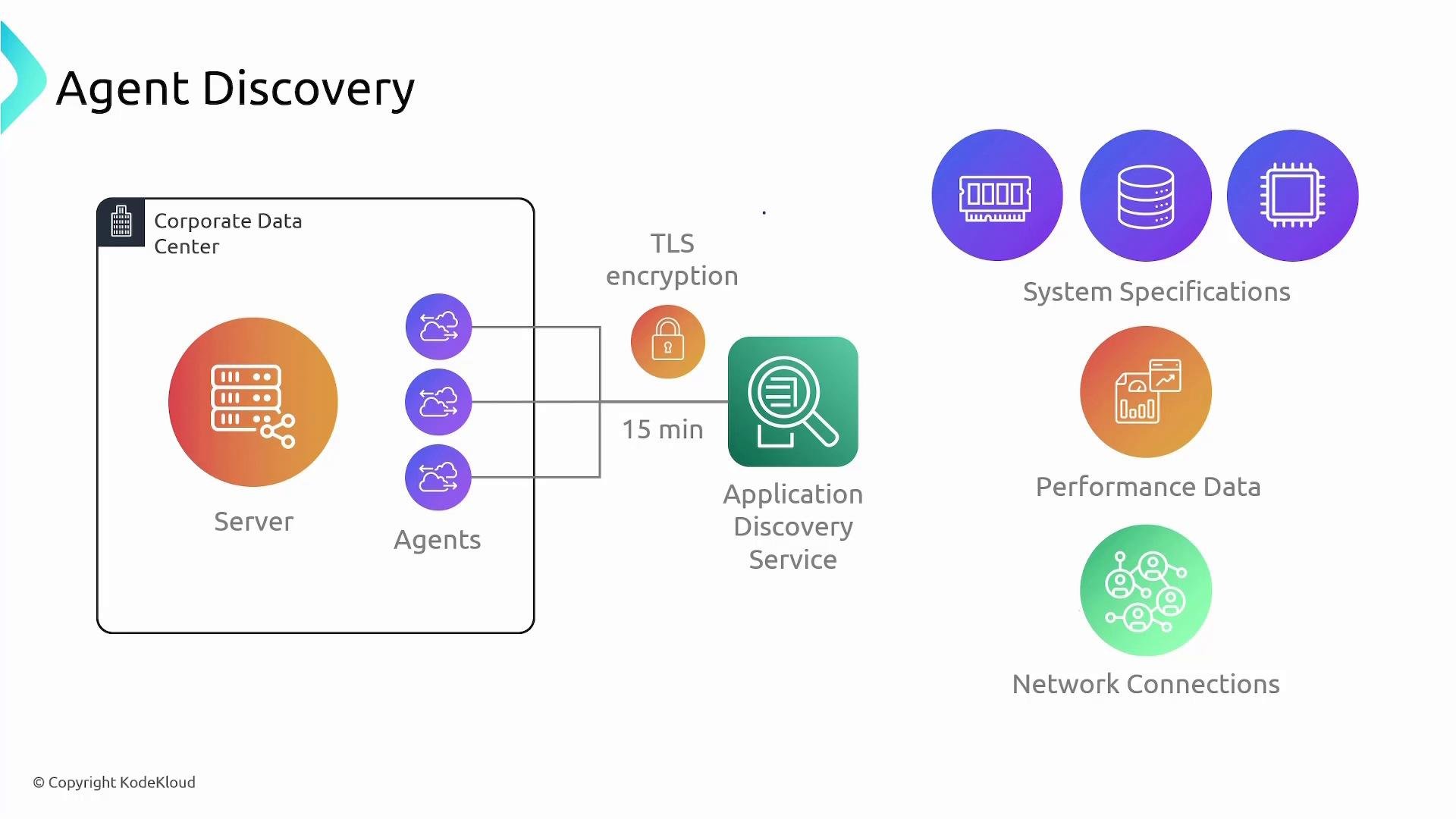
- Deploy a lightweight Application Discovery agent on each server to capture system and application‑level data.
- Agents collect running processes, performance metrics, open ports and network connections, and configuration details.
- Data is transmitted securely to Application Discovery Service over TLS at regular intervals.
- Best when you need process‑level visibility, application traffic detail, and per‑server diagnostics.
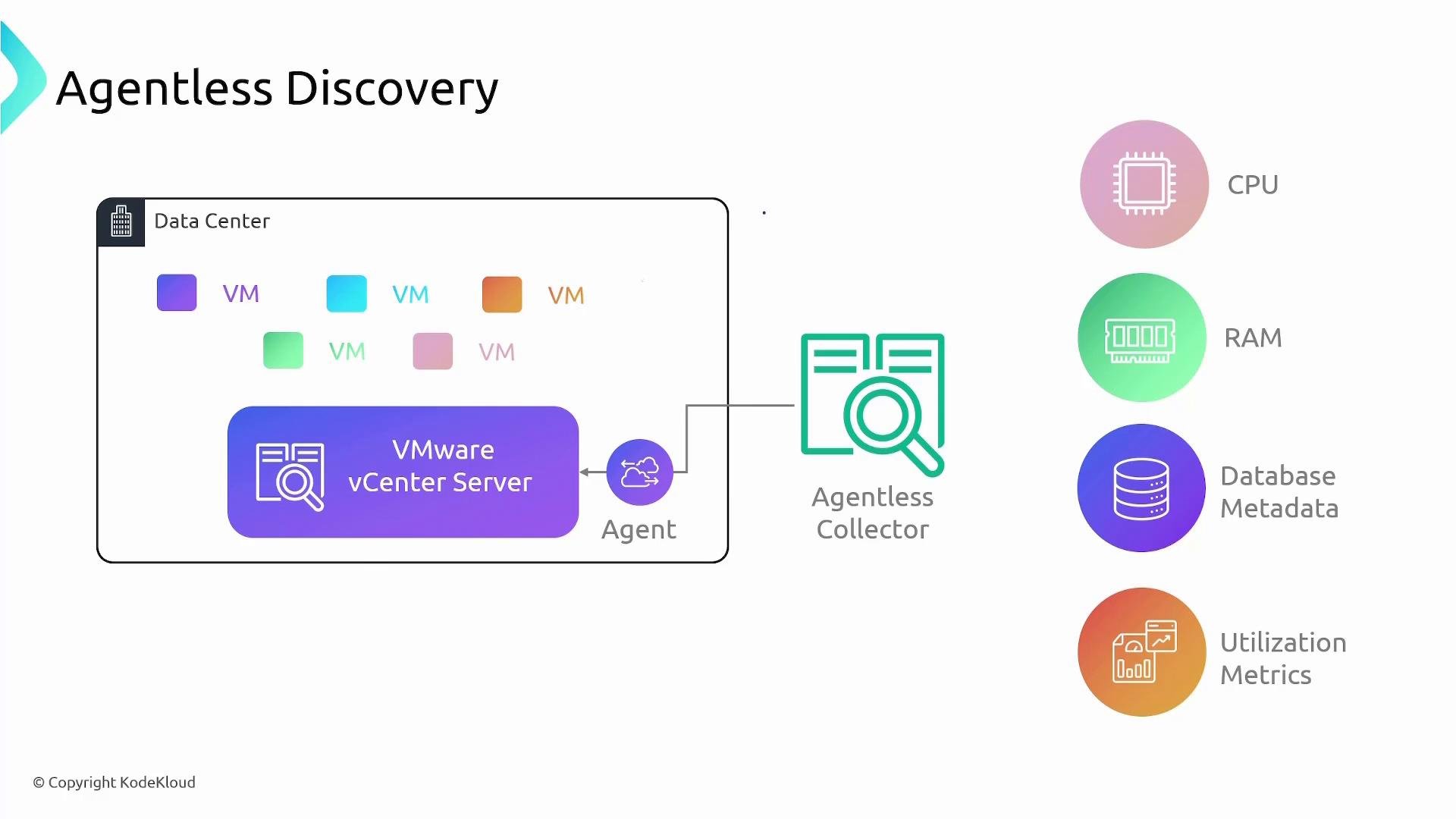
- Deploys an agentless collector as a virtual appliance in your VMware
vCenterenvironment. - The collector queries
vCenterAPIs to capture VM/host metadata, utilization metrics, and database metadata without installing agents on each VM. - Lower per‑server maintenance and useful for large VMware estates where per‑process detail is not required.
Use agent-based discovery when you need process-level visibility and fine-grained network communication data. Use agentless discovery when you prefer a centralized, lower-maintenance approach for VMware environments and do not require per-process information.
Data flow and storage
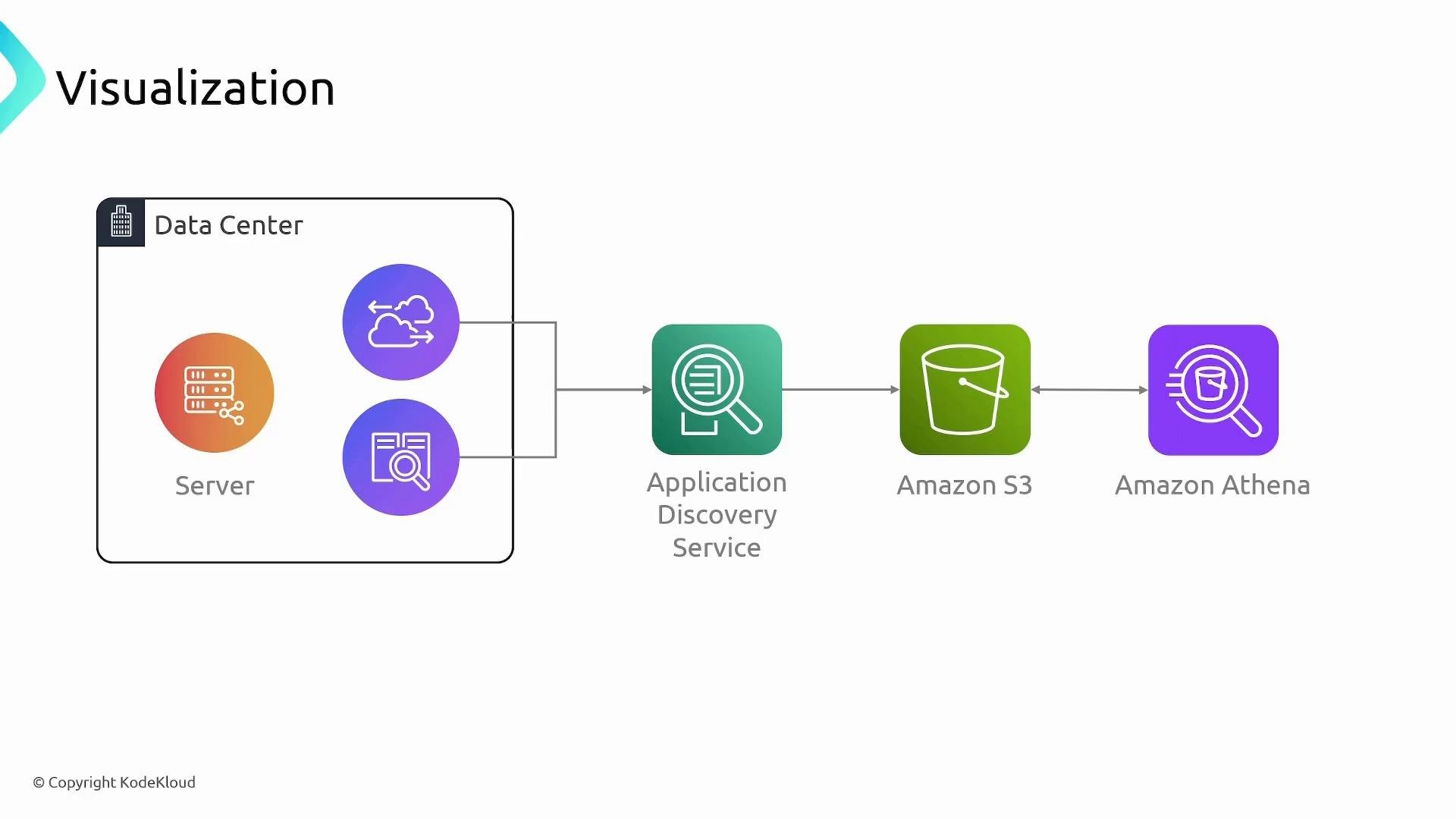
Regardless of method, collected discovery data flows securely to the Application Discovery Service and is exported for storage and analysis:- Agents or collectors send discovery packets over TLS at regular intervals.
- Raw and processed discovery output can be exported to
Amazon S3for long‑term retention. - Use
Amazon Athenato query S3‑stored discovery data and generate custom reports or dashboards.
Integrations and downstream tools
Application Discovery Service feeds other migration services and analytics tools to accelerate planning and execution:- AWS Migration Hub: Import discovery inventories and dependencies to build migration plans and track progress.
- AWS Database Migration Service (DMS): Use discovery data to identify database sources and plan migrations.
- Migration Evaluator (formerly TSO Logic): Analyze utilization and estimate migration costs and ROI.
Amazon S3+Amazon Athena: Store and query raw discovery data for custom analytics and reporting.
Common use cases
- Inventory discovery: Build a reliable, searchable inventory of on‑premises servers and databases to accelerate migration assessments.
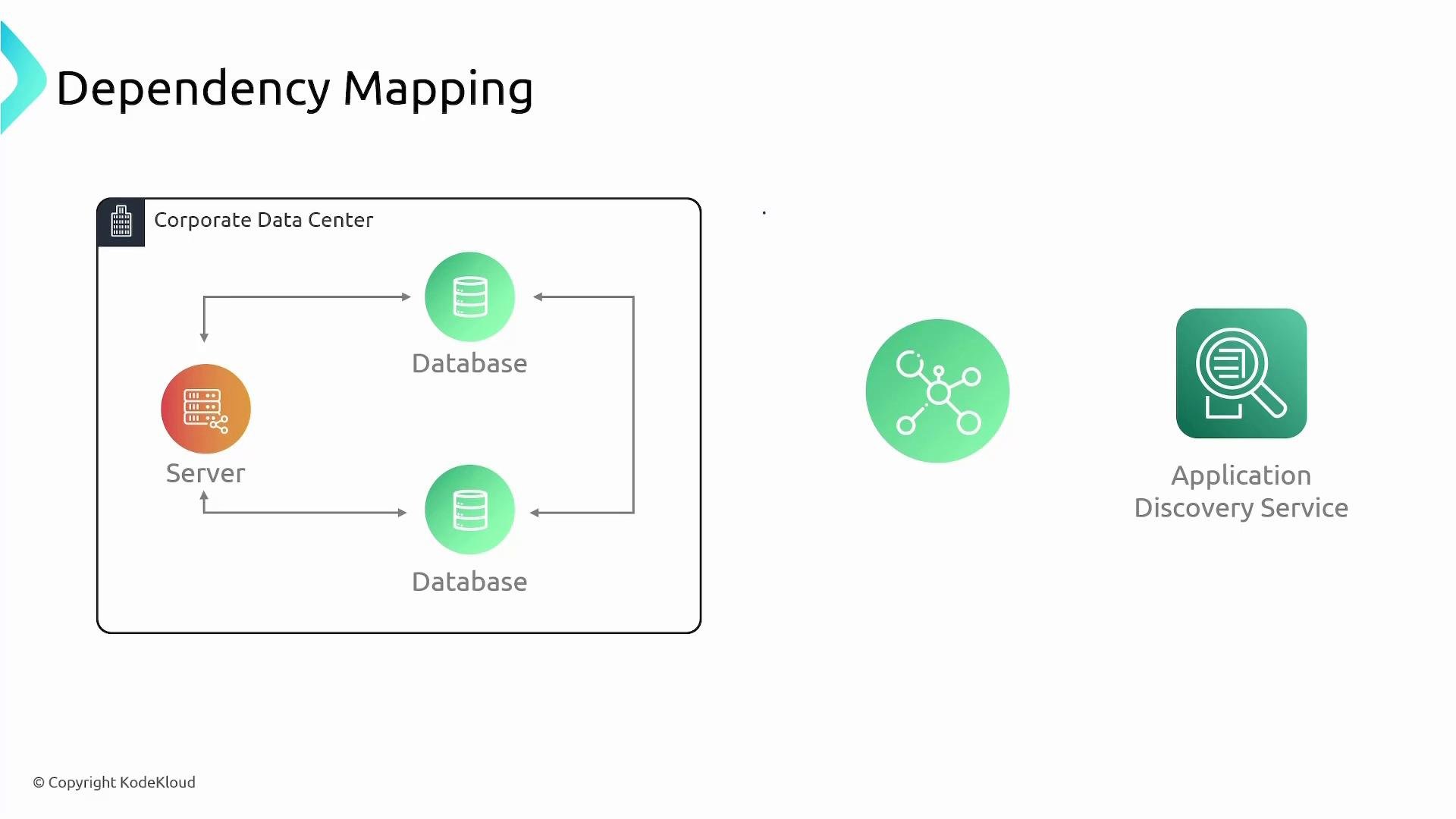
- Dependency mapping: Discover communication patterns and hidden dependencies to create safer move groups and reduce application downtime risk.
- Right‑sizing and capacity planning: Use historical utilization metrics to recommend appropriate
Amazon EC2instance types and estimate target infrastructure costs.
Links and references
- AWS Migration Hub
- AWS Database Migration Service (DMS)
- Migration Evaluator
- Amazon Athena
Amazon S3documentation: https://learn.kodekloud.com/user/courses/amazon-simple-storage-service-amazon-s3