

1. Implement Cloud Financial Management
To achieve substantial business value in the cloud, investing in cloud financial management is essential. This practice involves dedicating time and resources to understand and manage cloud expenditures distinctly from traditional data center finances. Establish comprehensive reporting, set up automated alarms, and streamline processes to monitor spending effectively.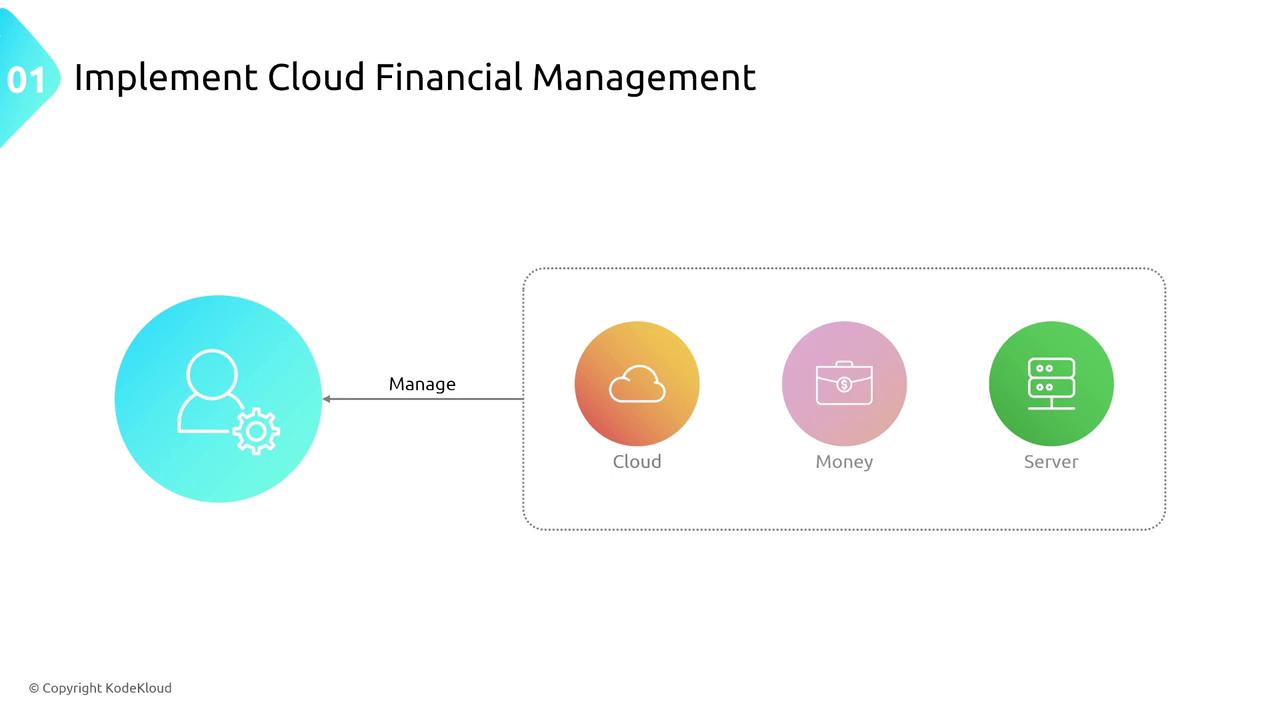
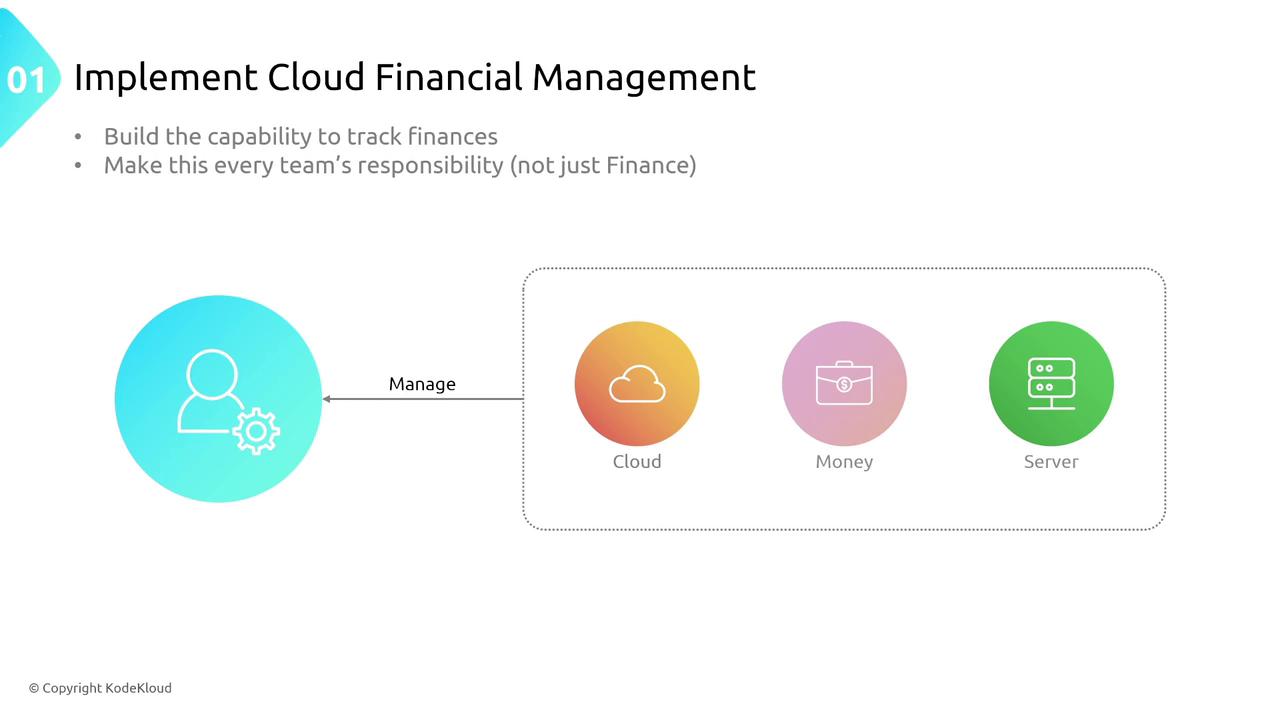
Remember: Empowering all teams with cost management responsibilities ensures better tracking and efficiency.
2. Measure Overall Efficiency
Understanding and measuring efficiency is crucial. Evaluate the balance between business demand, IT expenditures, and the value generated. Track key performance indicators such as capacity, utilization, and cost efficiency. For instance, spending 10 in revenue is ideal, but if 8, you need to optimize further. Consider using dashboards and reports to monitor these metrics in real time, helping you make data-driven decisions about resource allocation.3. Adopt a Consumption Model
A consumption-based model means paying only for the resources you actually use. Instead of keeping non-production environments running 24/7, schedule them based on real business needs—for example, operating them only during business hours can cut costs significantly.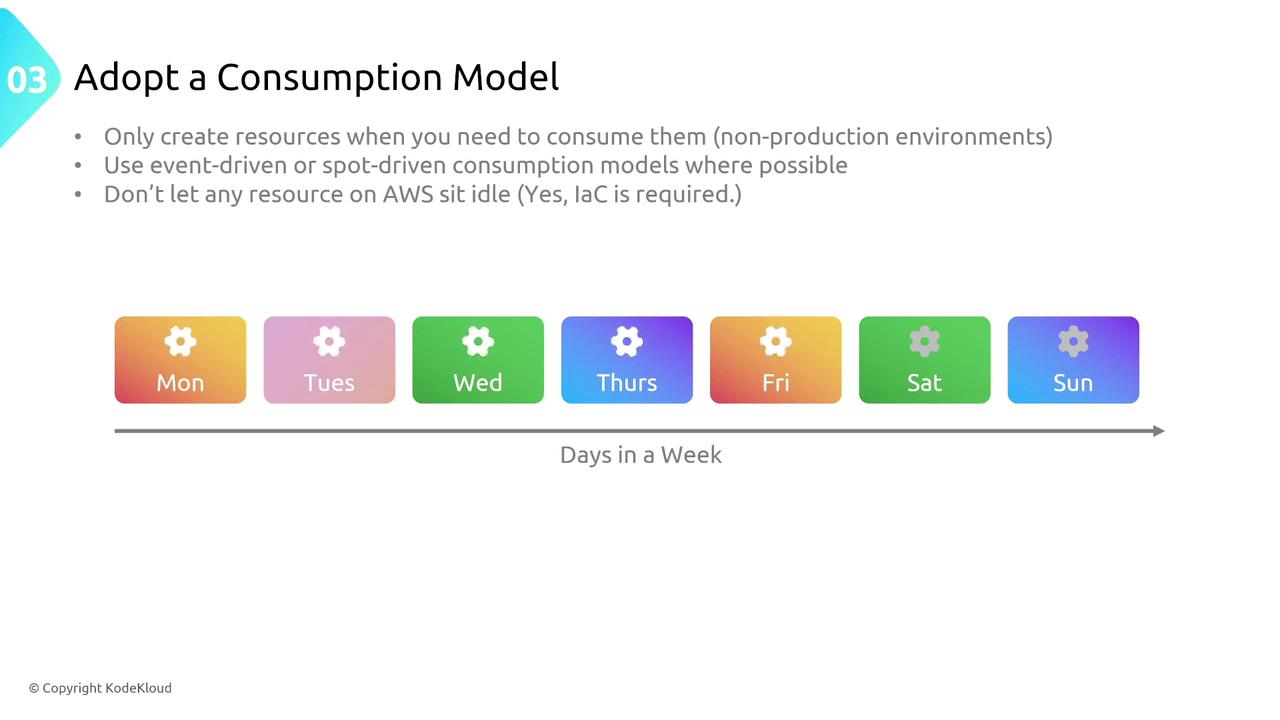
Utilize infrastructure as code to easily scale resources up or down based on real-time needs, ensuring you only pay for what you use.
4. Stop Spending on Undifferentiated Heavy Lifting
Offload routine IT tasks to your cloud provider to concentrate on aspects that add unique value to your business. AWS, for example, offers managed services for common operations, enabling your teams to focus on differentiating and core business functions.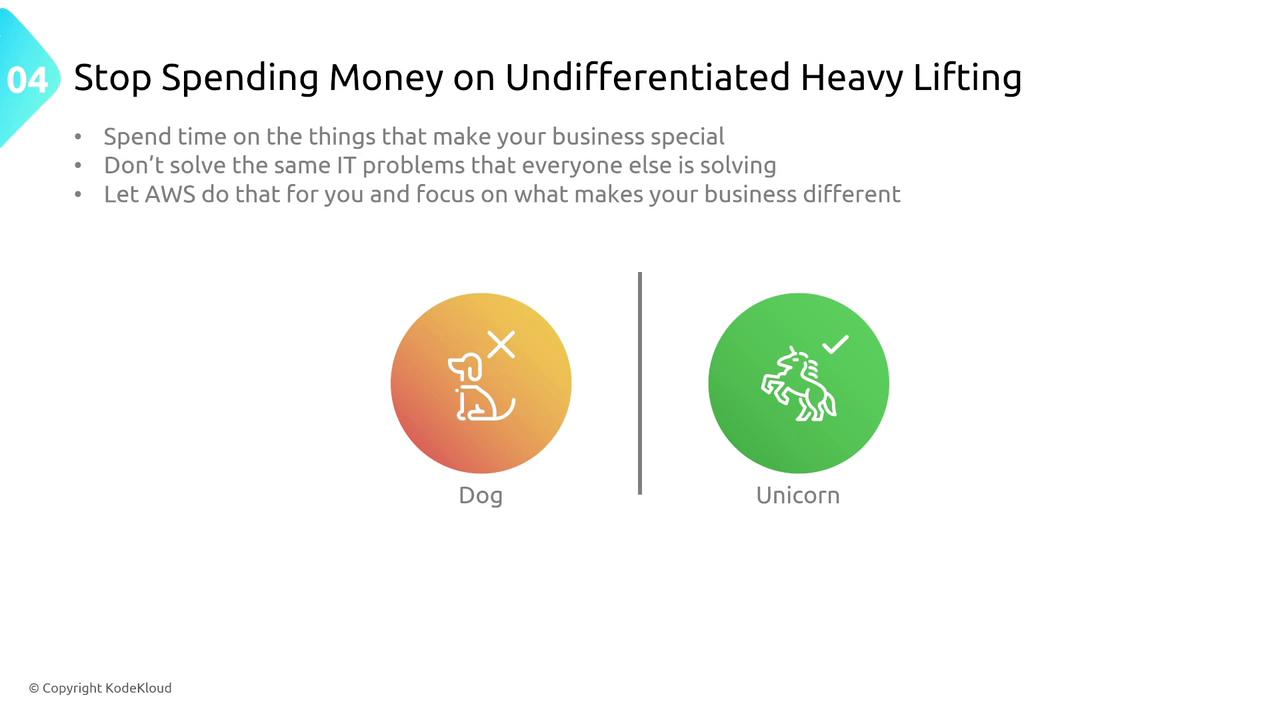
5. Analyze and Attribute Every Expenditure
Detailed billing data from AWS (and similar cloud providers) empowers you to analyze every cost component—network, storage, and compute. By tagging resources effectively, you can attribute costs to specific business initiatives. This granularity helps track ROI and ensures that each workload owner has the insights needed to optimize resource usage.Tagging resources correctly is crucial. It helps in correlating costs with business outcomes, enabling more accurate and efficient decision-making.
Summary of Design Principles
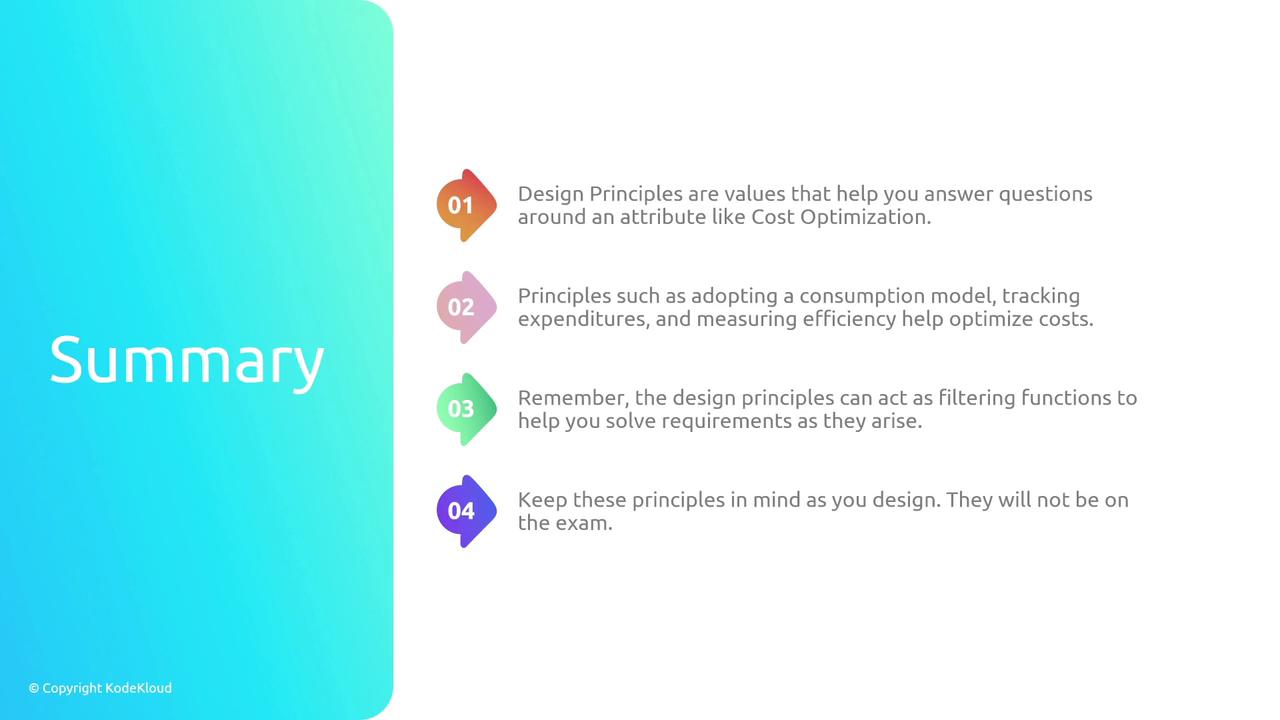
By incorporating these design principles, you not only optimize costs but also enhance the overall business value of your IT initiatives. While these ideas provide a strong foundation, remember they are not directly tested on the AWS exam, although related exam questions might reference these concepts. For further reading, explore these resources: I’m Michael Forrester. Thank you for reading this article. Join the discussion on our forums, and I look forward to connecting with you in the next lesson.