Why Traditional Databases Are Not Ideal for Ledger Use Cases
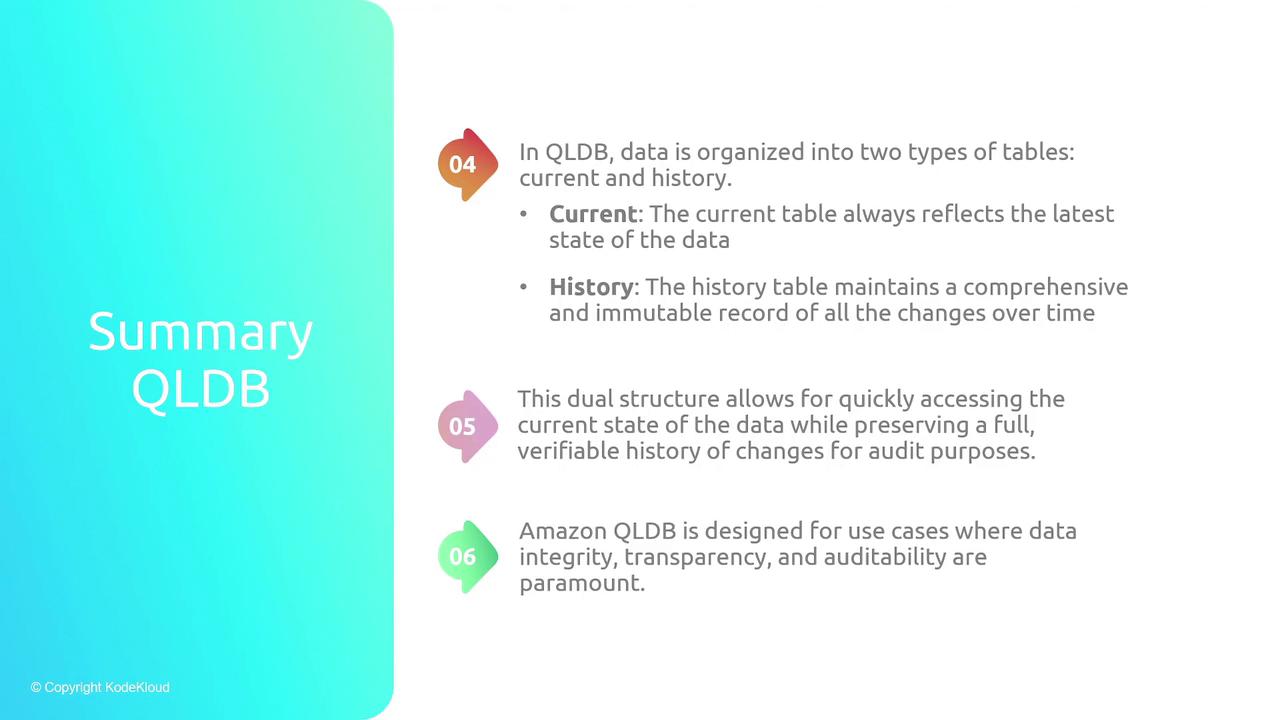
Traditional databases have several limitations when used as a ledger:- Mutability: Records can be updated or deleted, making data mutable rather than tamper-proof.
- Lack of Transparency: Data changes can be hard to trace, impeding auditability.
- Centralization: Managed by a single entity, they do not support decentralized, multi-party systems.
- Single Point of Failure: Centralized servers can become a single point of vulnerability.
- Absence of Consensus Mechanisms: They lack built-in methods for distributed trust.
- Limited Privacy Features: Advanced privacy options like selective disclosure or confidential transactions are often missing.
QLDB addresses these limitations with an immutable, append-only journal that ensures data integrity and provides complete auditability.
Overcoming Limitations with the QLDB Journal
In a conventional database structure, data is stored in tables, and every transaction is recorded in a mutable transaction log. While essential for disaster recovery, these logs can be directly modified, compromising data integrity. QLDB replaces this approach with an immutable, append-only journal that records every write operation—whether an insert, update, or delete.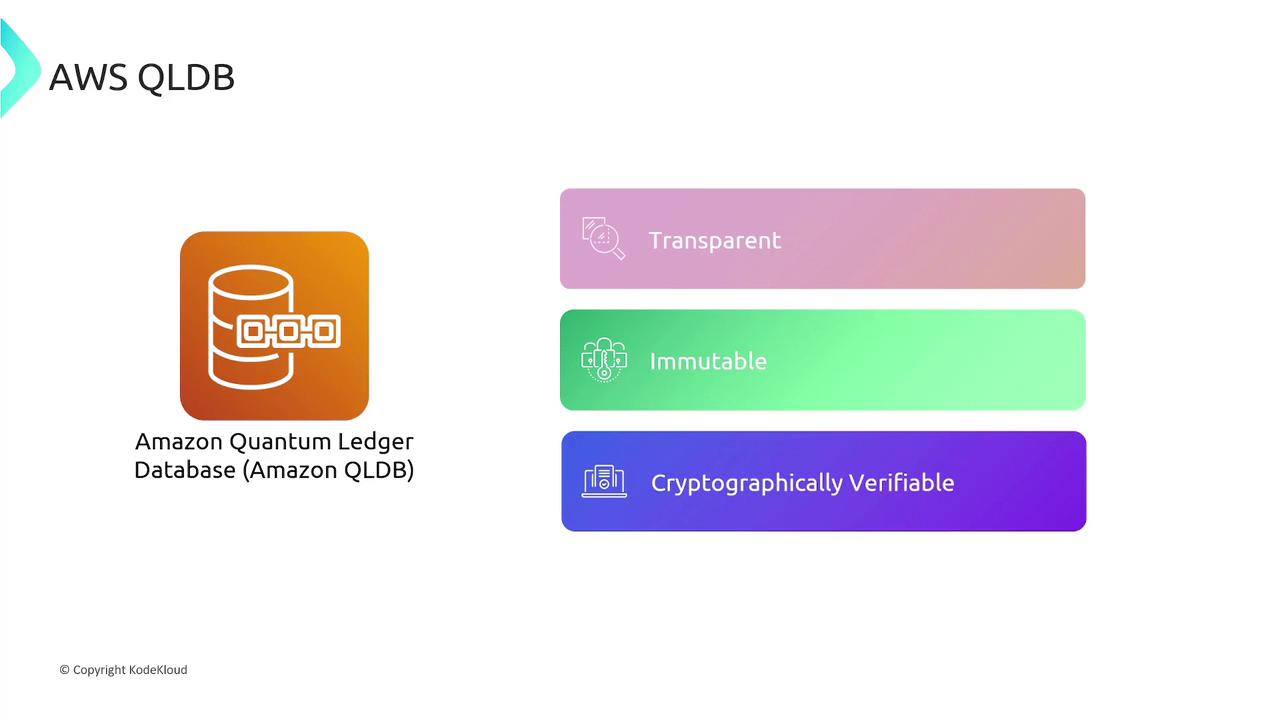
A Car Lifecycle Example
Imagine using QLDB to track a car’s lifecycle:- Initial Entry: The car’s first record is written to the journal as a block containing a unique identifier, metadata, and a hash value. This entry is updated in both the current data table (C table) and the history table (H table).
- First Resale: When the car is sold to Thomas, a new journal entry is added. The C table reflects the current owner, and the H table records the transaction.
- Subsequent Resale: When sold to Smith, the process repeats—appending a new block to the journal, ensuring every transaction is recorded chronologically and securely.
Ensuring Data Integrity with Cryptographic Verification
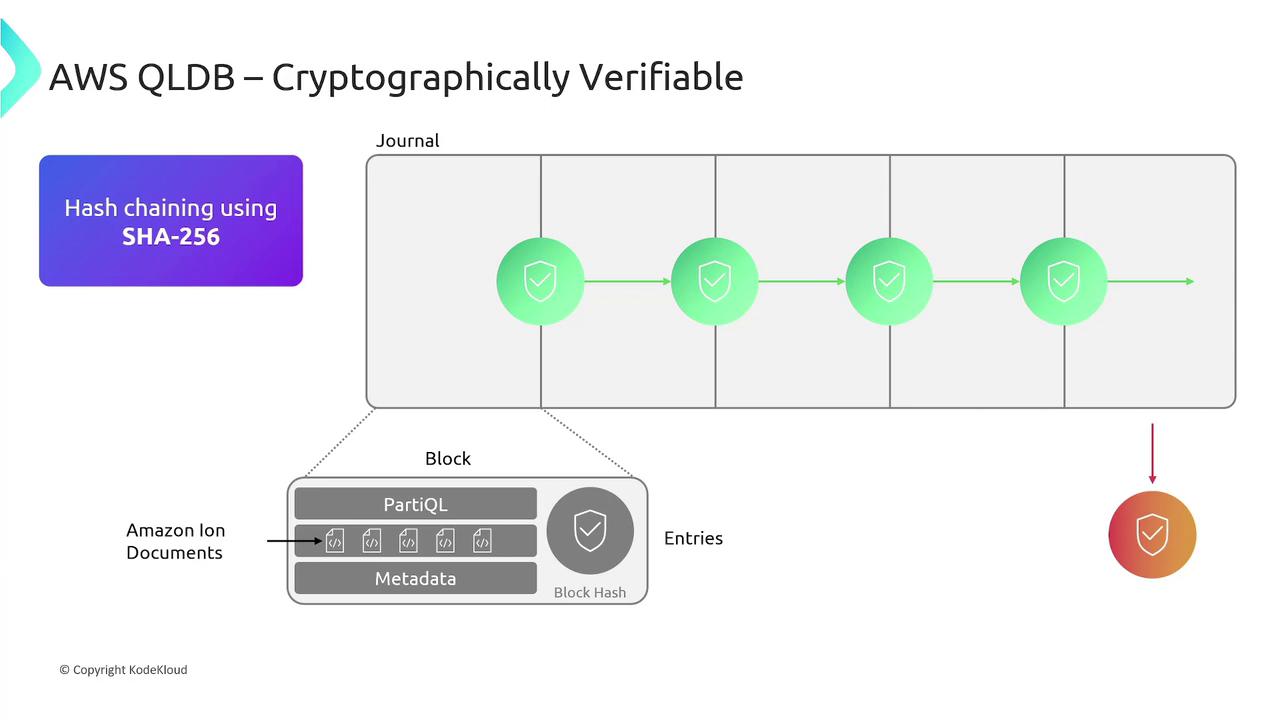
QLDB writes one block to its journal per transaction. Each block contains entry objects representing the processed document and the PartiQL statements applied. These blocks are sequenced and cryptographically linked using SHA-256, similar to blockchain technology, to maintain data integrity.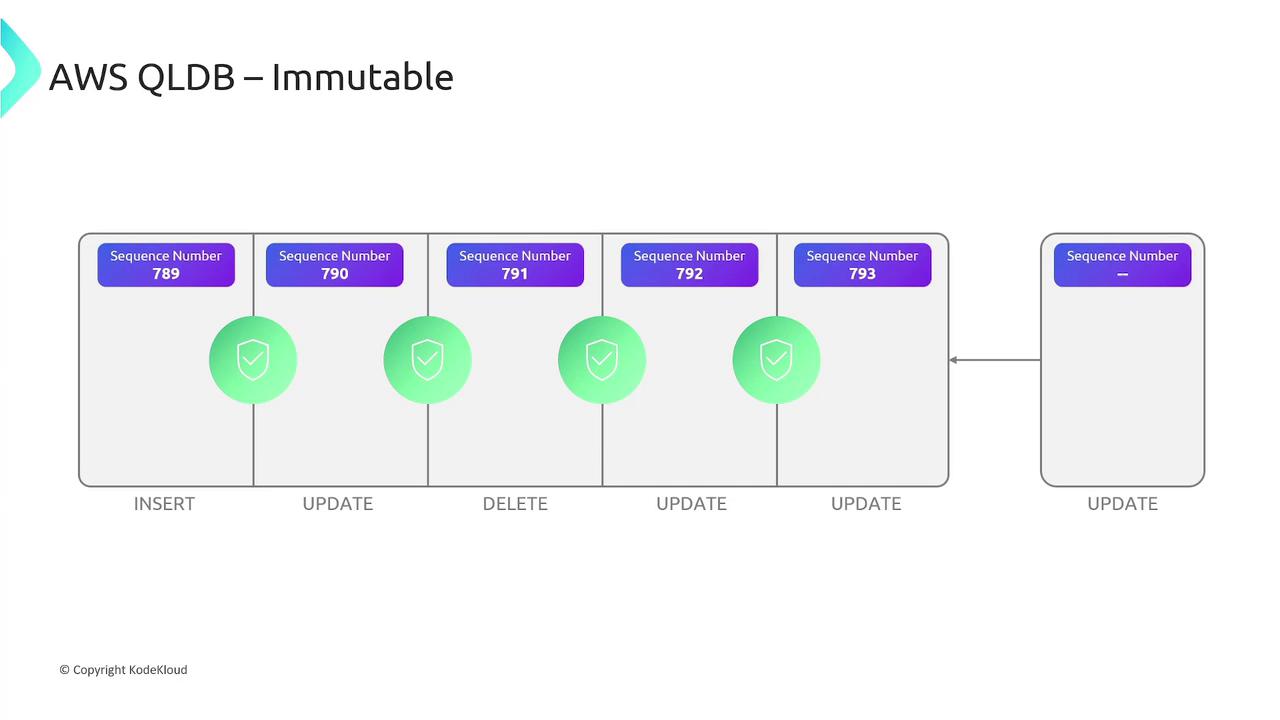
Core Features of QLDB
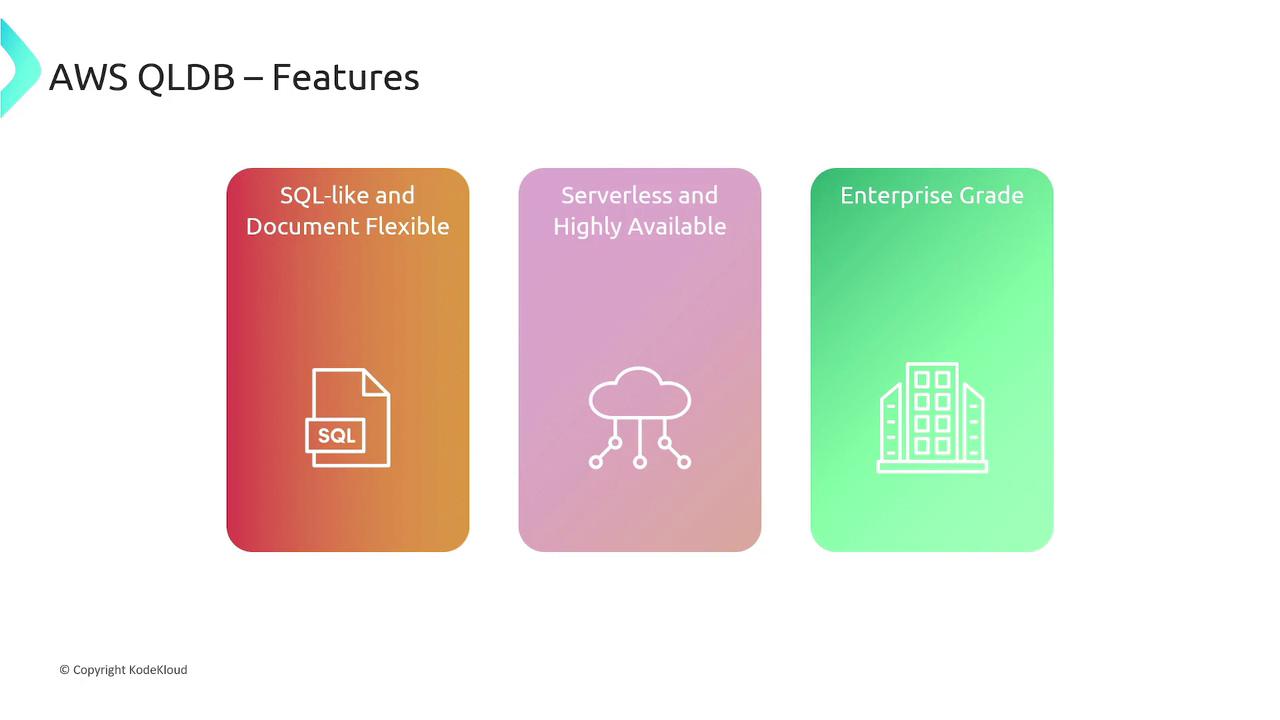
QLDB brings several powerful features to ledger management:- Open-Source and SQL-Compatible Query Language: Utilizes PartiQL which extends SQL to work with Amazon Ion, its document-oriented data model.
- Fully Managed and Serverless: Eliminates the need for server management while ensuring high availability.
- ACID Compliant: Supports enterprise-level reliability for mission-critical applications.
Use Cases for QLDB
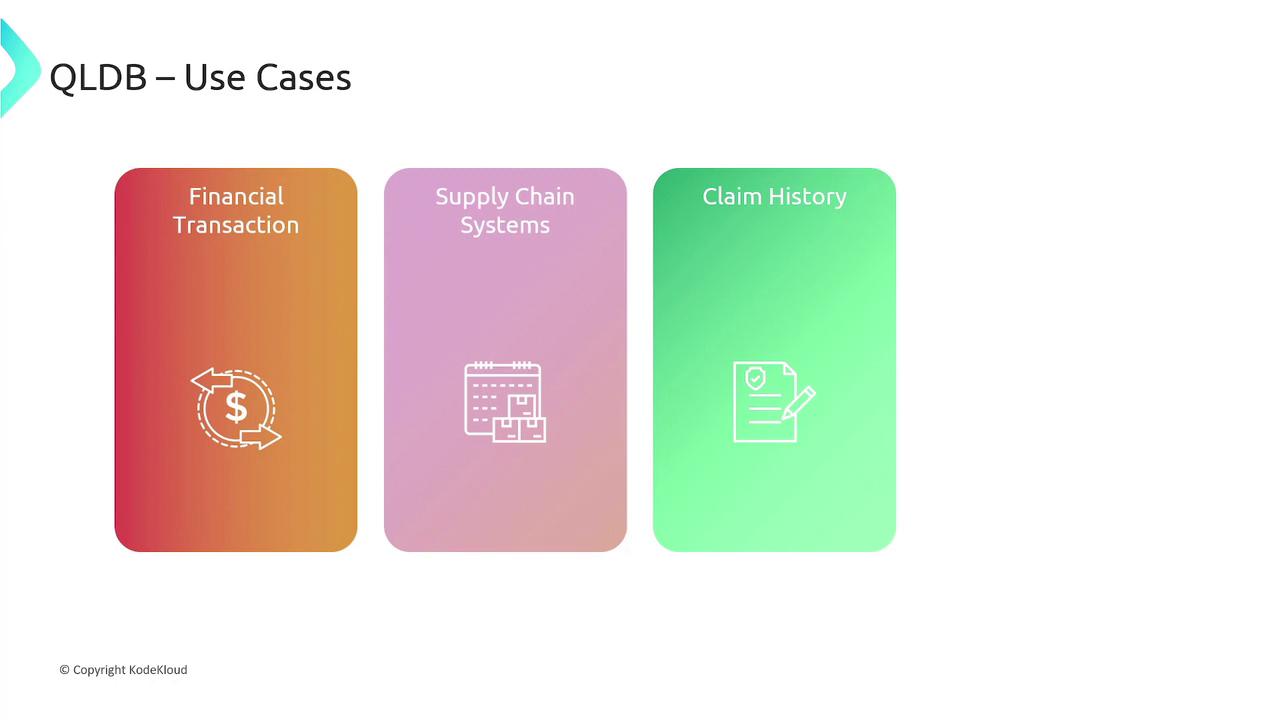
QLDB is ideal for applications that demand a verifiable, immutable ledger:- Financial Transactions: Track credit and debit card purchases.
- Supply Chain Management: Document shipments and purchases with an indelible audit trail.
- Claims History: Maintain an immutable record of insurance or digital claims.
Discover further details in the AWS QLDB documentation.
Dual Table Structure: Current vs. History
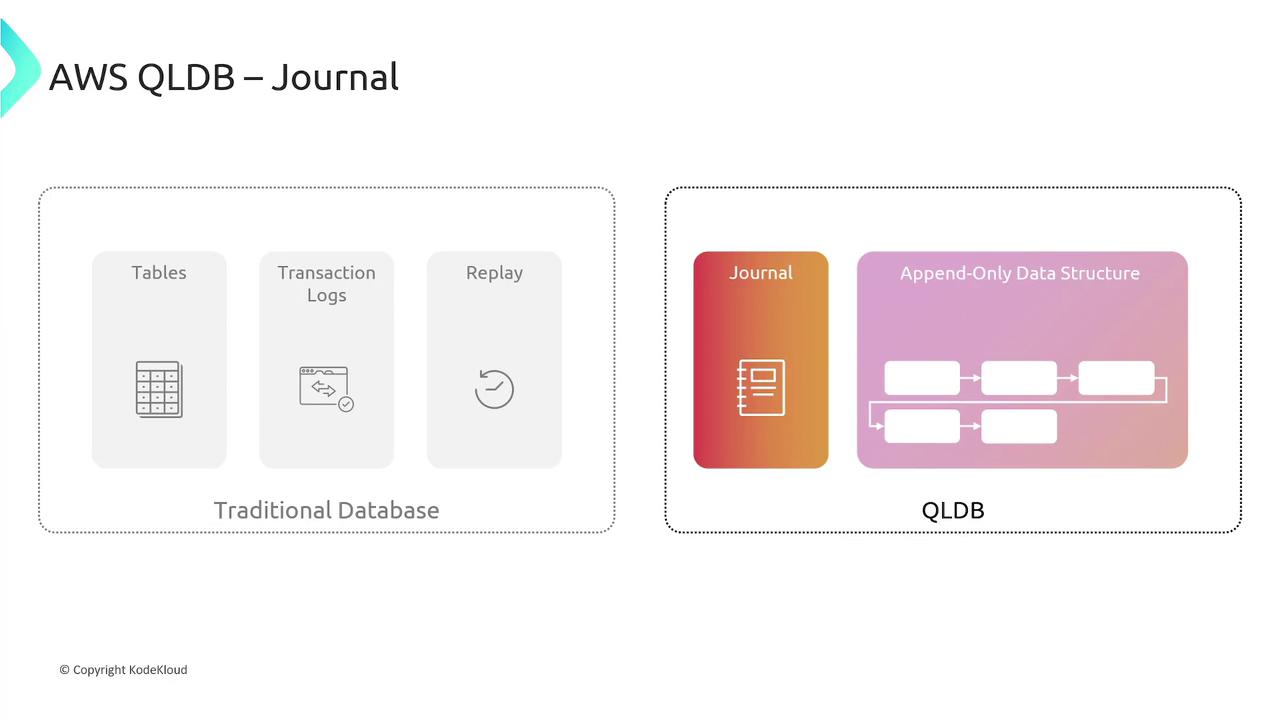
QLDB organizes data using two table types:- Current Table (C table): Reflects the latest data state.
- History Table (H table): Stores an immutable ledger of all historical changes.