

- Auto Scaling
- Application Load Balancer (ALB)
- Network Load Balancer (NLB)
- Gateway Load Balancer (GWLB)
- Amazon API Gateway
- Summary mapping and operational tips
Auto Scaling
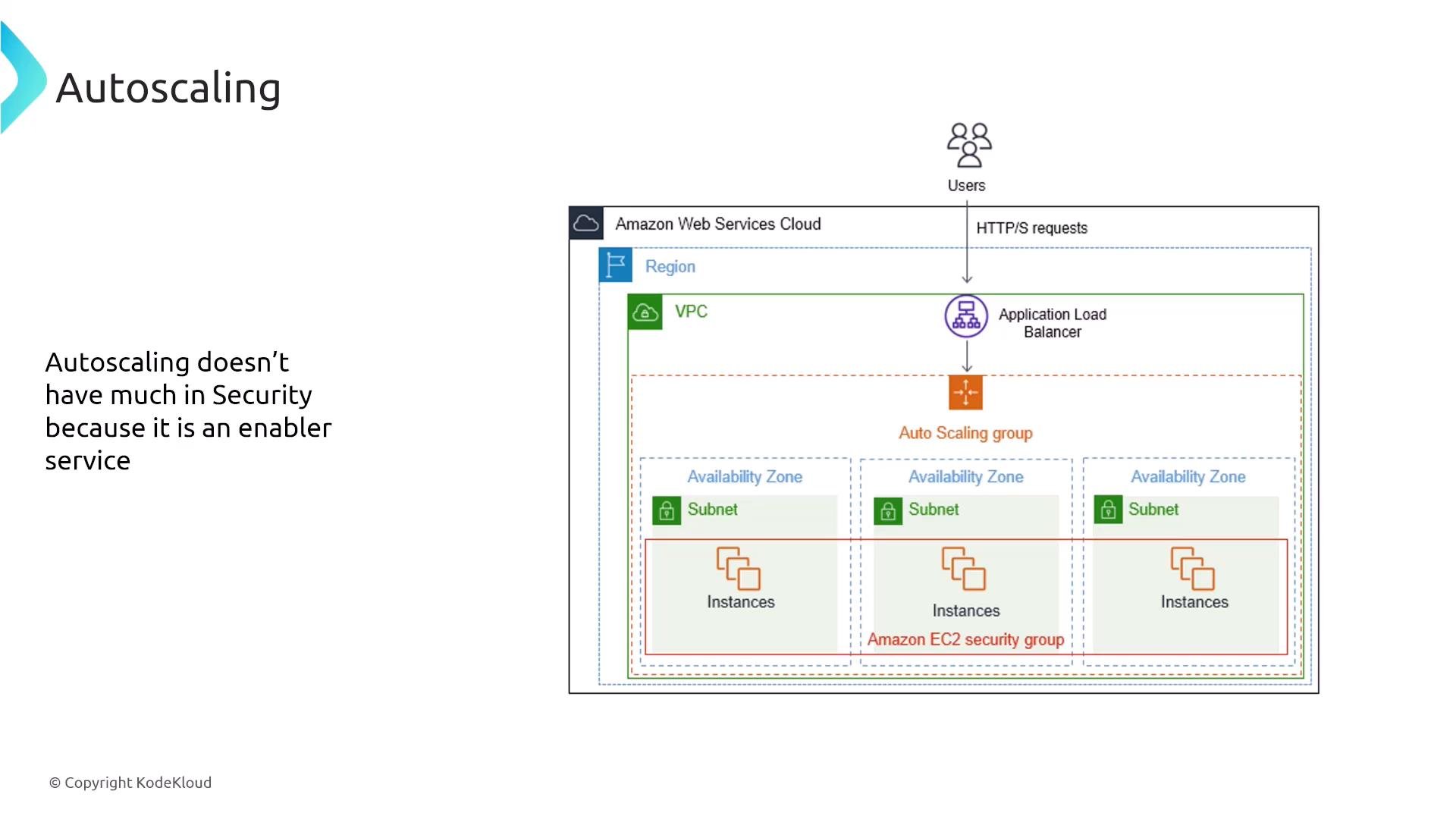
Auto Scaling automates the scaling of compute resources. While commonly associated with EC2, the auto scaling pattern is used across many AWS services (ECS tasks, ASG-backed instances, etc.). Auto Scaling is an enabler: the primary security controls are attached to the launched resources (EC2 instances, ECS tasks) rather than Auto Scaling itself. Key security considerations:- Service identity: Auto Scaling performs actions using a service-linked role. In IAM and exam scenarios, recognize the service-linked role as the IAM principal for Auto Scaling.
- Observability: monitor scaling activity with CloudWatch metrics/events and CloudTrail API logs to detect unexpected scaling behavior.
- Sizing and resilience: set sensible ASG
minandmaxvalues to meet availability, cost, and capacity requirements. Settingmin == maxdisables dynamic scaling and removes resiliency benefits.
Application Load Balancer (ALB)
ALB operates at Layer 7 (application layer) and is optimized for HTTP/HTTPS workloads, host/path-based routing, and content-aware routing. Security best practices for ALB:- OSI layer: Layer 7 — route based on HTTP semantics.
- Security groups: restrict inbound ports to only what’s required (for example, 443 for HTTPS) and allow outbound traffic necessary to reach targets.
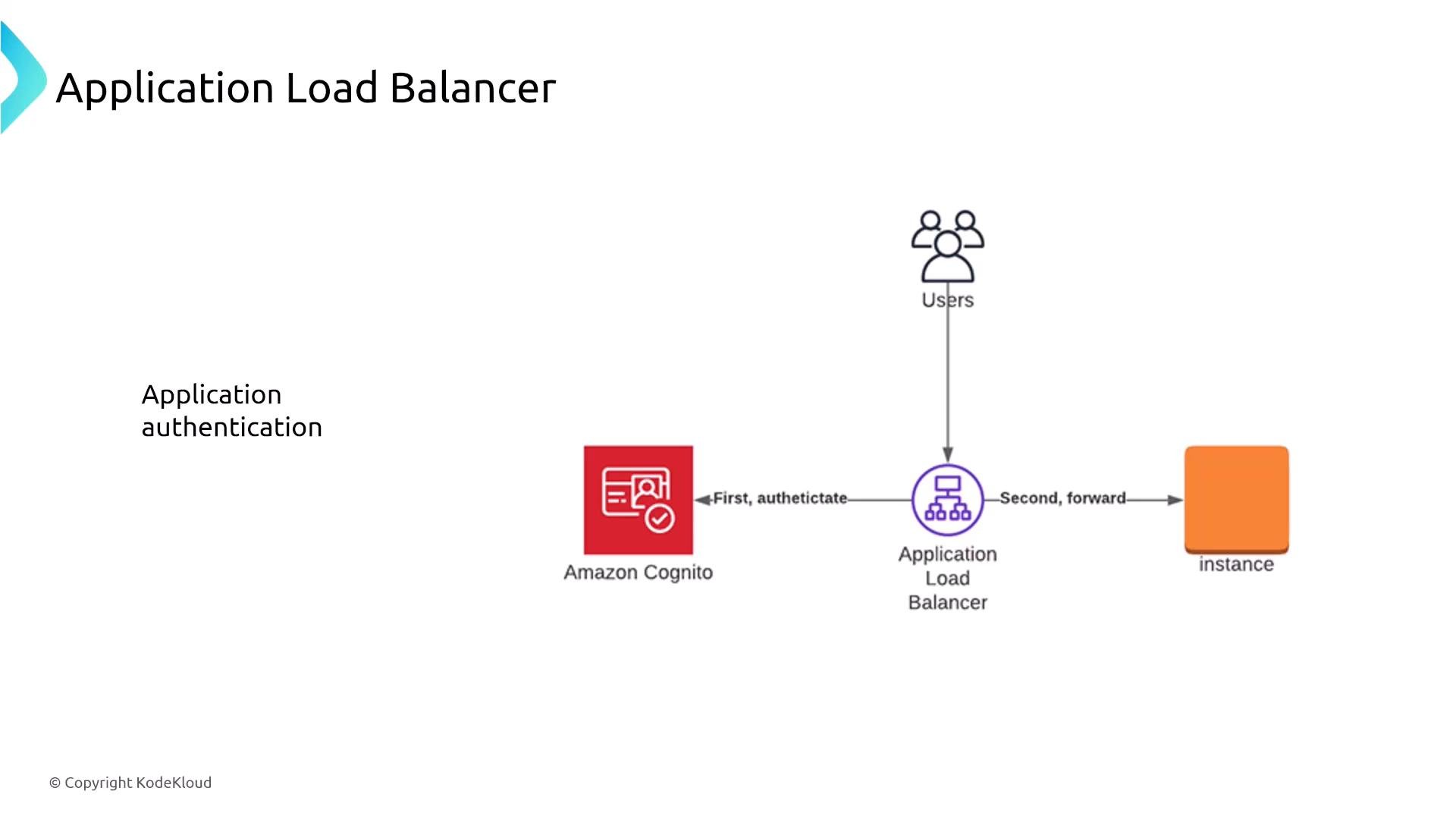
- Authentication: use listener rule authentication with Amazon Cognito or external OIDC providers to authenticate requests before forwarding.
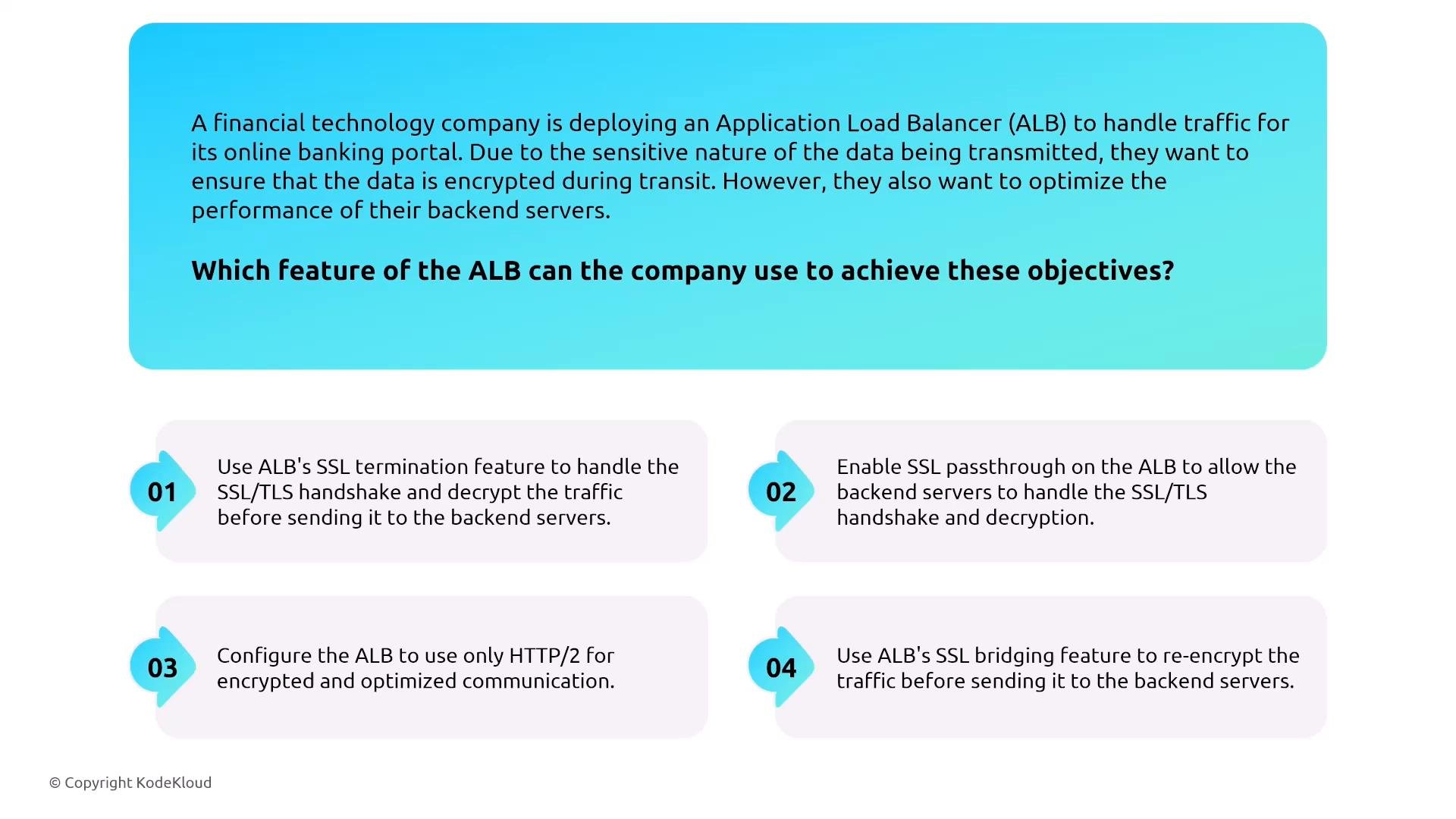
- TLS termination: terminate TLS on the ALB and use AWS Certificate Manager (ACM) for certificate management and automatic renewal.
- Logs and monitoring: enable ALB access logs to S3 for request/response-level detail; use CloudWatch for metrics and CloudTrail for configuration/API auditing.
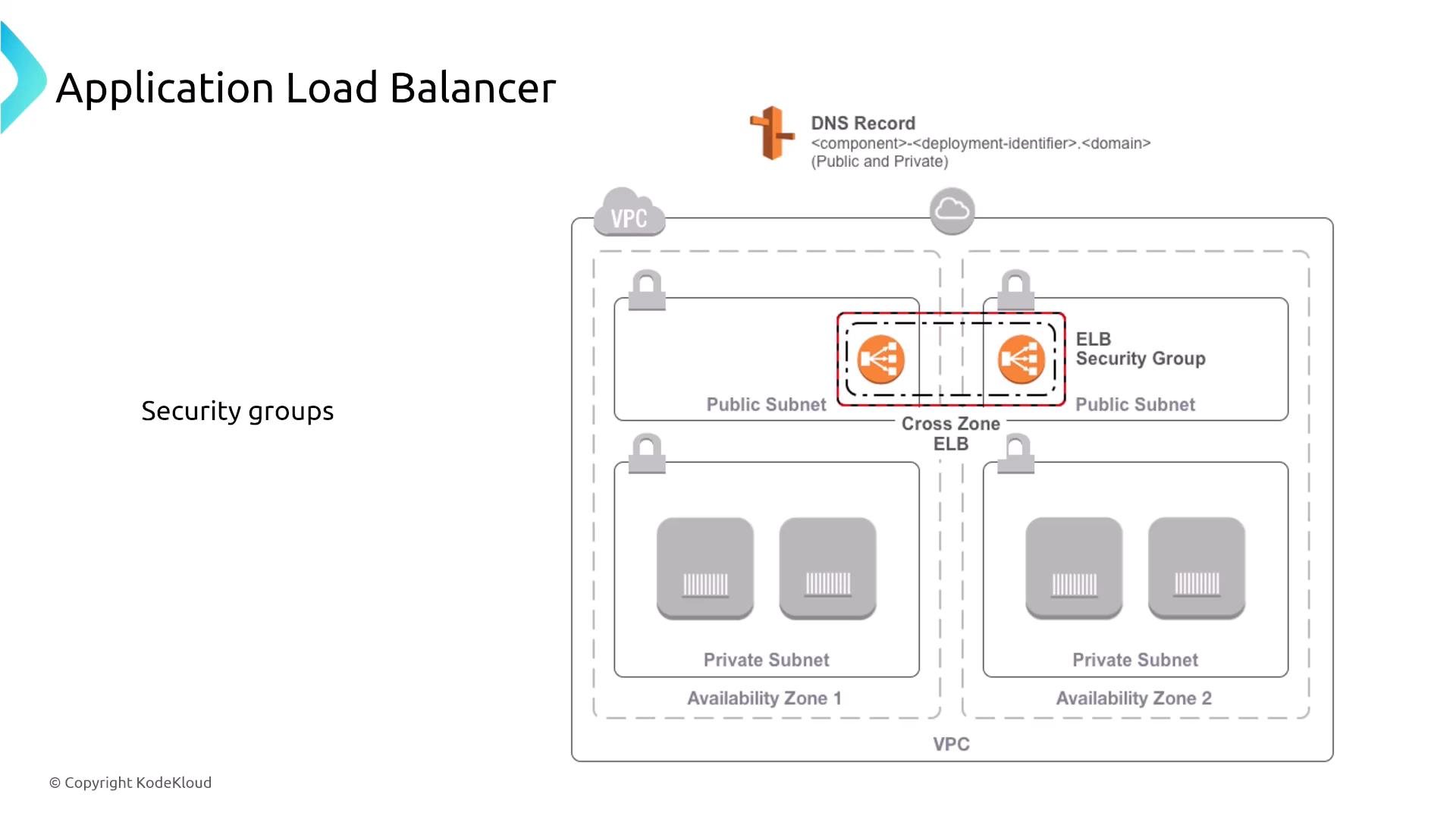
- ALB OSI layer: Layer 7.
- Pre-target authentication: ALB listener authentication with Cognito or OIDC.
- Encrypt traffic in transit: enable HTTPS listeners and use ACM-managed certificates.
Network Load Balancer (NLB)
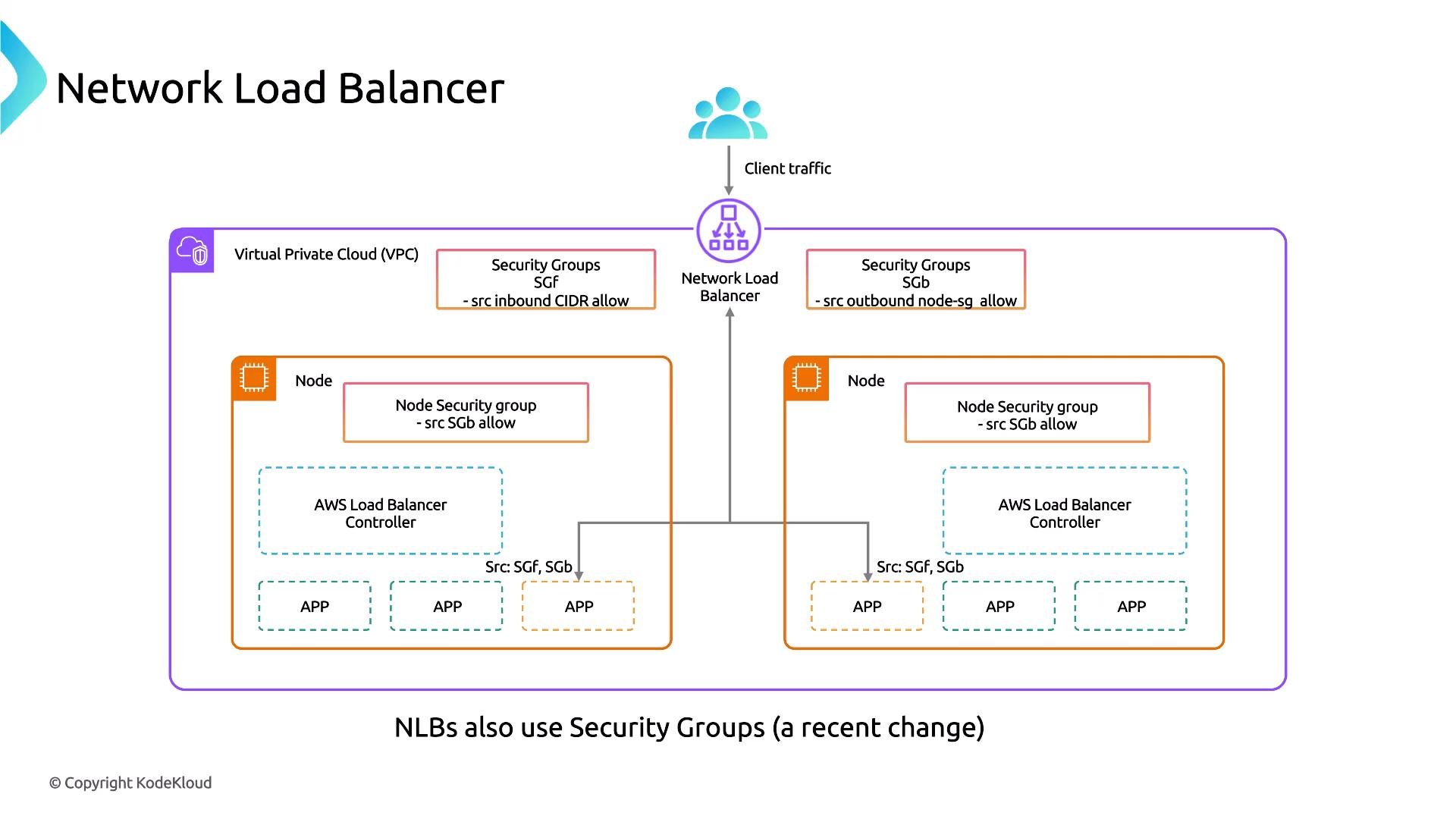
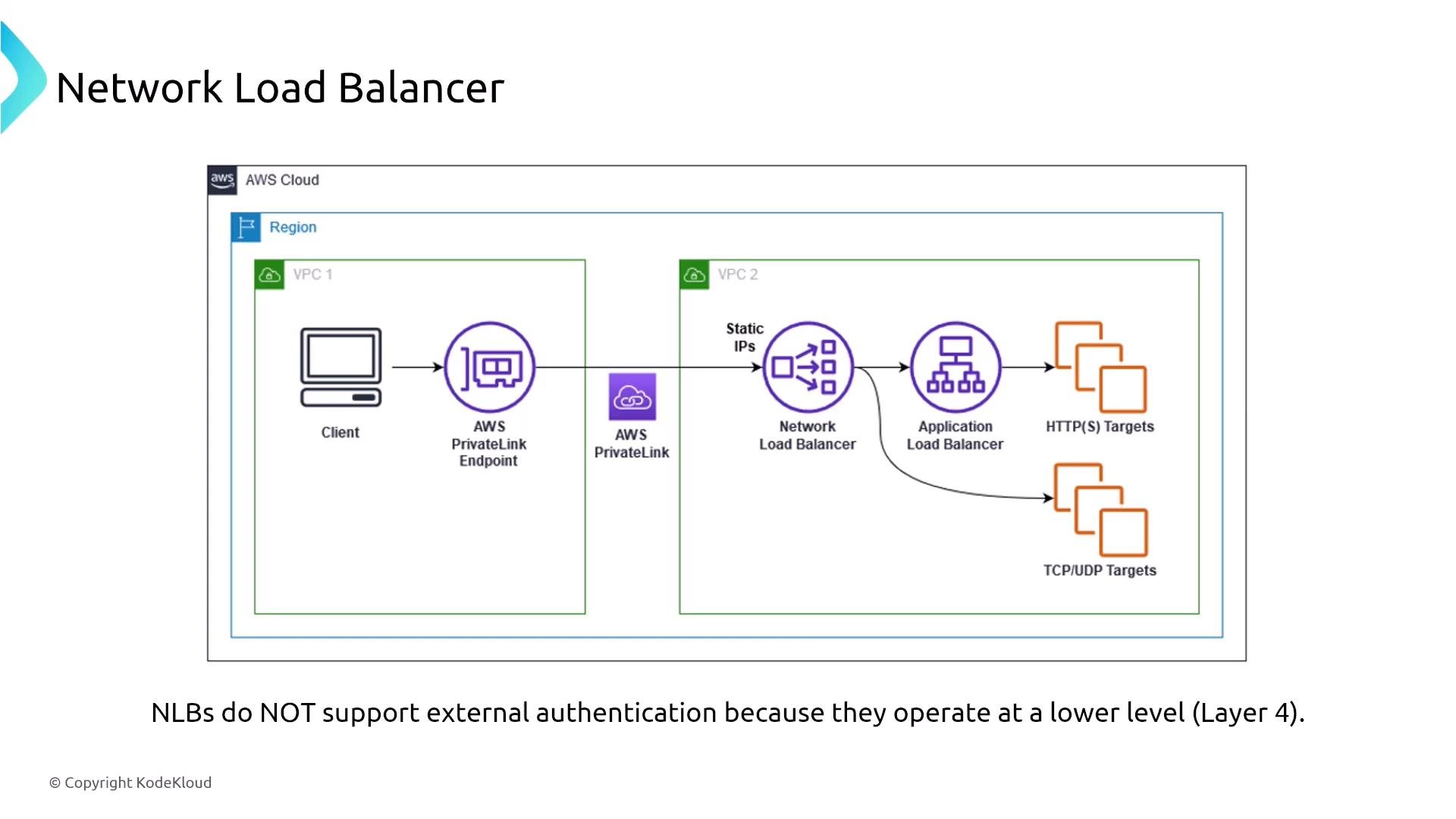
NLB operates at Layer 4 (transport layer), providing extremely high throughput, low latency, and the ability to expose static IP addresses. Key security and operational points:- OSI layer: Layer 4 — routes based on TCP/UDP rather than HTTP semantics.
- Listeners: supports TCP, UDP, and TLS listeners. TLS listeners allow TLS termination at the NLB.
- Access control: use security groups on targets or interface ENIs, and NACLs at the subnet level where appropriate.
- PrivateLink: NLB is a common target for AWS PrivateLink endpoint services — use this for secure, private connectivity across VPCs or accounts.
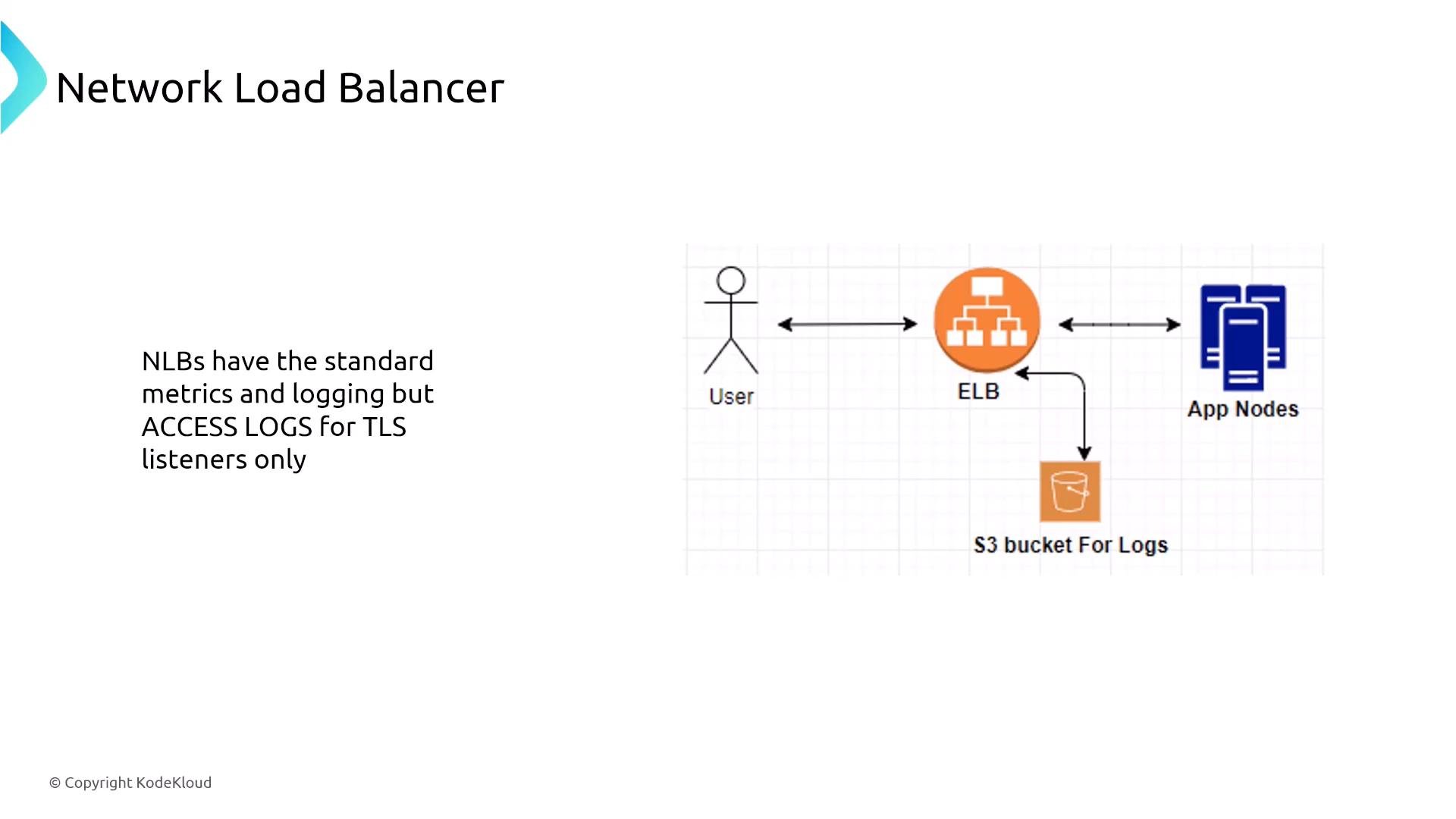
- Logging: NLB integrates with CloudWatch metrics and supports access logs to S3 for some listener types; verify current AWS docs for listener-specific logging support.
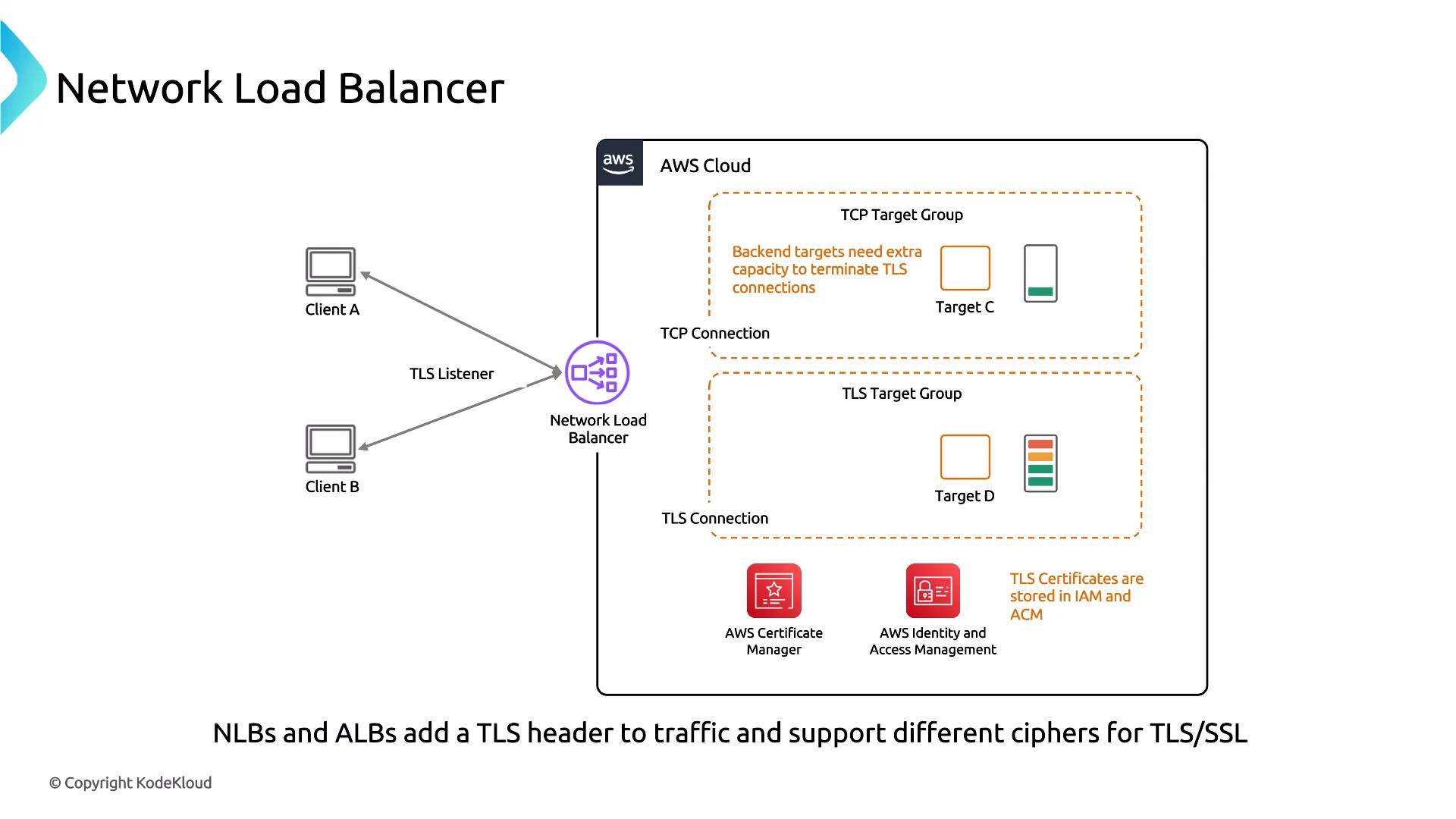
- NLB supports TLS but offers less granular cipher-suite customization than a dedicated proxy. If you need strict cipher control, terminate TLS on a proxy or at application endpoints where you can configure the TLS stack directly.
Gateway Load Balancer (GWLB)
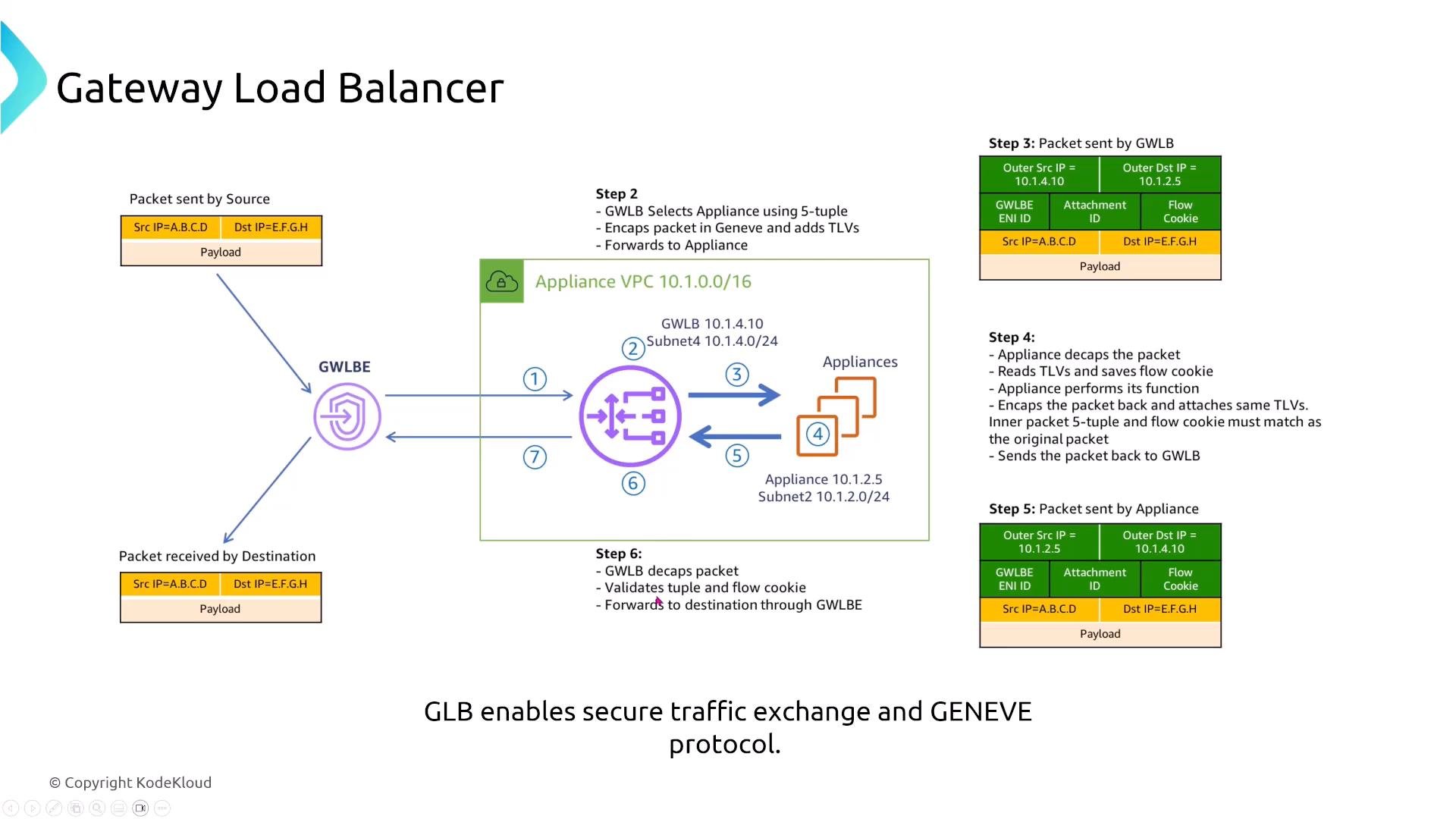
Gateway Load Balancer is purpose-built to deploy and scale third‑party inline network appliances (IDS/IPS, firewalls, DPI). It pairs flexible traffic steering with appliance scaling. Technical details:- Encapsulation: GWLB uses GENEVE to encapsulate and tunnel traffic to inspection appliances — allowing metadata and flexible headers to be delivered to appliances.
- Traffic flow: client → GWLB endpoint → GENEVE-encapsulated packet to appliance → appliance inspects/modifies → decapsulate at GWLB → forward to destination.
- Endpoint access control: create a Gateway Load Balancer endpoint (GWLBe) to connect consumer VPC traffic to a provider VPC. Use endpoint service configuration and resource-based policies to control which principals can create endpoints.
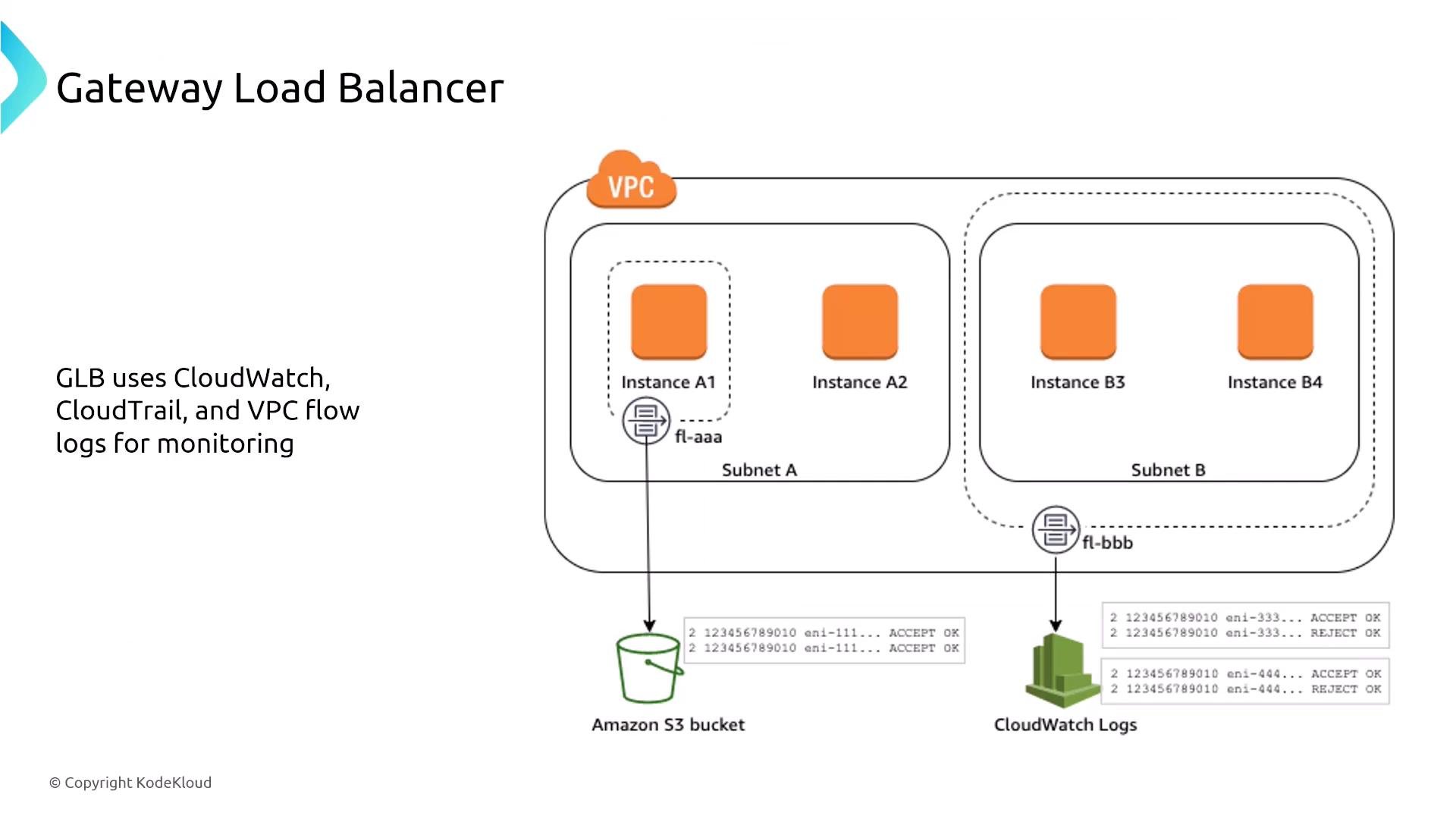
- Monitoring: enable CloudWatch metrics, CloudTrail, and VPC Flow Logs for per-ENI and per-flow network visibility.
- Enable VPC Flow Logs when you need per-flow inspection visibility.
- Use endpoint service policies to restrict who can connect to your GWLB-managed service.
Amazon API Gateway
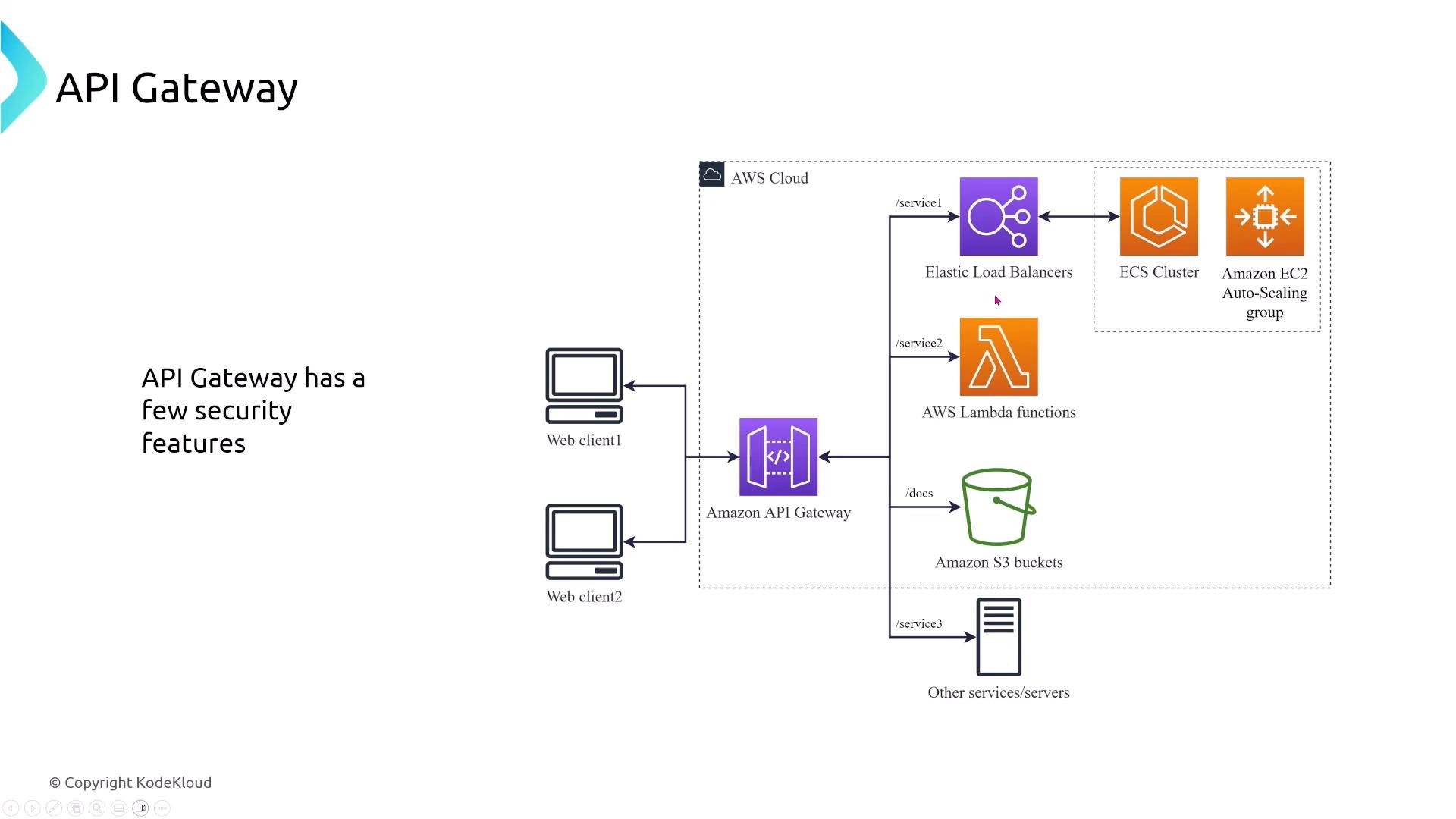
API Gateway is a managed front door for APIs and serverless backends. It offers request routing, transformation, authorization, throttling, caching, and observability features. Security and management features:- Purpose: front proxy for APIs supporting integrations to Lambda, ALB/NLB-backed services, HTTP endpoints, and many AWS service integrations.
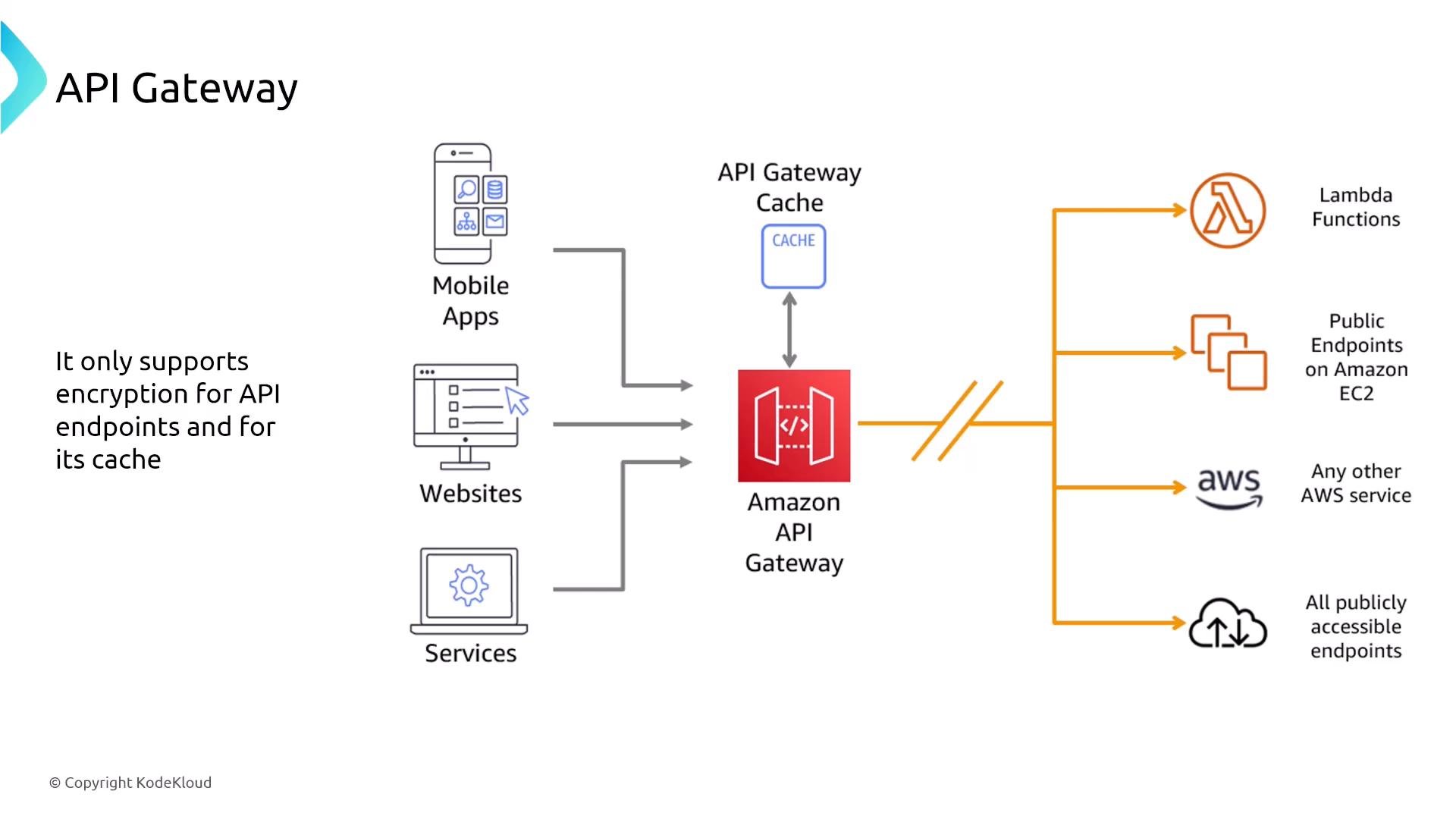
- Encryption: TLS for endpoint communication and encryption at rest for API cache. API Gateway also supports mutual TLS (mTLS) for client and server certificate verification.
- Authorization:
- IAM (sigv4) for AWS service-to-service calls,
- Amazon Cognito user pools for user authentication,
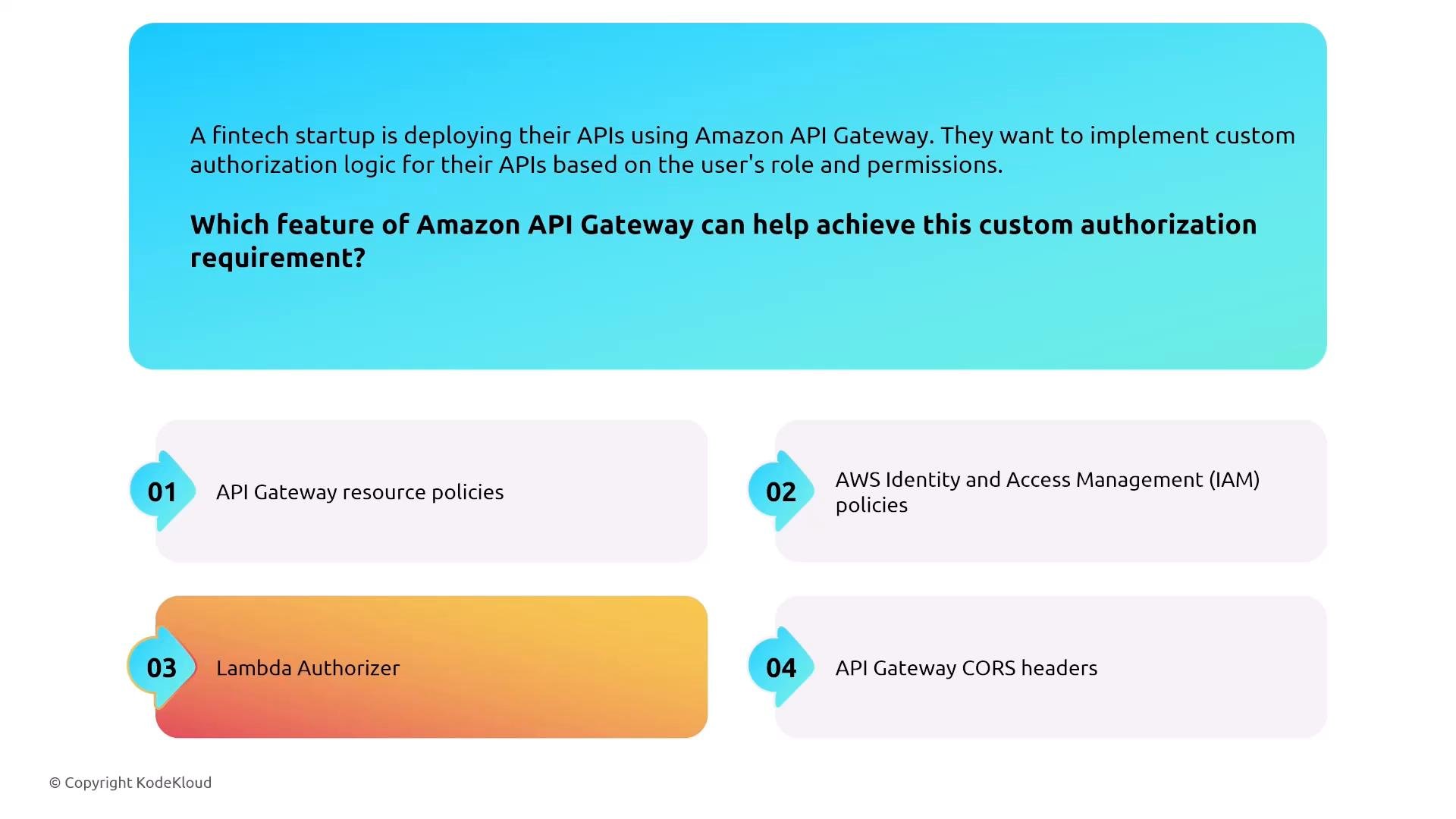
- Lambda Authorizers (custom authorizers) for custom auth/permission logic returning IAM policies.
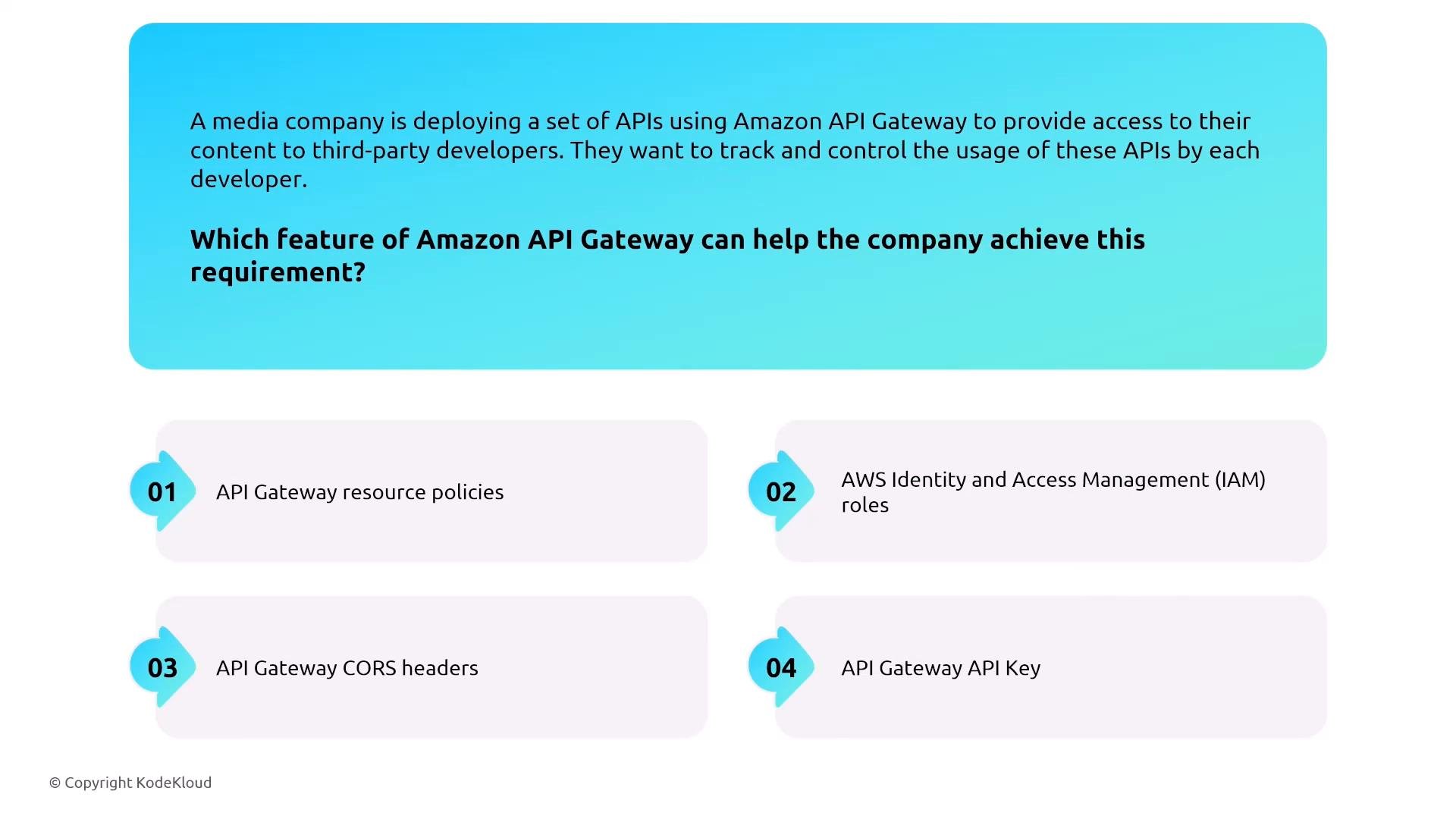
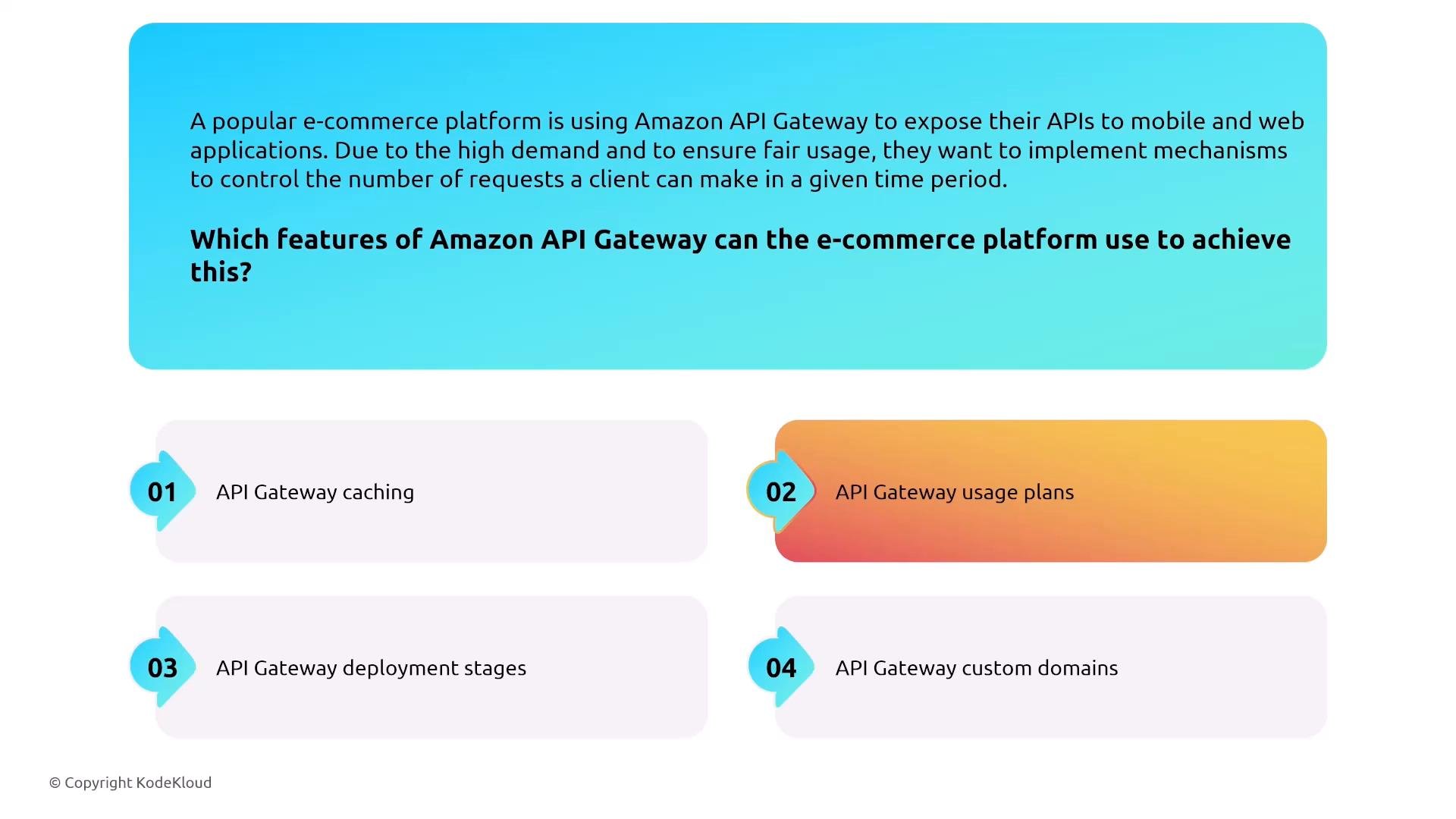
- API keys & usage plans: use API keys and usage plans to track, throttle, and quota developer or third-party usage.
- Observability: CloudWatch Logs/Metrics and AWS X-Ray support for distributed tracing.
- Custom authorization logic: use a Lambda Authorizer.
- Metering third-party usage: use API keys with usage plans, throttling, and quotas.
- Detailed diagnostics and auditing: enable CloudWatch Logs for the API and consider X-Ray for distributed tracing.
Quick Reference Table — Service, OSI Layer, and Recommended Controls
Closing notes
- Many integration services act as “enablers”: focus on how they connect, what they terminate, and which resources they expose.
- When answering exam or design questions, map each service to:
- its OSI layer,
- its authentication and authorization capabilities,
- its logging/monitoring options,
- and whether it persists data (for example, ALBs generally do not persist application data; API Gateway may cache responses that can be encrypted at rest).
- Apply defense in depth: network controls (security groups/NACLs), identity controls (IAM/Cognito/Lambda authorizers), transport security (TLS/mTLS), and observability (CloudWatch, CloudTrail, VPC Flow Logs).
When designing integrated applications, apply defense in depth: network controls (security groups/NACLs), identity controls (IAM/Cognito/Lambda authorizers), transport security (TLS/mTLS), and observability (CloudWatch, CloudTrail, VPC Flow Logs).