

Celebrate — then regroup
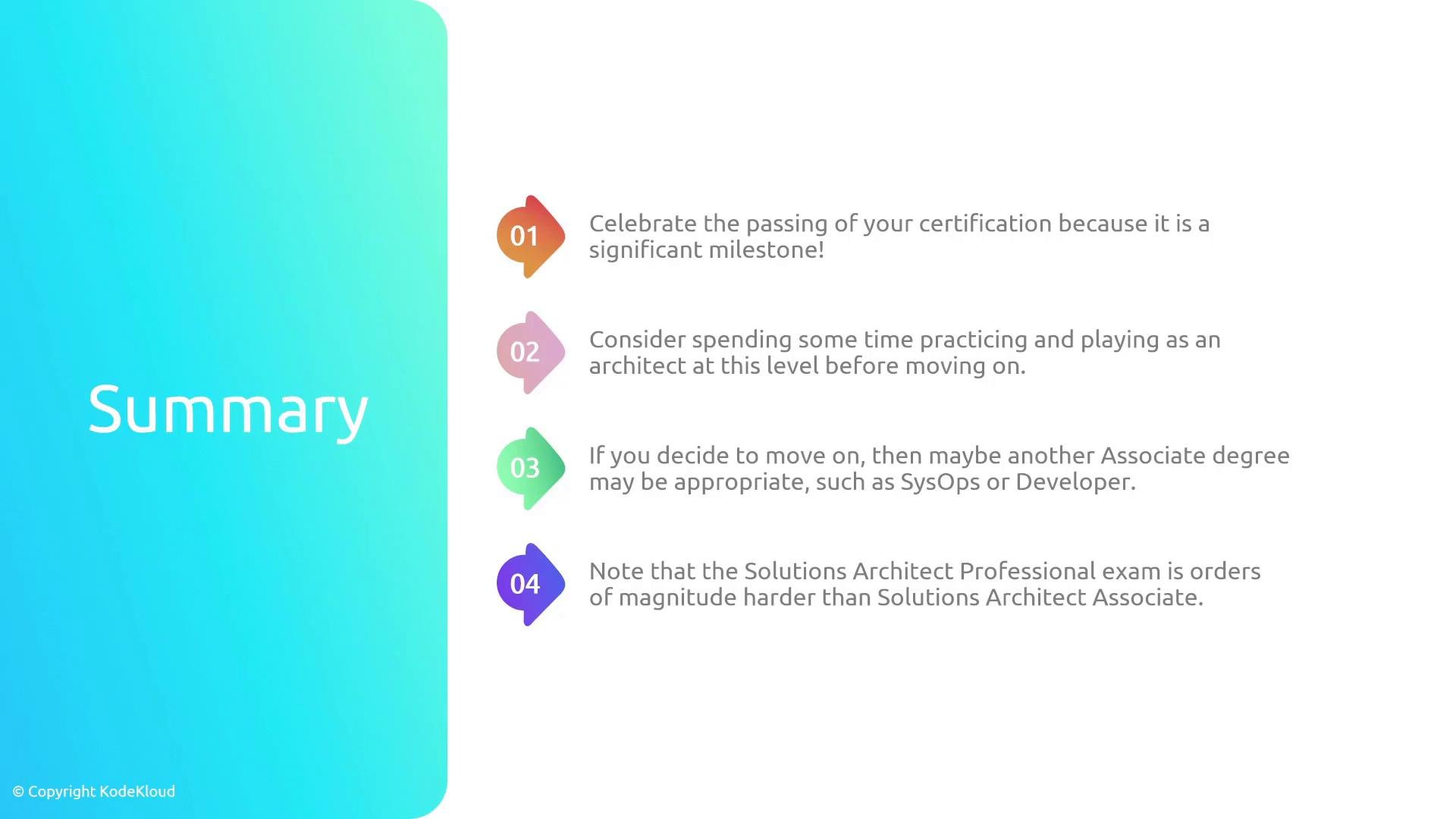
- Celebrate your achievement. Passing this exam is a big win.
- If you didn’t pass but were close, don’t be discouraged. Reach out on Slack for encouragement and targeted feedback. Often a few focused adjustments make the difference.
Before you chase the Professional exam
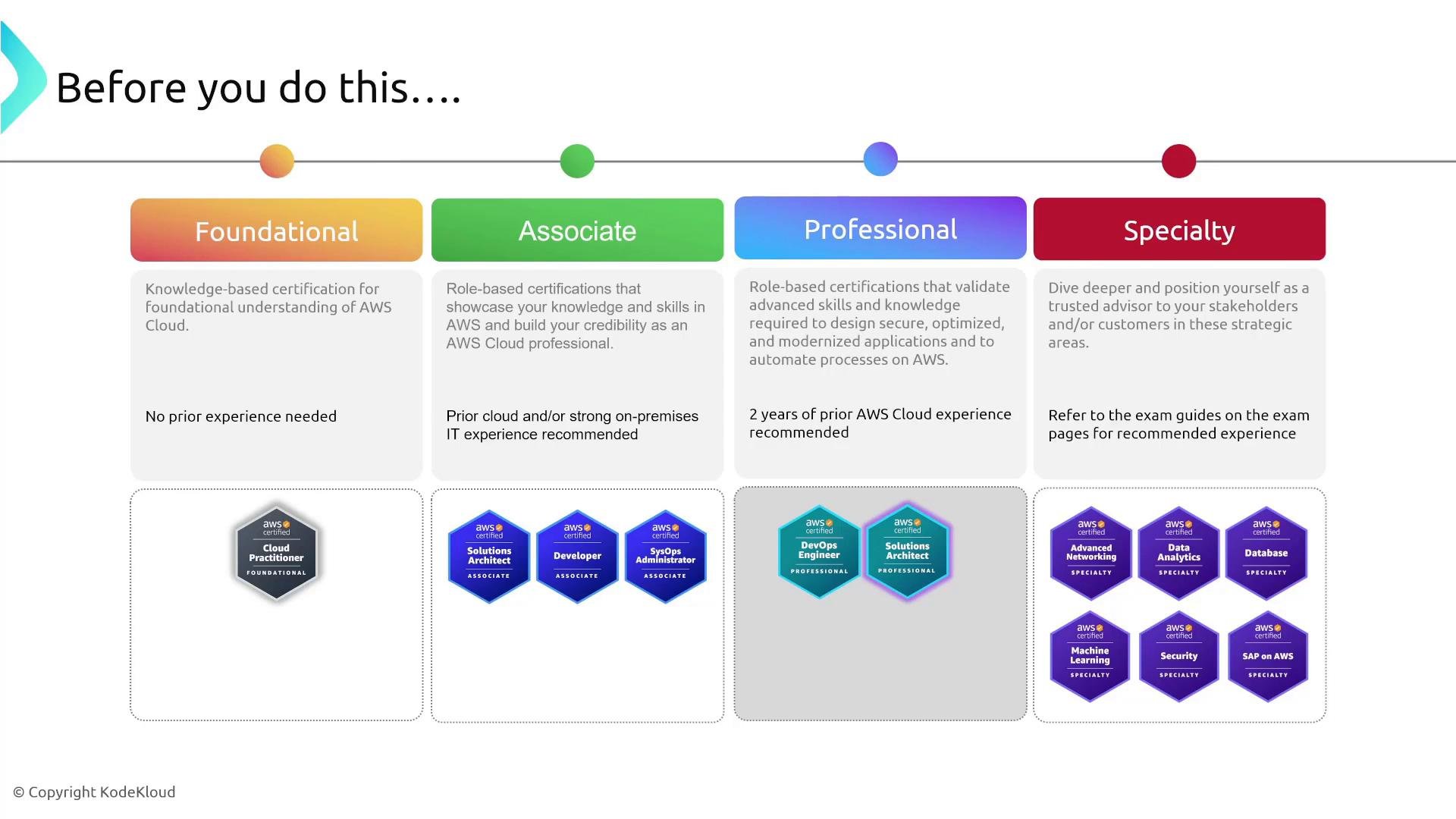
- Don’t rush into the Solutions Architect – Professional. It’s significantly harder and expects deeper, hands-on experience across services and architecture patterns.
- Strengthen your Associate-level skills first. The Developer – Associate and SysOps – Associate certifications are excellent complements, especially for DevOps or developer-focused roles.
- The Solutions Architect – Associate gives a broad AWS overview and a foundation in architectural decision-making — useful even if your primary role is development or system administration.
Build hands-on experience before moving up
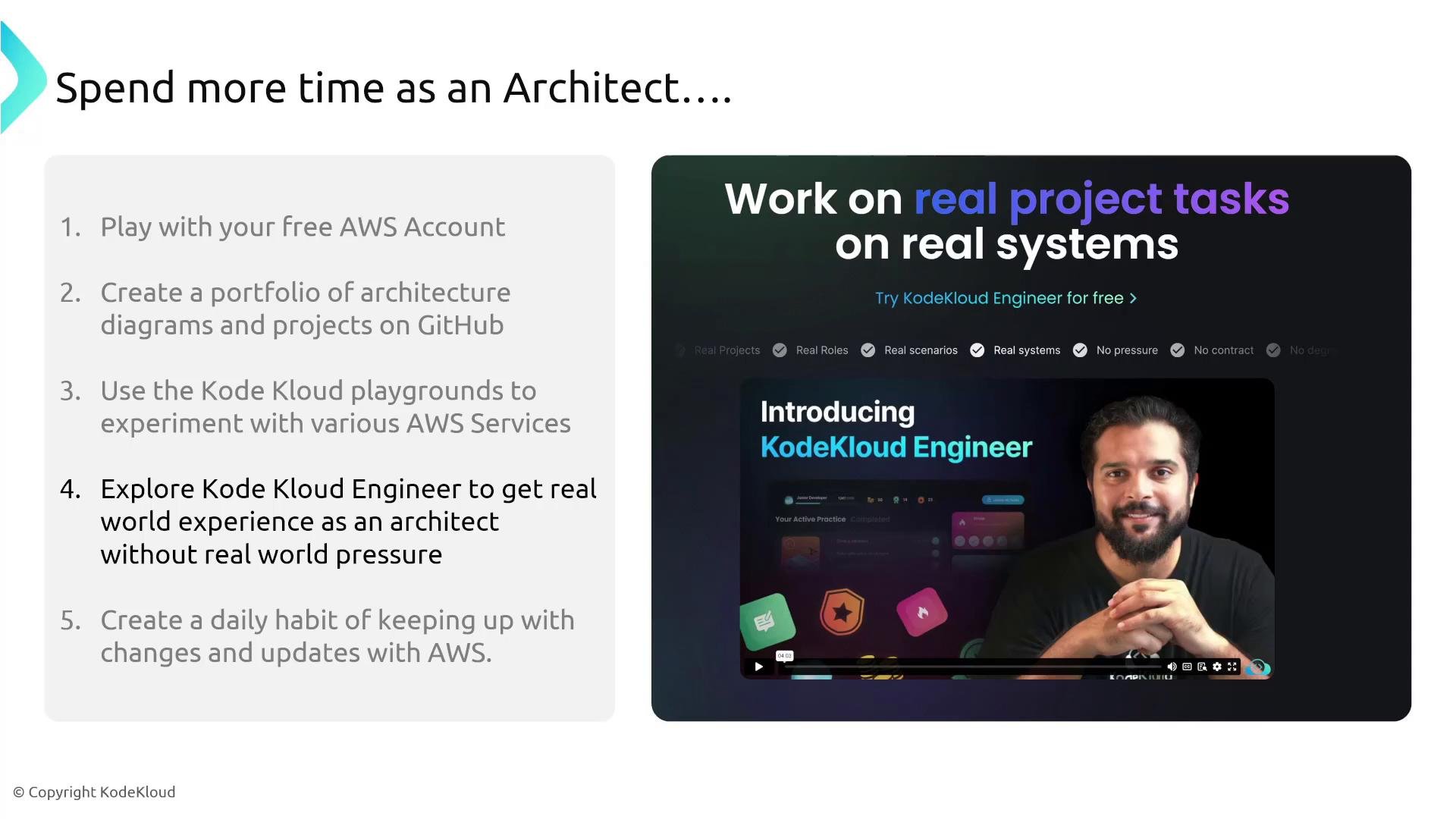
- Spend more time designing and implementing real architectures at the Associate level. Practical exposure makes Professional-level topics far easier to understand.
- Use the AWS Free Tier to prototype architectures and validate design decisions. Monitor billing and be aware some services or patterns can exceed free limits.
- Produce project artifacts for your portfolio: architecture diagrams, CloudFormation/Terraform templates, deployment scripts, and GitHub repositories that demonstrate your work and reasoning.
Practical project ideas
- Build a fault-tolerant web application with multi-AZ deployment and autoscaling.
- Implement centralized logging and monitoring using CloudWatch, CloudTrail, and an ELK/managed service.
- Create an IaC project: provision a VPC, ECS/EKS/EC2 instances, RDS, and necessary IAM policies using Terraform or CloudFormation.
Practice with real tasks and playgrounds
- Work on project-based tasks to convert theory into practice. Platforms such as KodeKloud Engineer provide hands-on labs and real systems with no production risk — ideal for learning by doing.
- Recreate exam scenarios or questions that surprised you during the test in a sandbox environment. Reproducing and troubleshooting those scenarios cements understanding.
Adopt a continuous learning habit
- Keep up with AWS service changes and announcements. Subscribe to the AWS Blog and follow monthly updates from trusted instructors.
- Build a daily or weekly routine: read release notes, experiment with new services, or automate a small task (for example, a script that notifies you about AWS service updates).
- Practice designing solutions that address realistic constraints — cost, performance, security, and availability — so your architectures are balanced and production-ready.
Recommendation summary (quick reference)
Spend time building and documenting real projects. A concrete portfolio often helps more with hiring and real-world work than simply collecting certifications.
The Solutions Architect – Professional (and most Specialty exams) demand deeper practical experience. Don’t rush into them without sufficient hands-on exposure.
Next steps and resources
- Start a small portfolio project and publish it to GitHub with clear README and architecture diagrams.
- Join community channels (Slack, Reddit, LinkedIn) to ask questions and get feedback.
- Follow AWS release notes and blogs:
- Explore hands-on labs and sandbox platforms like KodeKloud to practice scenarios at your own pace.