

- Learn the relevant AWS services and their trade-offs.
- Learn design patterns for each attribute: security, resiliency, performance, and cost.
- Practice “turning the dials” on those attributes — how a change to one attribute affects the others.
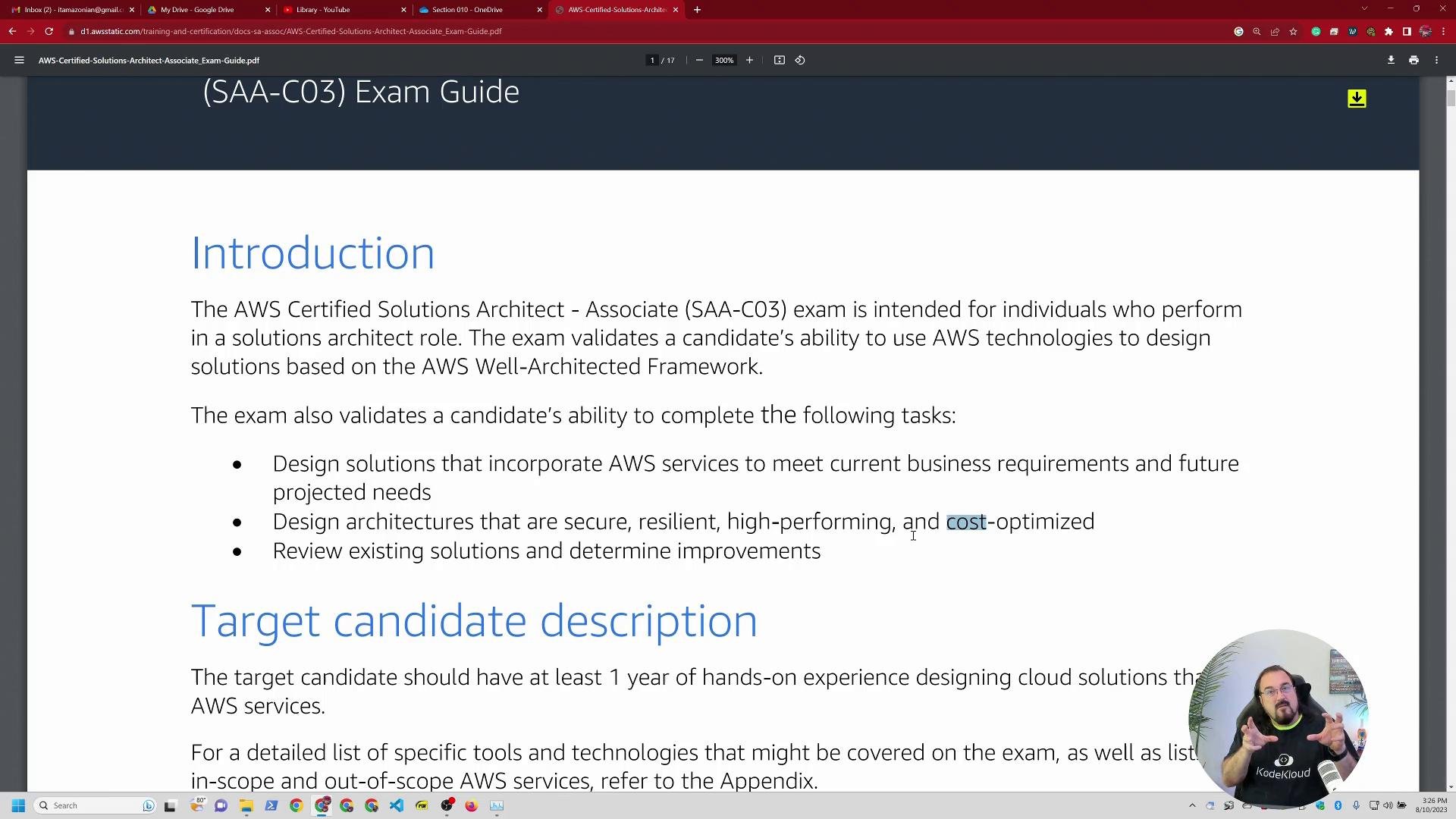
- AWS recommends at least one year of hands-on experience designing available, cost-efficient, fault-tolerant, and scalable systems on AWS. That level of practical exposure provides a strong foundation for the exam.
- If you don’t have a full year of production experience, build practical projects and document them. A focused portfolio of small architectures, deployments, and design decisions can substitute for formal experience and is useful during interviews.
Build hands-on projects as part of your study. A portfolio of small architectures and deployments often substitutes for formal experience when demonstrating your skills.
About the unscored questions: the exam includes pretest items that are indistinguishable from scored questions. Treat every question as if it counts and manage your time accordingly.
- Practice full-length timed exams to get used to the 130-minute window.
- Aim above the minimum passing score to allow for tough wording or unfamiliar scenarios on test day.
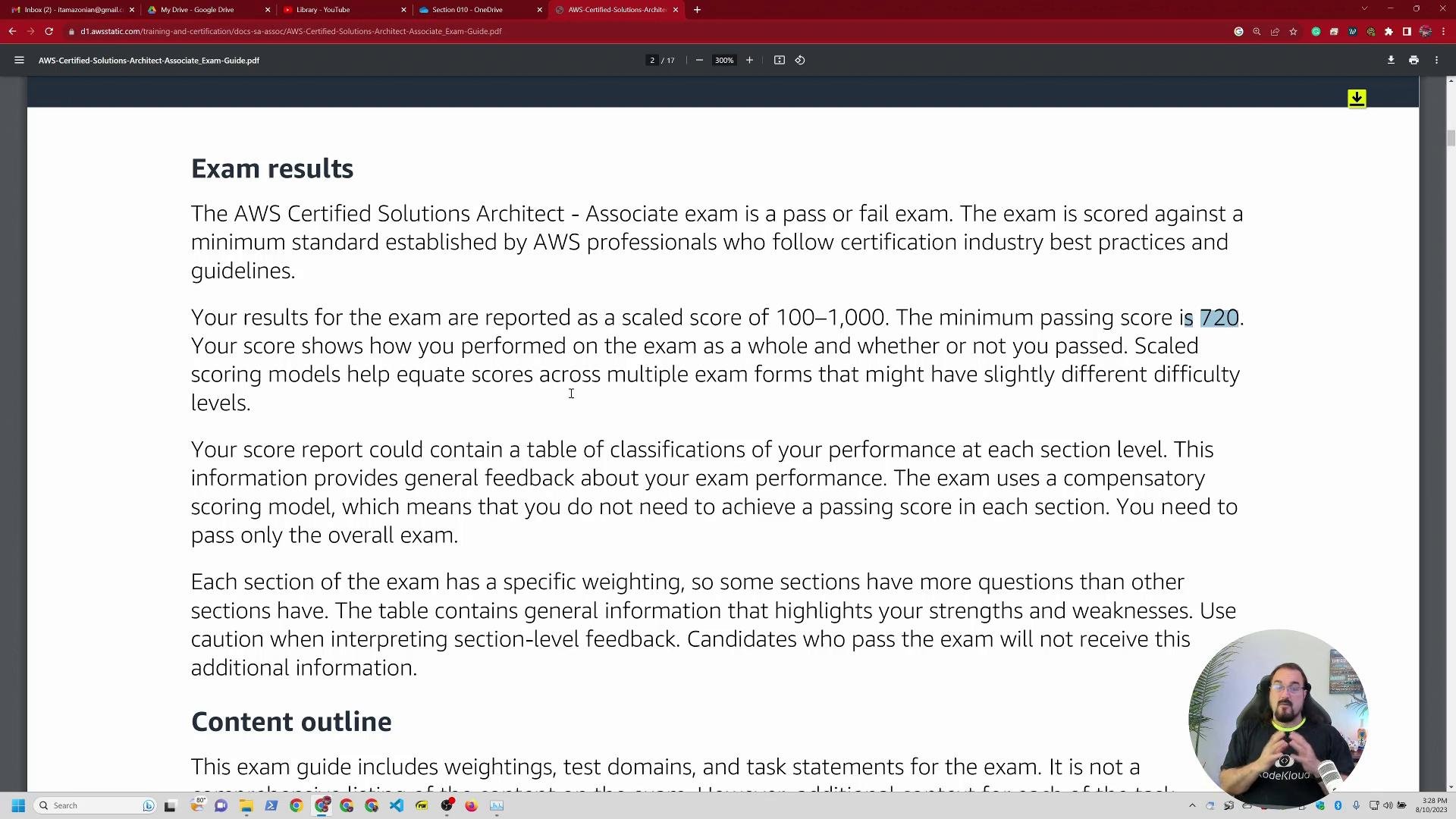
Allocate study time proportionally (e.g., prioritize security and resiliency) while ensuring balanced coverage across all domains.
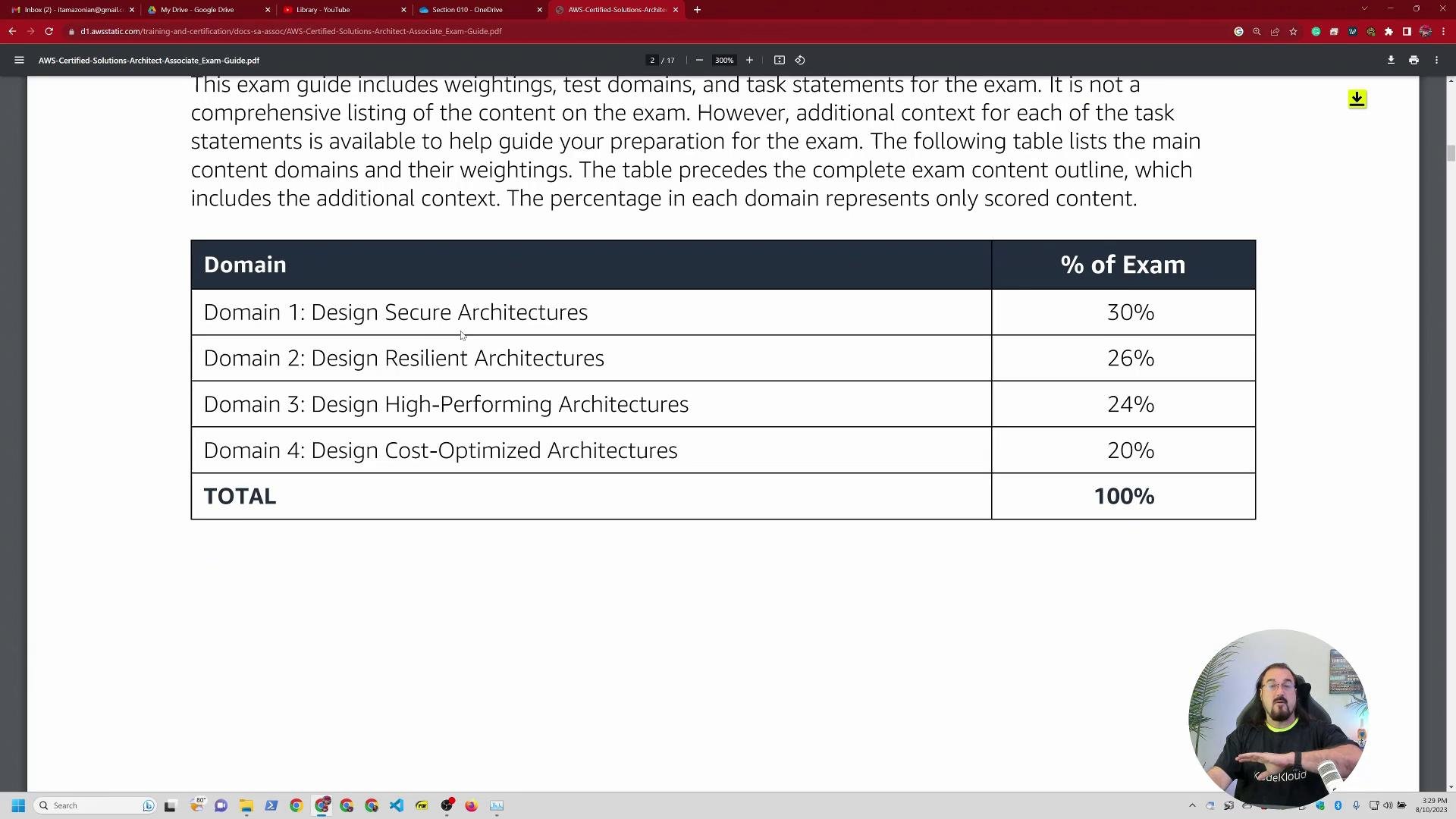
- The official exam guide breaks each domain into task statements. Each task statement defines a specific knowledge or skill area you will be tested on.
- Map each task statement to hands-on labs and short projects. For example, a task about “design secure architectures” maps to labs on IAM, Secrets Manager, KMS, and VPC security controls.
- Domain 3 now explicitly includes data ingestion and transformation tasks. You should know common patterns for ingesting, transforming, and preparing data at scale (for example using Kinesis, SQS, Lambda, and AWS Glue) and how these patterns affect performance and cost — you are not required to design ML models for the exam.
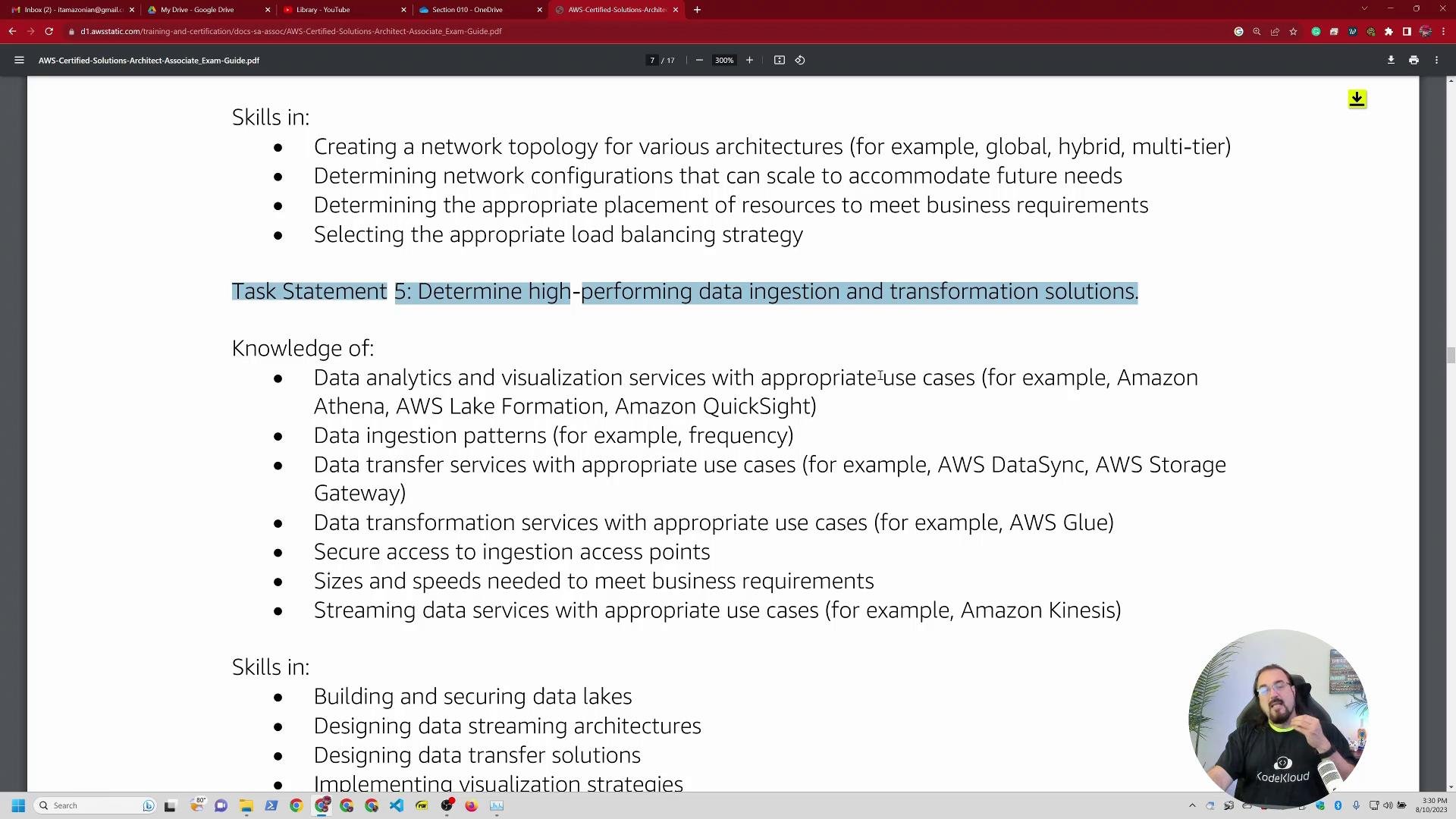
- Use the exam guide’s service list to scope your study. Focus on core services and their integrations that appear on the guide.
- This curriculum follows the exam blueprint closely. A few extra services are discussed for context (for example, Lightsail is compared with
Amazon Elastic Compute Cloud (EC2)to highlight trade-offs), but in general prioritize the services listed in the official guide. - Learn not only what each service does, but common design patterns, failure modes, and cost trade-offs.
- Build short, focused hands-on projects covering each domain (security, resiliency, performance, cost).
- Practice design questions: take a requirement, propose multiple solutions, and evaluate trade-offs in security, availability, performance, and cost.
- Time-box practice exams to 130 minutes and review explanations for every question you miss.
- Create a crib sheet of key service limits, default behaviors, and recommended best practices for quick review.
- Treat every question as scored and simulate real exam timing in practice.
- Prioritize study time according to domain weightings, with extra attention to security and resiliency patterns.
- Build a hands-on portfolio to supplement any lack of formal experience.
- Review the official SAA‑C03 exam guide for full task statements and the complete list of services.
- Official exam guide: https://aws.amazon.com/certification/certified-solutions-architect-associate/
- Amazon Elastic Compute Cloud (EC2)
- AWS documentation: https://docs.aws.amazon.com/