

- Retake and review the practice mock exam until you consistently score 95% (or at least understand every mistake)
- Make the practice mock exam your immediate priority after finishing the course.
- Retake the mock exam until you can reliably hit a 95% score. If you score lower (for example, 85%), identify exactly which questions you missed and why.
- Understanding why an answer is wrong is as important as knowing why the correct one is right. This exposes gaps in either factual knowledge or exam-style reasoning that you should correct.
- For recurring mistakes, review the specific topic until your mental model matches AWS behavior and best practices. For example, if your mental model of storage or networking features is incorrect, correct it using official documentation and re-test yourself until the misunderstanding is resolved.
- Revisit the scenario-based design sections (not just the short quizzes)
- Spend additional time on the full scenario-based design sections, especially scenario-focused lessons. These contain multiple exam-style questions that emphasize architecture attributes like security, reliability, performance, and cost optimization, and show how those attributes interact across services.
- Don’t limit your review to the final quizzes — go through the complete scenario sections. If time is limited and you already perform well on end-of-section quizzes, at minimum re-do those quizzes and review the comprehensive design challenge (pay attention to VPC setup and service placement).
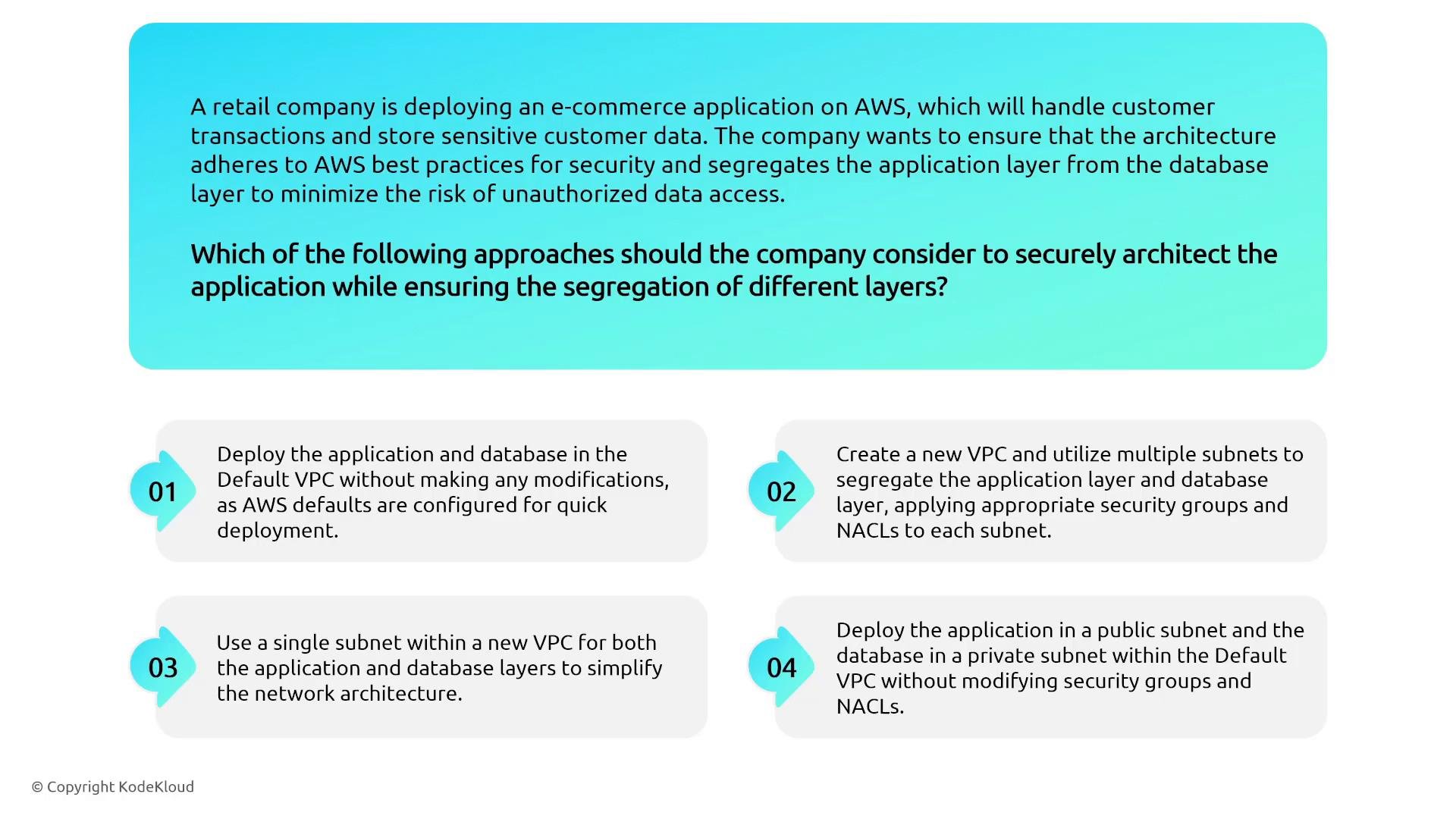
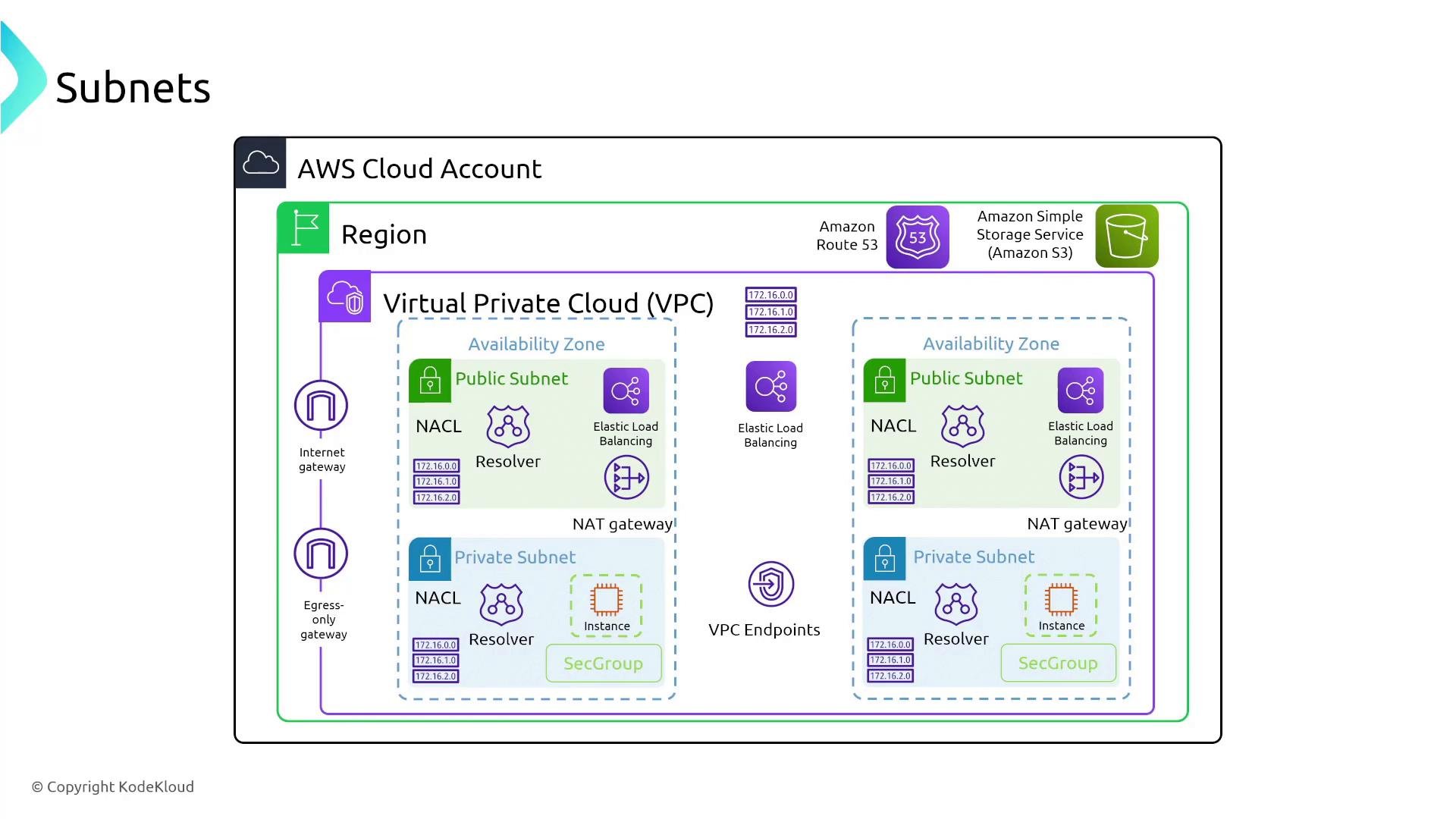
- The exam-aligned approach is isolation and segmentation inside the same VPC: design an appropriately sized VPC and use multiple subnets to separate the application layer and the database layer, and apply appropriate security controls (security groups, NACLs, and route table rules) to each subnet.
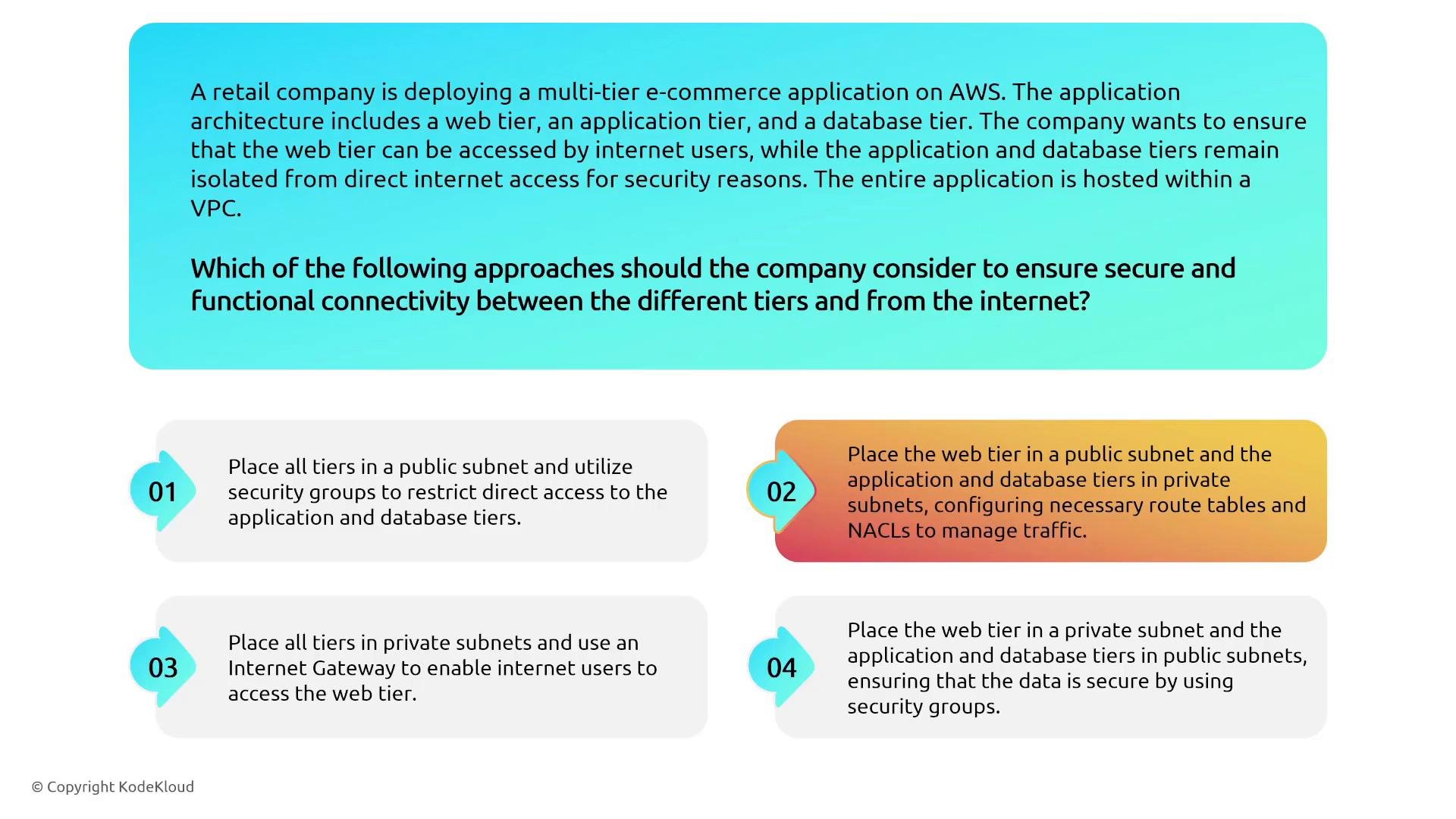
- You could place services in separate VPCs, but that generally adds unnecessary complexity for this use case. The typical pattern is private subnets for databases and application tiers, with a public subnet only where required (for example, a public-facing web tier).
- If you’re still unsure, ask for help — join the Slack channel and talk to a coach
- If you’ve completed the training, repeatedly practiced the mock exam, and reviewed the scenario-based design sections but still lack confidence, reach out for personalized coaching.
- Join the AWS Cloud Forum on
https://kodekloud.slack.com. Both Sanjeev Thyagarajan and I (Michael Forrester) monitor that Slack workspace. We can usually assess your readiness with a few targeted questions and point out any weak domains (for example, machine learning or networking). - We’ve coached many students to pass the Solutions Architect exam and are happy to review mistakes, ask targeted diagnostic questions, and help you build confidence.
If you need coaching, post in the AWS Cloud Forum on
https://kodekloud.slack.com. If we don’t respond immediately, leave a message — we’ll get back to you as soon as we can.
Summary and next steps
- Keep taking the included mock exam until you consistently reach a 95% score. This rehearsal builds exam-style thinking and exposes common pitfalls.
- Revisit the scenario-based design sections for deeper architectural understanding; focus on differences introduced by small scenario changes (e.g., a requirement for a public-facing tier).
- Use the Slack forum (
https://kodekloud.slack.com) to request coach help if you remain uncertain.
- AWS Exam Guide — AWS Certified Solutions Architect – Associate: https://d1.awsstatic.com/training-and-certification/docs-sa-assoc/AWS_Certified_Solutions_Architect_Associate_Exam_Guide.pdf
- AWS Well-Architected Framework: https://aws.amazon.com/architecture/well-architected/
- AWS VPC documentation: https://docs.aws.amazon.com/vpc/latest/userguide/what-is-amazon-vpc.html