This article explores Amazon Rekognition, a machine learning service for automated image and video analysis, enhancing multimedia management and content moderation.
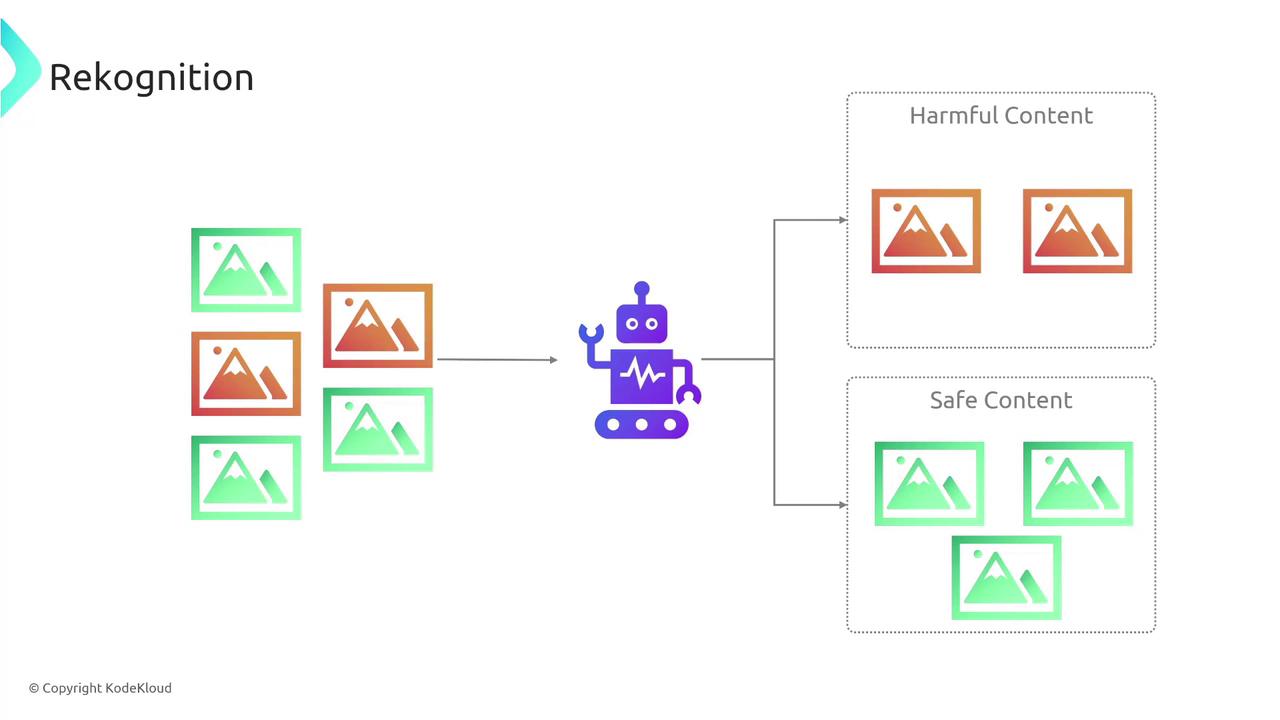
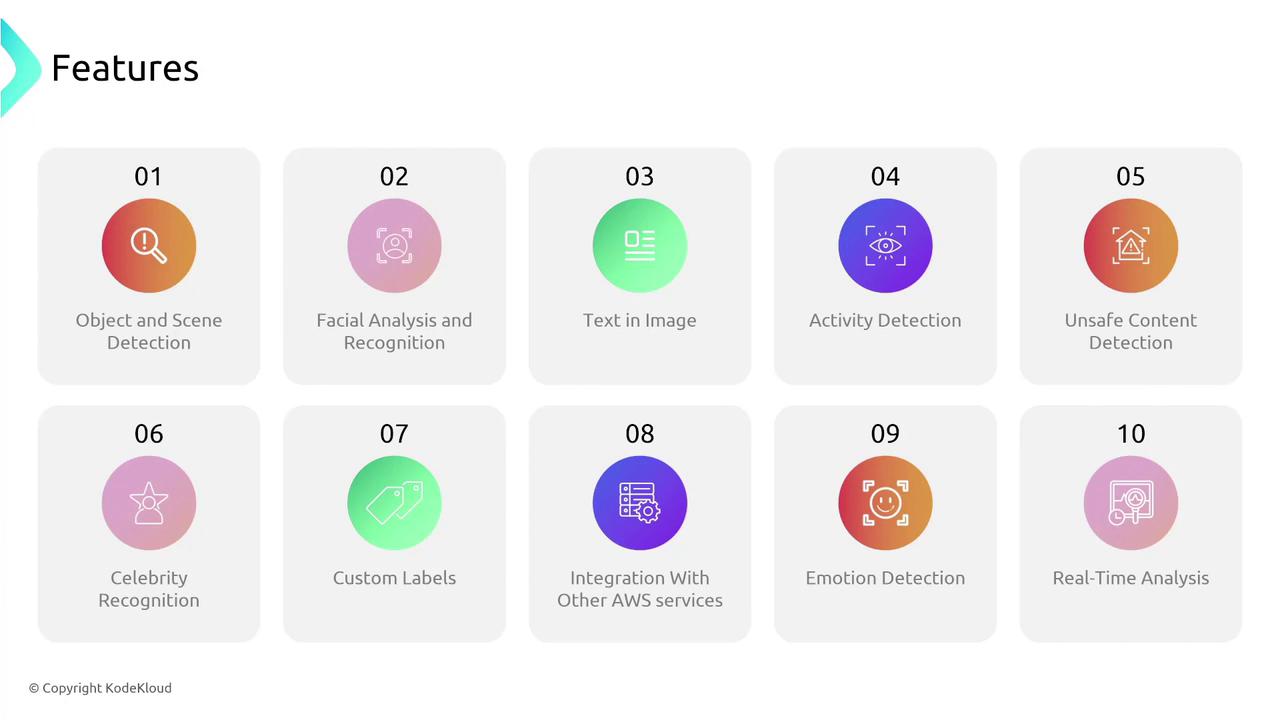
Welcome back! I’m Michael Forrester, and in this article, we dive into Amazon Rekognition—a robust machine learning service designed for comprehensive image and video analysis. Learn how Rekognition simplifies automatic tagging and categorization of images, making multimedia management faster and more efficient.Imagine you have an extensive image database on your website. Instead of manually assigning tags to every image, Rekognition leverages sophisticated machine learning algorithms to analyze image content automatically. For instance, when an image shows a dog riding a skateboard, Rekognition can intelligently tag it with labels such as “dog,” “skateboard,” or even “dog riding skateboard.” This automated approach is invaluable for streamlining content management and significantly reducing manual effort.Amazon Rekognition employs deep learning techniques to detect objects, people, text, scenes, and activities in both images and videos. It can even identify inappropriate content, which makes it a crucial tool for content moderation on platforms where user-generated content must adhere to strict guidelines.
Integrating Rekognition can help maintain community standards on platforms like Reddit, Pinterest, or Instagram by quickly filtering unsafe content.
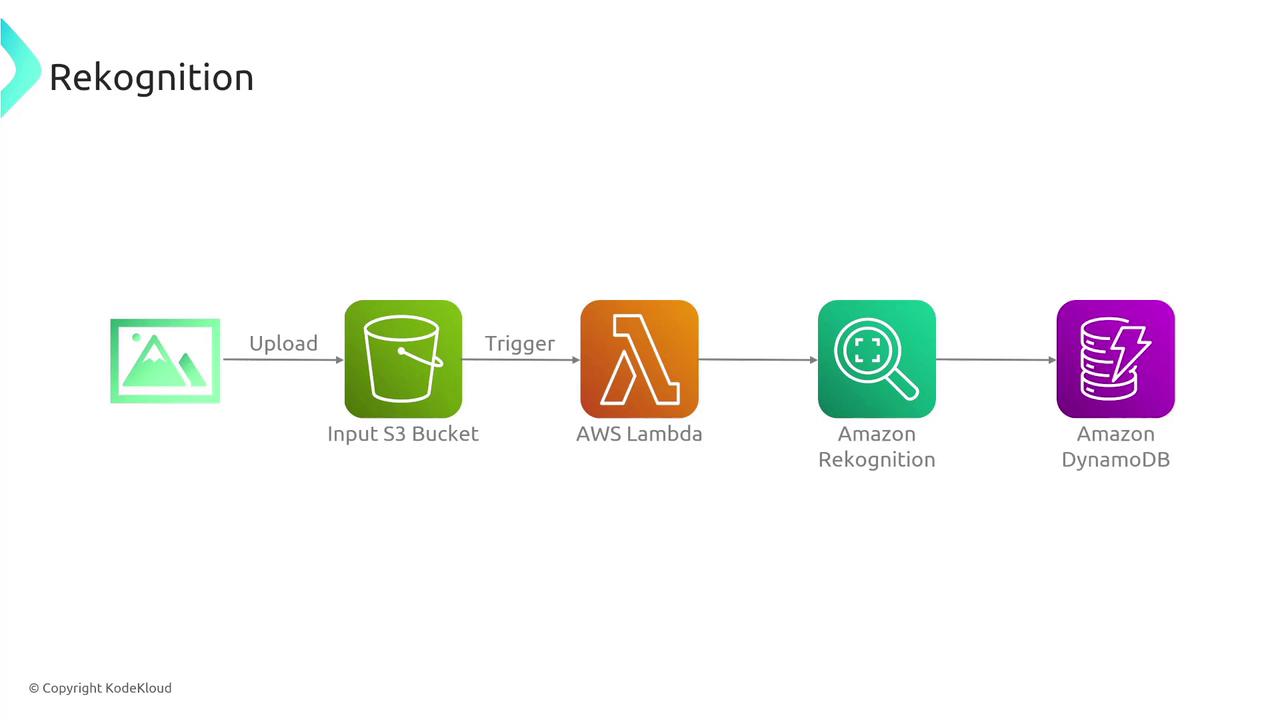
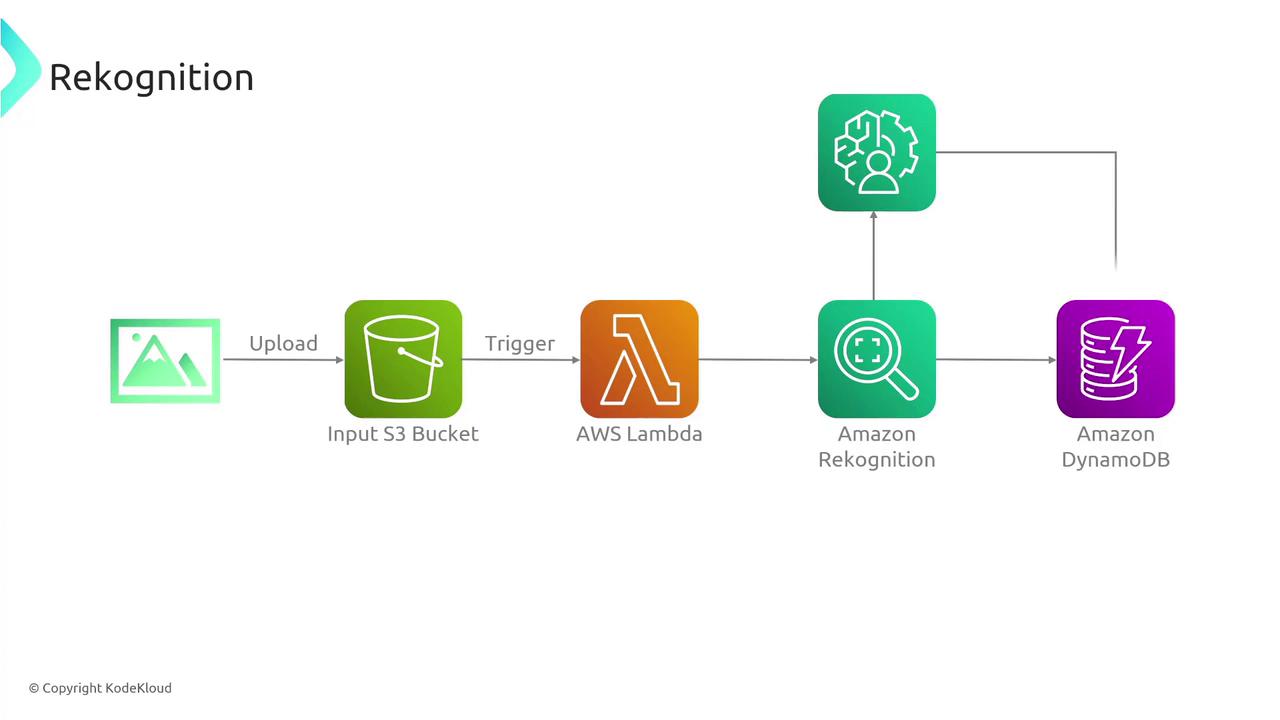
Rekognition is a fully managed service that seamlessly integrates with other AWS services. For example, you can set up an S3 bucket to trigger Rekognition—either directly or via AWS Lambda—each time a new image is uploaded. After processing, Rekognition generates detailed metadata and tags that can be stored in DynamoDB for further analysis. Additionally, for images with lower confidence scores, Amazon Augmented AI (A2I) can be incorporated to allow human reviewers to verify the tags before finalizing them.
For example, if Rekognition returns a confidence score of around 70% for some images, you might opt for human review. In contrast, images with confidence scores above 85–90% can be automatically approved. This hybrid approach ensures a reliable, scalable content moderation workflow through tight AWS integration.
Amazon Rekognition integrates tightly with other AWS products, enabling you to build sophisticated, automated workflows for image and video analysis. Common integrations include:
AWS Service
Use Case
Example
Amazon S3
Storage and event triggering upon new image uploads
Trigger Rekognition using S3 event rules
AWS Lambda
Serverless function execution
Process images as they are uploaded
Amazon DynamoDB
Storage of processed metadata and tags
Store image analysis results for querying
Amazon Augmented AI
Human review for unreliable results
Improve accuracy for low-confidence images
Ensure that the confidence score thresholds are carefully calibrated to balance automation with quality control, particularly for sensitive content moderation scenarios.
Amazon Rekognition automates image and video analysis to facilitate efficient content moderation, image organization, and metadata generation. By integrating seamlessly with key AWS components such as S3, Lambda, and DynamoDB—and optionally leveraging Amazon Augmented AI for human review—Rekognition offers a scalable, reliable solution for managing multimedia content.We hope this comprehensive overview of Amazon Rekognition provides valuable insights into its capabilities and potential applications. Stay tuned for more technical deep dives in our upcoming articles!For more detailed information on AWS services and machine learning, visit the AWS Documentation.